How to Choose and Blend Bonsai Soil for Thriving Trees
The soil beneath your bonsai is doing more work than any wire or cut — get the mix wrong and even a masterpiece specimen will quietly decline from the roots up.
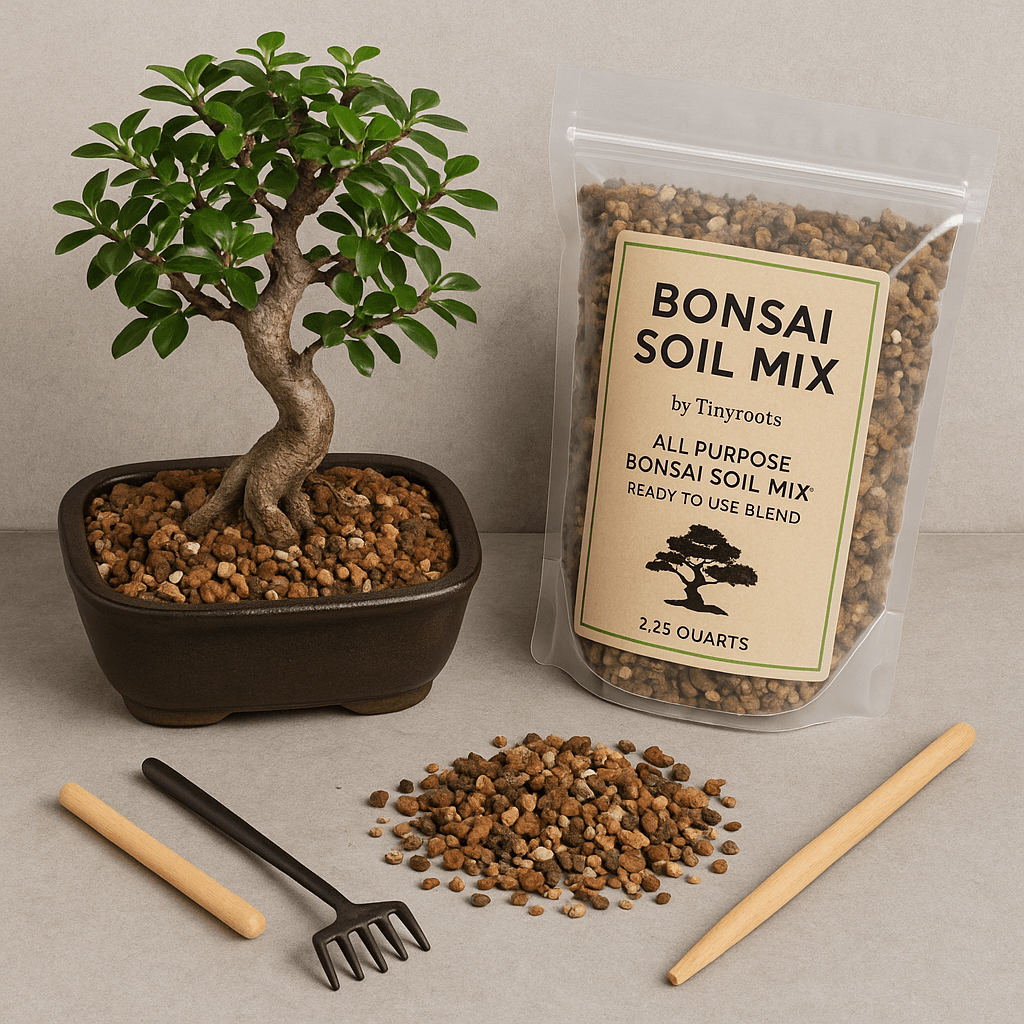
Soil is the most consequential decision you make for any tree in your collection. Not the pot size, not the pruning schedule, not the wire gauge. The substrate your roots live in governs oxygen supply, moisture availability, drainage speed, pH stability, and the physical structure that lets nebari develop and anchor. In a containerized tree with a restricted root volume, the margin for error is razor thin. A poor mix, whether compacted, waterlogged, or chemically hostile, is the single most frequent cause of decline in containerized trees. Understanding what goes into a good blend, and why each component earns its place, is the foundation every other bonsai skill is built on.
Why Bonsai Soil Is Nothing Like Garden Soil
The instinct to grab a bag of potting compost from the garden center is understandable but almost always counterproductive. Standard potting mixes are designed for containers that drain freely into open ground and are used seasonally. Bonsai pots are small, shallower than they look, and the tree lives in them for years or decades. That substrate has to do three things simultaneously: provide mechanical support so the root system can develop structure and the tree stays anchored; maintain oxygen availability to prevent anaerobic conditions and root rot; and hold enough water that roots can access moisture between waterings without becoming waterlogged. No single material does all three equally well, which is why every serious bonsai mix is a blend.
The Core Components
Akadama is the benchmark ingredient for temperate outdoor bonsai. This granular baked clay from Japan holds moisture well, buffers pH in a root-friendly range, and provides a texture that deciduous and coniferous species respond to with vigorous fine-root development. It does degrade over time, slowly crumbling and compacting, which is why repotting cycles matter. Note that availability and legal import rules vary by country, so sourcing may require some research depending on where you are.
Pumice is a lightweight volcanic aggregate that adds porosity and structural stability to any mix. It resists compaction, retains water moderately, and is one of the most versatile components across species types.
Lava rock, or scoria, is the drainage workhorse. Its coarse, angular texture increases the air pockets in a mix and provides long-term structural stability. Where pumice moderates, lava rock accelerates drainage and keeps a mix from collapsing in on itself over multiple seasons.
Pine bark or a composted organic component plays a supporting role, used sparingly in most mixes. It contributes some water-holding capacity and a modest nutrient base. It earns a larger share in mixes for broadleaf tropicals and indoor species that prefer slightly richer, more moisture-consistent conditions.
Horticultural grit or washed builders' sand can be added in small proportions to improve drainage and reduce compaction when working with heavier base mixes. The emphasis is on washed; unwashed builder's sand introduces fine particles that do exactly the damage you are trying to prevent.
Matching the Mix to the Tree
There is no universal bonsai soil ratio, and anyone who tells you otherwise is selling something. The correct mix depends on species, climate, pot depth, watering habits, and season.
*Temperate conifers:* Pines and junipers thrive in predominantly inorganic mixes. A ratio of 6 to 7 parts inorganic components (akadama, pumice, and lava rock in combination) to 1 to 2 parts organic material is a widely used starting point. Many professionals favor leaning even further toward the inorganic end for pines specifically, where fast drainage and root rot prevention outweigh the marginal benefit of added organic matter. Bonsaitonight.com offers detailed species-specific ratios and consistently reinforces the value of light, fast-draining mixes for this group.
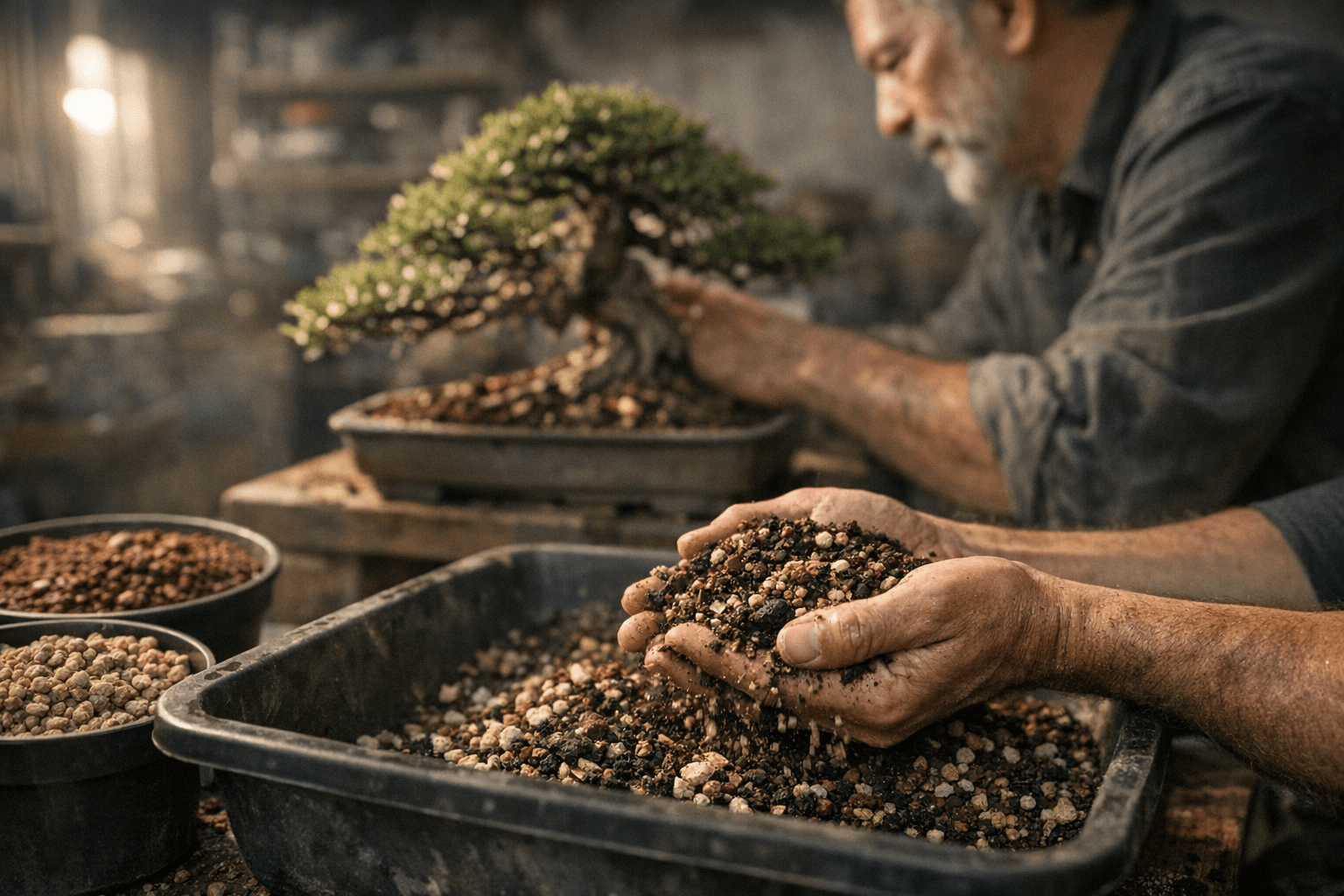
*Deciduous maples and flowering trees:* These species benefit from a slightly higher proportion of water-retaining components. A blend of moderate akadama combined with pumice and a small bark fraction supports the moisture demands of leaf expansion and flower development without sacrificing drainage. The roots of deciduous trees are generally more forgiving than pines, but they still suffer in compacted or anaerobic conditions.
*Indoor tropicals:* Ficus, schefflera, and similar species represent a different set of priorities. They typically require more consistent moisture and respond well to a higher organic proportion in the mix. The drainage components remain essential, but the balance shifts toward retention. A purely inorganic mix will dry out too quickly for a ficus on a windowsill.
Building a Mix: A Practical Process
The goal is not to follow a recipe blindly but to build something appropriate for your specific tree and your specific environment.
1. Identify the species and your climate context: outdoor temperate or indoor tropical determines your starting philosophy.
2. Choose a base component, either akadama or pumice, and add lava rock as the coarse element to guard against compaction.
3. Screen all components to a particle size of 2 to 5 mm. Fine dust clogs pore spaces and undermines everything the mix is designed to achieve.
4. Build small test batches before using a new blend on a prized specimen. Fill a pot, water it, and observe how quickly moisture drains and how long it is retained. You are looking for fast initial drainage with a moderate residual moisture level.
5. Adjust for climate seasonally. In hot, dry conditions, lean slightly toward water-retentive components. In cool, wet climates, favor drainage to avoid the waterlogging risk that comes with slow evaporation.
Repotting and Soil Transitions
When you repot, the guiding principle is to match or modestly improve your existing mix rather than radically alter the water-holding profile of the pot. Roots adapt to their substrate, and a sudden shift from a moisture-retentive mix to a highly inorganic one (or vice versa) can cause unnecessary stress during an already demanding process.
Timing matters too. For pines and junipers in temperate climates, late winter or early spring, just before growth resumes, is the traditional repotting window. The tree is dormant or just beginning to stir, root disturbance is tolerated well, and the growing season ahead gives the root system time to re-establish. Tropical indoor species are more flexible; repotting can happen at any time of year as long as the roots are actively growing and disturbance is kept to a minimum.
The Long View
A well-chosen substrate reduces disease pressure, supports clean root pruning, and makes every styling decision downstream more predictable. Roots that develop in the right environment respond to cuts and directional encouragement the way a healthy tree should. Investing in quality components and taking the time to understand seasonal adjustments is one of the highest-return habits in the practice, one that pays dividends across every tree in a collection for as long as they are in your care.
Know something we missed? Have a correction or additional information?
Submit a Tip