Japan's 100th Kokufu-ten Part Two Showcases Scale, Special Trees, Double Sessions
Jonas Dupuich reported 362 total displays across both halves of Japan's centennial Kokufu-ten, with a standout juniper whose ribbon of deadwood stopped crowds cold.
The 100th Kokufu-ten delivered a centennial-scale statement: 181 displays in each half of its double-session format, for a combined 362 displays across the full exhibition at the Tokyo Metropolitan Art Museum in Ueno Park. Jonas Dupuich, reporting on-site for Bonsai Tonight, called the figure "a whopping 181 displays in each half," a count that exceeds the 200-to-250 display positions typical of recent editions and underscores how seriously organizers treated the milestone.
Part Two ran February 14-18, 2026, with a one-day closure on February 16 for the reset that defines the double-session model. For the past twelve years, Kokufu-ten organizers have used this approach: open the exhibition to the public for several days, close for a day or two to rebuild the entire show with fresh displays, then reopen. Part One had run February 8-11. The museum sits between Ueno Zoo and the Tokyo National Museum, roughly seven minutes on foot from the Park Exit of JR Ueno Station.
Acceptance into the Kokufu-ten is the highest honor in Japanese bonsai cultivation. Hundreds of submissions compete for the roughly 200-to-250 display positions spread across both parts, and trees are credited to their owners rather than the artists who trained them. Judging covers both the individual specimen and the full display composition, including pot selection and arrangement.
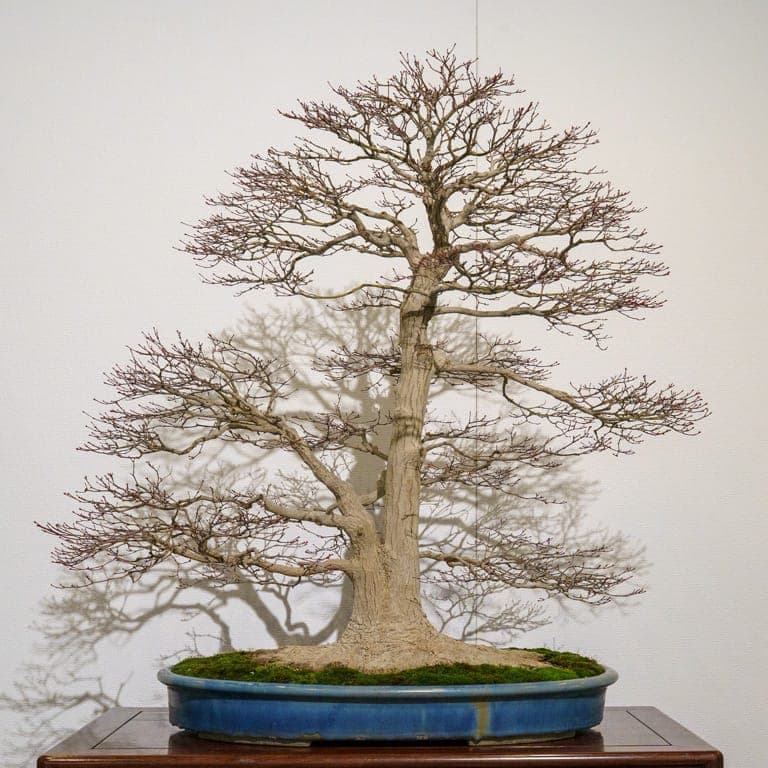
Dupuich's Part Two coverage moved through large conifers, shohin displays, and a strong deciduous section. Among the conifers, he singled out a medium-size black pine paired with a trident maple: "I liked that the tree had strong movement to the left and a surprisingly large trunk for a tree under 18 inches tall." The tree that drew the most sustained crowd attention, however, was a juniper with an unusually slender trunk. "The movement was fantastic," Dupuich wrote, "and the ribbon of deadwood that formed the trunk was surprisingly thin." The exhibition's species range extended from white pine and semi-cascade white pine to needle juniper, shimpaku, and, on the deciduous side, groupings of four trident maples, trident maples displayed on stone, Koran hornbeam, Japanese maple, and Chinese quince.
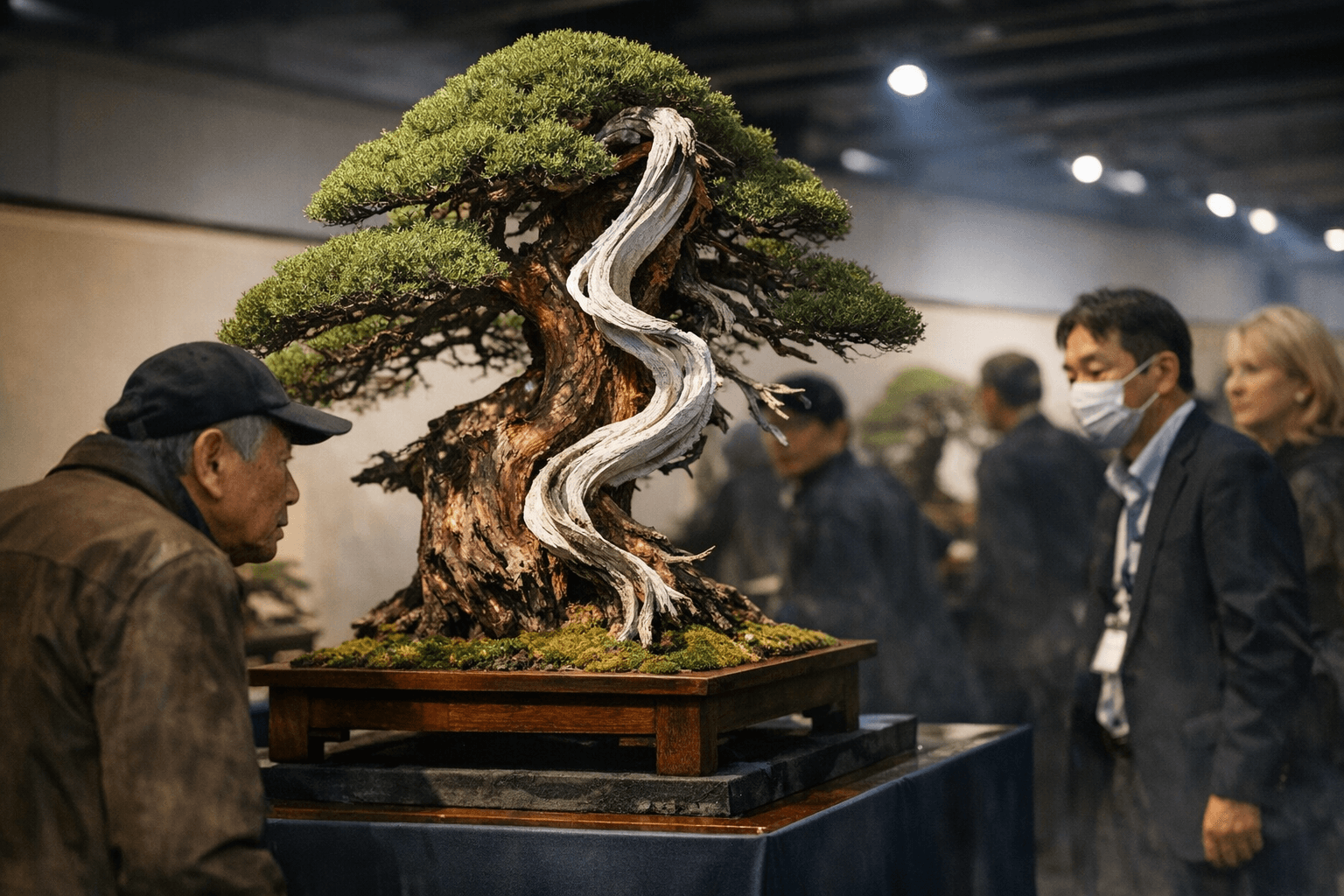
Scale was a recurring theme in reader response. Commenter vance hanna pointed to a photograph of a shimpaku with a visitor framing her own shot beside it: "Scale is everything!"
The centennial drew demand well beyond the exhibition hall itself. Multiple tour operators organized dedicated trips for the 100th edition, with some selling out well in advance. The World Bonsai Friendship Federation proposed a time capsule project to mark the anniversary, with plans to include bonsai images, books, tools, and containers. The Kokufu-ten has persisted through war, economic disruption, and shifting cultural priorities across a century, and as it enters its second hundred years it remains the global benchmark against which bonsai cultivation is measured.
This article was produced by Prism’s automated news system from verified source data, official records, and press releases, then run through automated quality and moderation checks before publishing. The system is built and supervised by the people who set the standards it runs under. Read our full AI policy.
Did this article answer your question?