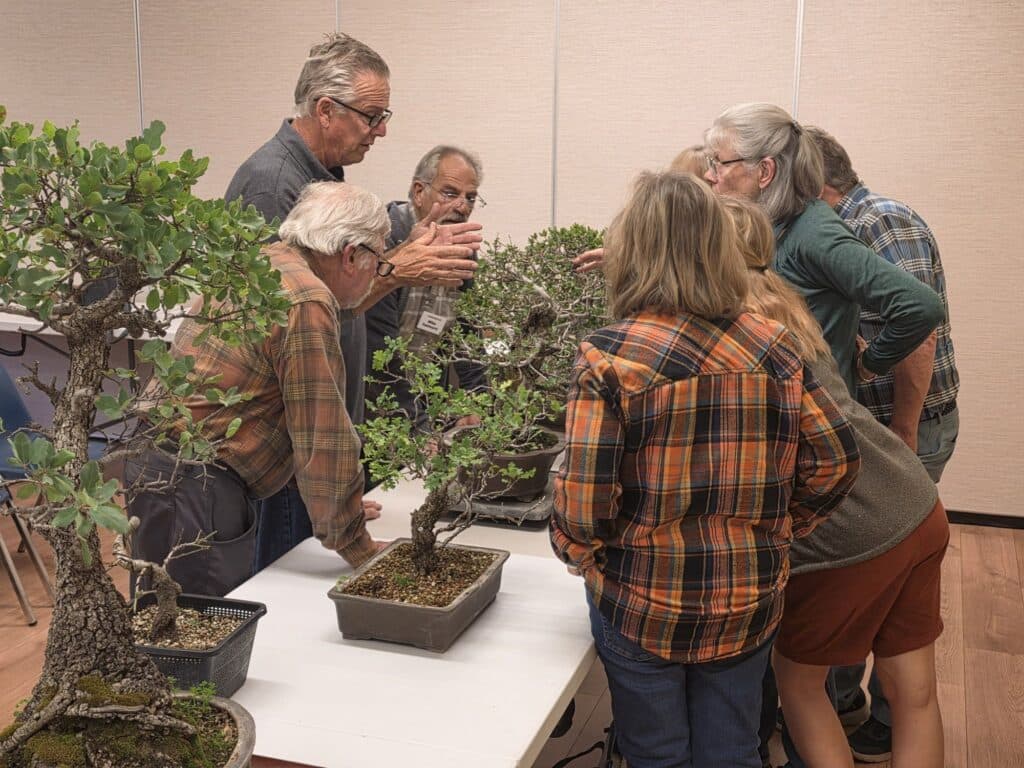
Kifu Bonsai Offers Hands-On Evergreen Repotting Clinic This Spring
Robert Mahler's East Greenville studio ran a focused evergreen repotting clinic, giving participants hands-on root work and substrate guidance during spring's critical window.
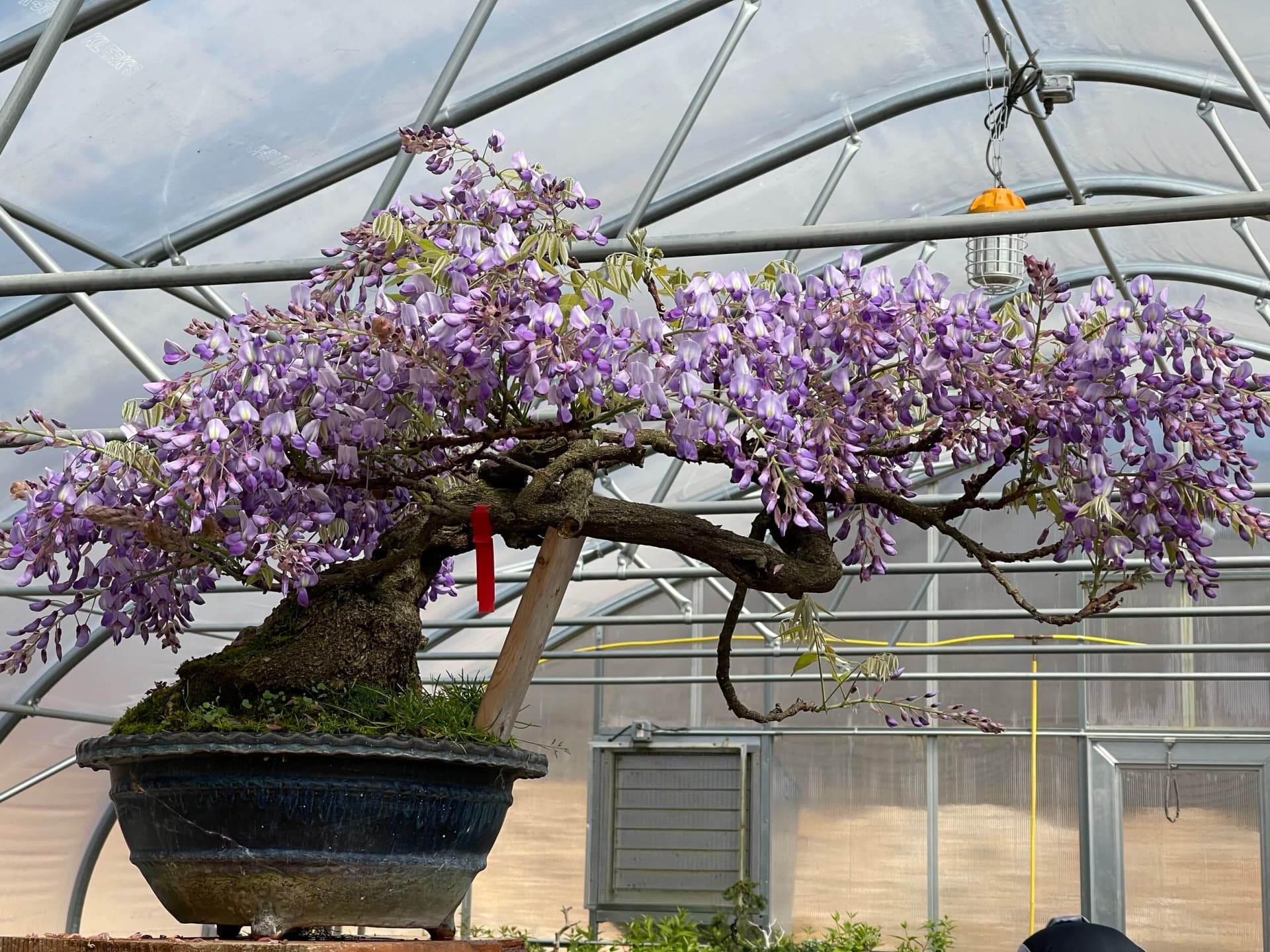
Robert Mahler ran Kifu Bonsai's evergreen repotting clinic last Sunday in East Greenville with a small-group format designed around one core constraint: the narrow spring window when conifer and broadleaf work can be done safely in Pennsylvania.
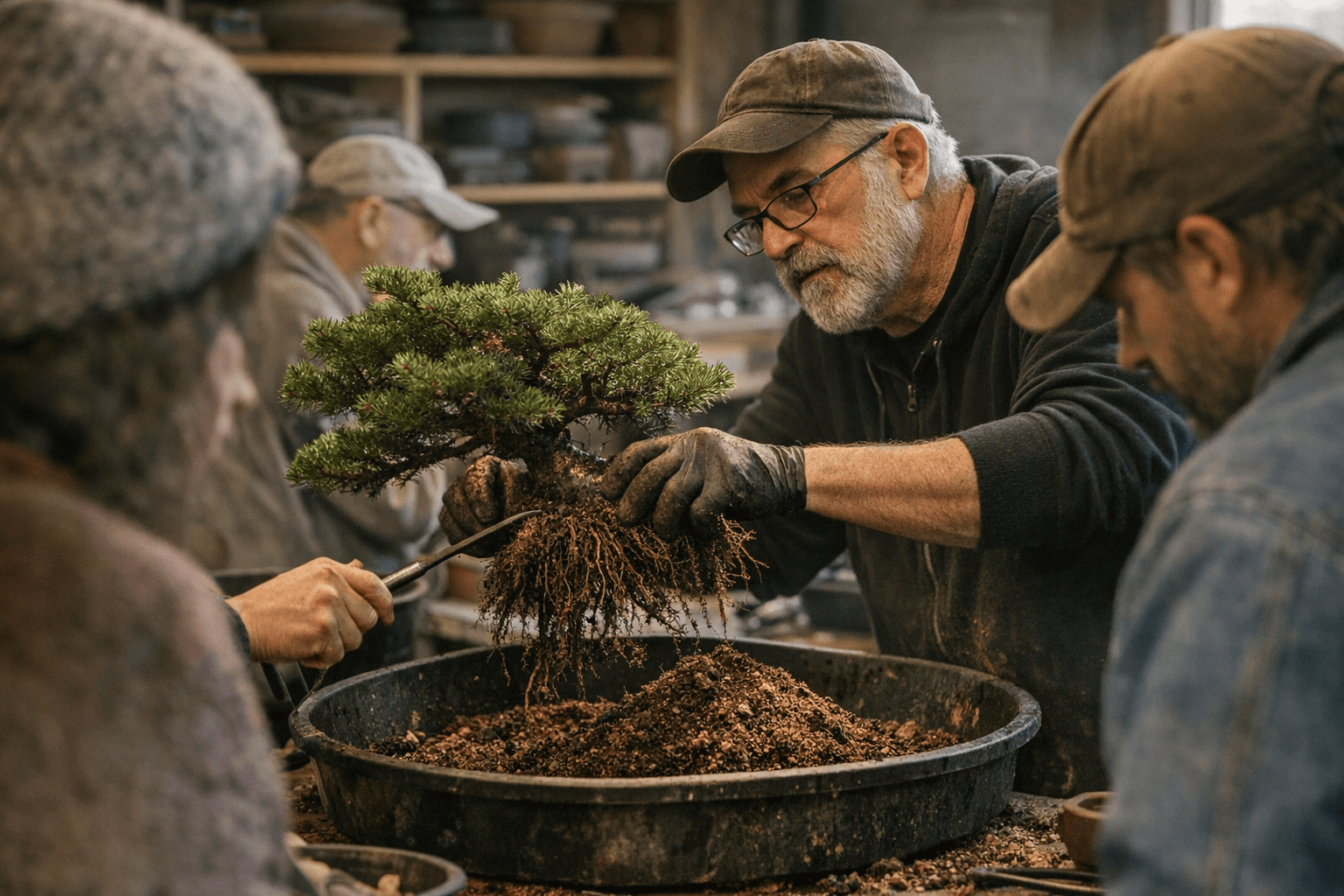
The March 29 session was structured as a single date, no follow-up classes, no multi-week curriculum, just one concentrated afternoon to get the work right before the growing season fully commits. Participants arrived with their own trees and tools. Mahler, trained in Japan, supplied the soil mixes himself, removing one variable from the equation and keeping instruction squarely on technique. The curriculum addressed root pruning strategy, substrate selection appropriate to evergreen species, and post-repot care calibrated to local spring conditions, including the frost exposure that remains a genuine hazard in southeastern Pennsylvania well into late March.
The limited class size was not incidental. It gave Mahler the ability to assess each participant's specific tree and correct technique in real time, the kind of corrective engagement that a lecture-style format simply cannot replicate. For a grower whose juniper has outgrown its pot after two growing seasons, watching someone else's repotting demonstration is a different experience than having an instructor redirect your root work mid-session.
Kifu's decision to separate evergreen material from deciduous instruction also reflects sound horticultural logic. Conifers and broadleaf evergreens operate on a different physiological rhythm than maples or elms, and the substrate choices that suit a five-needle pine are frequently wrong for a trident. Collapsing both categories into a single beginner class tends to generate shortcuts; dedicating a session entirely to evergreens gave attendees the resolution that mixed-material classes rarely allow.
Pre-class communication from Kifu flagged local temperature and frost risk explicitly, reminding participants to plan for post-repot protection once their trees returned home. That kind of climate-specific guidance is a marker of instruction built for the region rather than transplanted from a generic curriculum.
For Mahler's studio, the single-topic intensive format has become a signature approach, one that builds a sustained relationship between student and instructor rather than a one-time introduction to bonsai basics.
Know something we missed? Have a correction or additional information?
Submit a Tip