Longwood Gardens acquires 80-year-old Chinese cork bark elm, expands bonsai collection
Longwood Gardens added an 80-year-old Yatsubusa elm rescued from Oregon land slated for development, then handed its next chapter to Sergio Cuan.
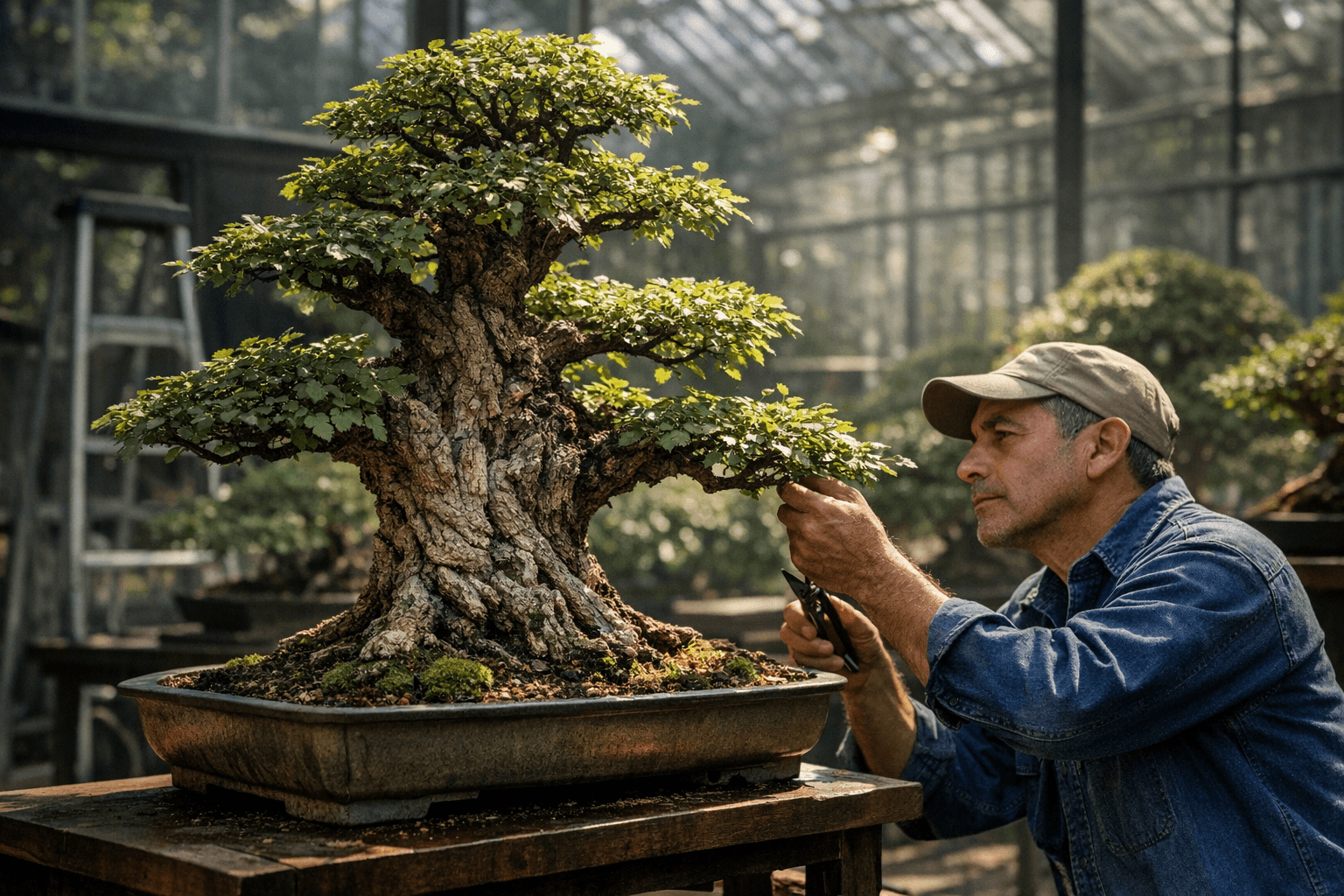
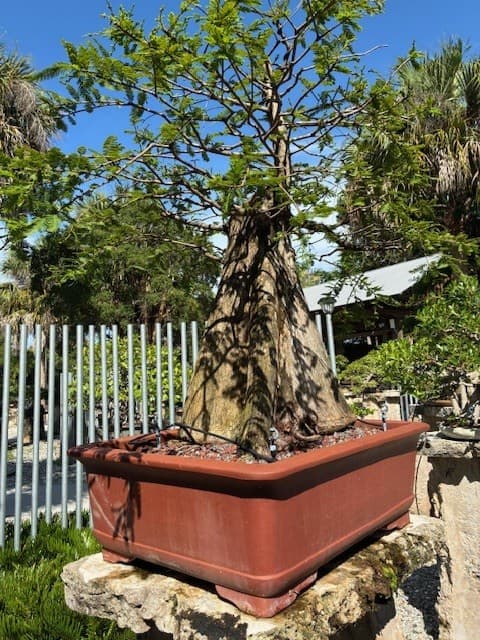
Longwood Gardens has added an 80-year-old Yatsubusa Chinese cork bark elm, and it is treating the tree as a biography in progress, not a finished object. The Ulmus parvifolia ‘Yatsubusa’ spent decades in a propagation field in Oregon’s Willamette Valley, where it developed the rugged bark and fine leaves that now give it presence in miniature. When the land was sold for residential development, bonsai artist Ryan Neil rescued the tree and later passed shaping duties to Sergio Cuan.
That handoff says as much about the tree as its trunk line does. Neil, who founded Bonsai Mirai in 2010 outside Portland and was the first Western person to complete a six-year apprenticeship under Masahiko Kimura in Japan, brought the elm out of a field and into a new custodial chain. Cuan, a New Jersey-based bonsai practitioner and multidisciplinary artist with nearly 40 years in the art and practice of bonsai, has been asked to guide what Longwood describes as the tree’s next chapter of life. In Longwood’s telling, the elm is not just surviving, it is continuing.
The acquisition fits a collection built for that kind of stewardship. Longwood says its bonsai collection now includes more than 143 trees, and the Bonsai Courtyard centers on a nearly 200-tree core collection with a rotating display of up to 50 to 60 specimens. The garden traces that public-facing program back to 1959, when it began with 13 trees from Yuji Yoshimura. That lineage matters here: Longwood is not simply adding inventory, it is extending a living archive.
The institution’s 2022 promised bequest from The Kennett Collection explains the scale of that ambition. Described as the finest single collection of bonsai and bonsai-related objects in the Western world, it included more than 1,200 specimen trees. Against that backdrop, the elm reads as both a rescue and a responsibility, a tree whose plated bark, tiny leaves, and fine twigging now have to hold up under public scrutiny while still changing with age.
Cuan’s approach reinforces that idea. Longwood describes him as a renowned multidisciplinary artist, and his work treats balance, harmony, line, contrast, and negative space as part of the composition. That is the point of the new addition: a bonsai can be a record of place, loss, rescue, and succession at once. At Longwood, this elm has entered a collection built to preserve exactly that kind of living history.
This article was produced by Prism’s automated news system from verified source data, official records, and press releases, then run through automated quality and moderation checks before publishing. The system is built and supervised by the people who set the standards it runs under. Read our full AI policy.
Did this article answer your question?