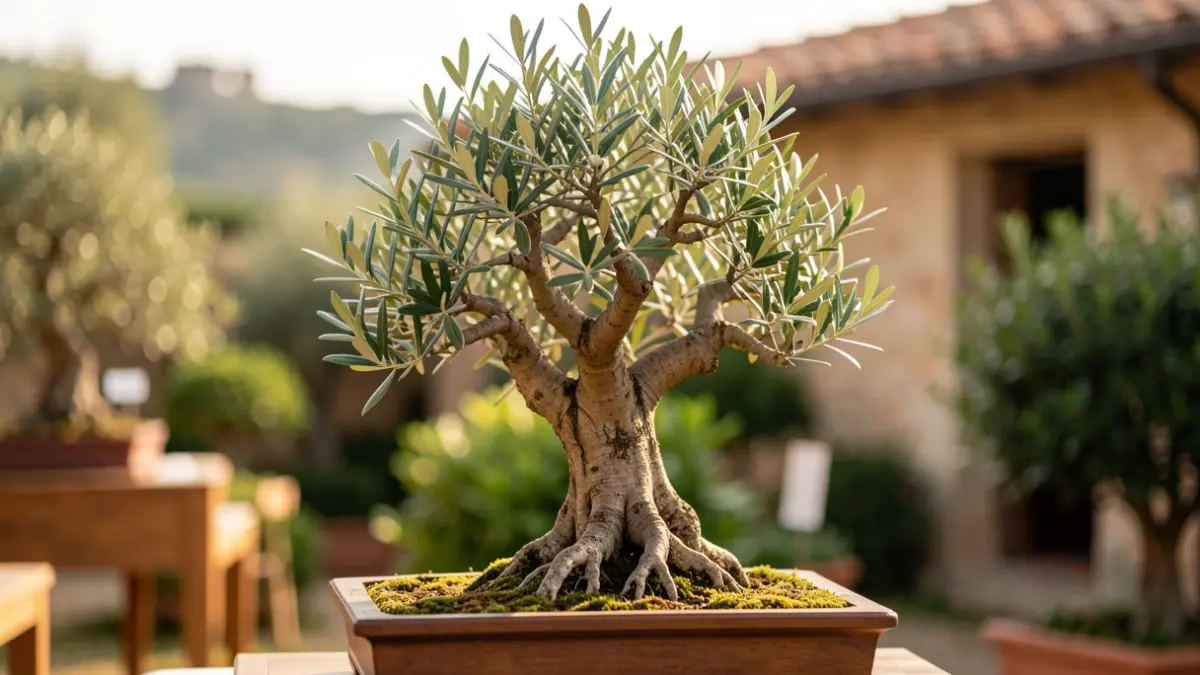
Paclobutrazol and Bonsai Techniques Induce Distinct Dwarfing Pathways in M7 Apple Rootstock
A controlled comparison on three-year-old M7 apple trees found paclobutrazol and bonsai-style mechanical pruning both cut shoot growth to under 12% of controls, but via very different physiological paths.

Researchers compared chemical and mechanical dwarfing on three-year-old M7 apple rootstock and found similar reductions in shoot length but starkly different plant responses. Both paclobutrazol (PBZ) treatment and bonsai-like mechanical techniques "worked to keep shoot elongation to less than 12% of the control." That parity in size control hides contrasting internal chemistry that matters for growers, potters and rootstock breeders.
The PBZ-treated trees showed a hormonal and metabolic signature consistent with biochemical regulation. The authors report "Hormonal regulation was the main cause of PBZ-induced dwarfing," including "a marked decline in gibberellin A3 (GA3; 63% drop) and a rise in zeatin." PBZ trees also showed "significant starch accumulation and better absorption of macronutrients with few signs of stress." The study frames PBZ as a targeted tool: "PBZ acts as a precise biochemical regulator that produces a sink-limited state without imposing substantial physiological stress on the plant."
By contrast, trees managed with bonsai techniques - described as root and shoot restriction, pruning, etc. - showed a classic stress physiology. The report states that "dwarfing through bonsai techniques caused a systemic stress response, as shown by a 284% rise in the stress osmolyte sorbitol and a 190% rise in abscisic acid (ABA)." That treatment group "also had low nutrient levels, a sharp drop in the GA/ABA ratio, and clear signs of physiological stress, like lower photosynthetic efficiency and higher oxidative markers." The authors conclude that bonsai methods "control growth by causing a resource-limited, stress-driven physiology."
Those divergent signatures carry practical implications. Paclobutrazol can produce tight size control while preserving carbohydrate reserves and macronutrient uptake, offering a lower-stress route for growers seeking compact trees without immediate physiological decline. The bonsai route still achieves dramatic dwarfing but does so by pushing plants into stress responses that reduce photosynthetic performance and elevate oxidative markers, signaling potential trade-offs for long-term vigor and resilience.

Context helps place these results. Extension material classifies M.7 as a semi-dwarfing rootstock that is "moderately precocious" and that "may require trunk support in shallow, rocky soils," while other literature emphasizes that many rootstock studies historically focused on M9, leaving genotype-specific mechanisms underexplored. The paper’s authors argue that their findings "highlight paclobutrazol as a more controlled dwarfing tool and provide a physiological framework for developing stress-resilient dwarfing rootstocks."
Key experimental details are not included in the excerpts available here: PBZ application rate, precise bonsai protocol steps, sample sizes, statistics and site details are missing. The report notes that "The datasets generated and analyzed during the current study are available from the corresponding author on reasonable request." Verify doses and methods in the full manuscript before applying any chemical or mechanical dwarfing approach.
For bonsai practitioners and small-scale orchardists, the takeaway is clear: both approaches can dramatically curb shoot growth, but paclobutrazol appears to do so with less physiological cost, while mechanical bonsai techniques demand closer monitoring of nutrients, photosynthesis and oxidative stress if you want compact form without hidden decline.
This article was produced by Prism’s automated news system from verified source data, official records, and press releases, then run through automated quality and moderation checks before publishing. The system is built and supervised by the people who set the standards it runs under. Read our full AI policy.
Did this article answer your question?