Shohin Bonsai Takes Center Stage at Tokyo's 100th Kokufu-ten
The 100th Kokufu-ten placed shohin last on the exhibition floor — the final trees visitors saw before leaving, and a prize winner among them.
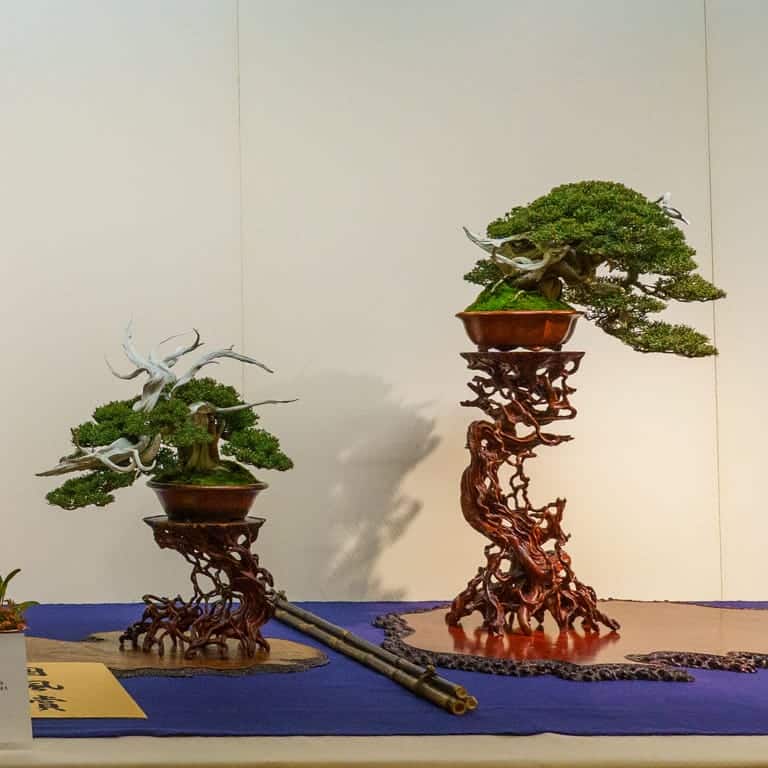
At the world's most prestigious bonsai exhibition, the smallest trees had the last word. Each half of the 100th Kokufu-ten featured a small number of shohin displays, positioned deliberately at the end of the floor plan: large trees first, then medium bonsai, and finally the shohin, the last bonsai visitors saw before leaving the exhibit. It was an understated placement for a category that, at the centennial show, punched well above its size.
The Kokufu-ten bonsai exhibition reached its centennial in February 2026, marking 100 editions since the first event was held in 1934. The 100th edition ran in two parts: Part 1 from February 8–11 and Part 2 from February 14–18, with a closure on February 16, at the Tokyo Metropolitan Art Museum in Ueno Park. The Japanese Bonsai Association hosted the event, which was busier than it had been in recent years, with a larger percentage of foreign visitors attending.
Bonsai Tonight covered the shohin presentations specifically, documenting how the shohin displays notched a prize winner at Part I of the show. That a shohin composition earned a Kokufu Prize at the centennial edition was a detail that underscored how seriously the form is now regarded at the national level.
The exhibition displays over 200 bonsai specimens across various species and styles, and recent editions have featured more than 250 displays. Among the centennial highlights, the greatest number of Kokufu Awards ever presented were given out, perhaps because of the exceptional fine-quality bonsai displayed commemorating the 100th exhibition.
The show's history is inseparable from its ambition. The first Kokufu-ten opened in March 1934 at the Tokyo Prefectural Art Museum, organized by Norio Kobayashi, a publisher and author of over 500 issues of Bonsai magazine, alongside Count Yorinaga Matsudaira, President of the House of Peers; the inaugural exhibition displayed 96 trees. One of the most resonant details of the centennial was a Japanese White Pine worked on by Mr. Shinji Suzuki: the tree had been shown at the very first Kokufu-ten in 1934, making its reappearance a direct living link between the 1st and 100th editions of a show that, it bears noting, is the 100th exhibition, not the 100th year, as two editions were skipped and some early years ran double shows.
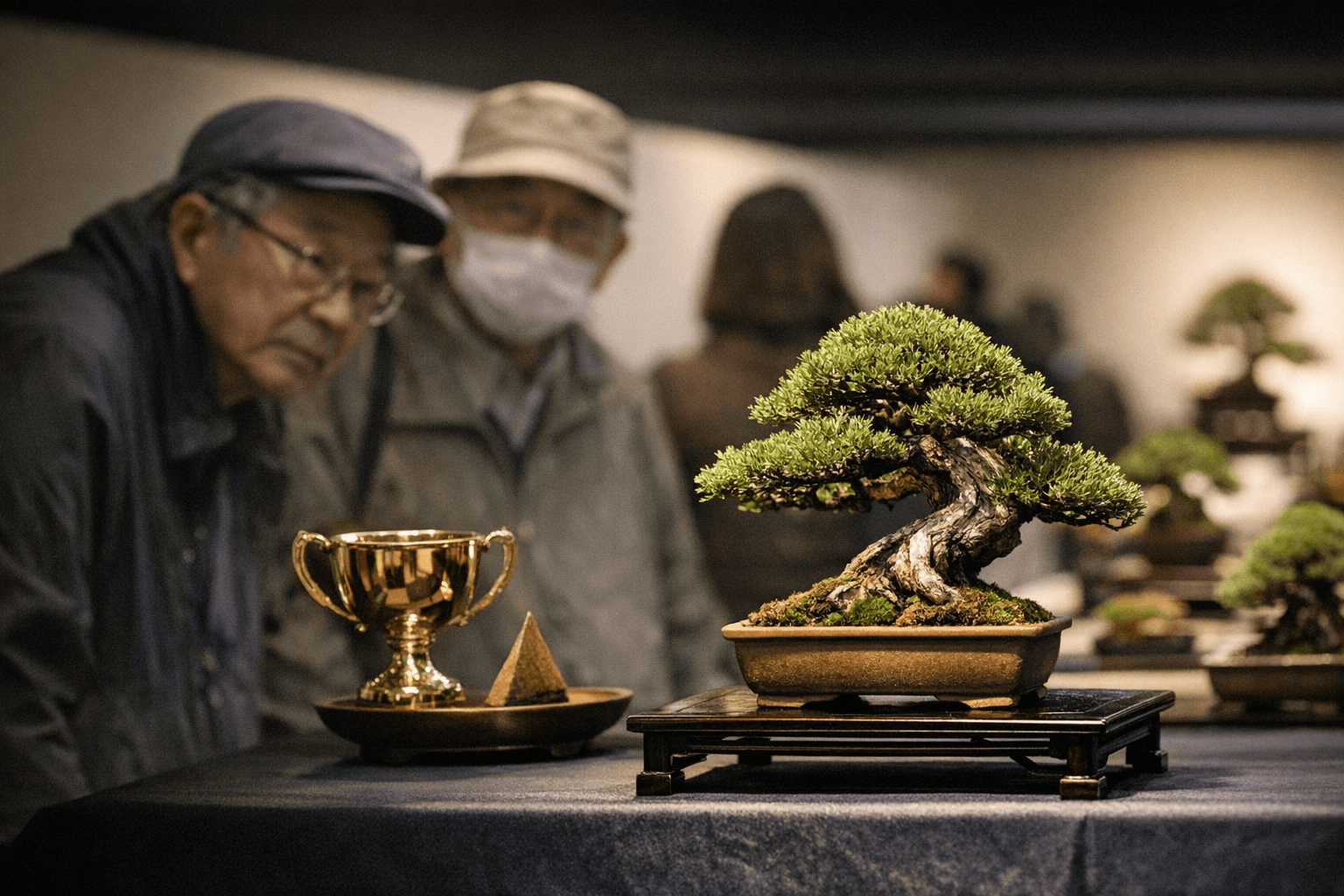
The 100th edition drew significant crowds given the historic milestone, and multiple tour operators organized special trips for the centennial, with some selling out well in advance. Bjorn Bjorholm's Eisei-en operation confirmed that both of its 100th Anniversary Kokufu-ten tours for 2026 were completely sold out.
Away from the floor, the centennial also prompted a longer-term gesture toward the future. The World Bonsai Friendship Federation proposed a time capsule project to commemorate the 100th anniversary, with plans to assemble bonsai resources including images, books, tools, and containers. It would be most fitting, according to the Federation, to hold the burial ceremony following the 2026 World Bonsai Convention.
The Kokufu-ten's continuity through war, economic changes, and shifting cultural priorities demonstrates the enduring significance of bonsai in Japanese culture, and as the exhibition enters its second century, it continues to serve as the benchmark for bonsai cultivation worldwide. That a shohin composition stood among the prize winners at this particular milestone suggests the benchmark is being measured at every scale.
This article was produced by Prism’s automated news system from verified source data, official records, and press releases, then run through automated quality and moderation checks before publishing. The system is built and supervised by the people who set the standards it runs under. Read our full AI policy.
Did this article answer your question?