What Bonsai Tools to Buy First and Why for Beginners
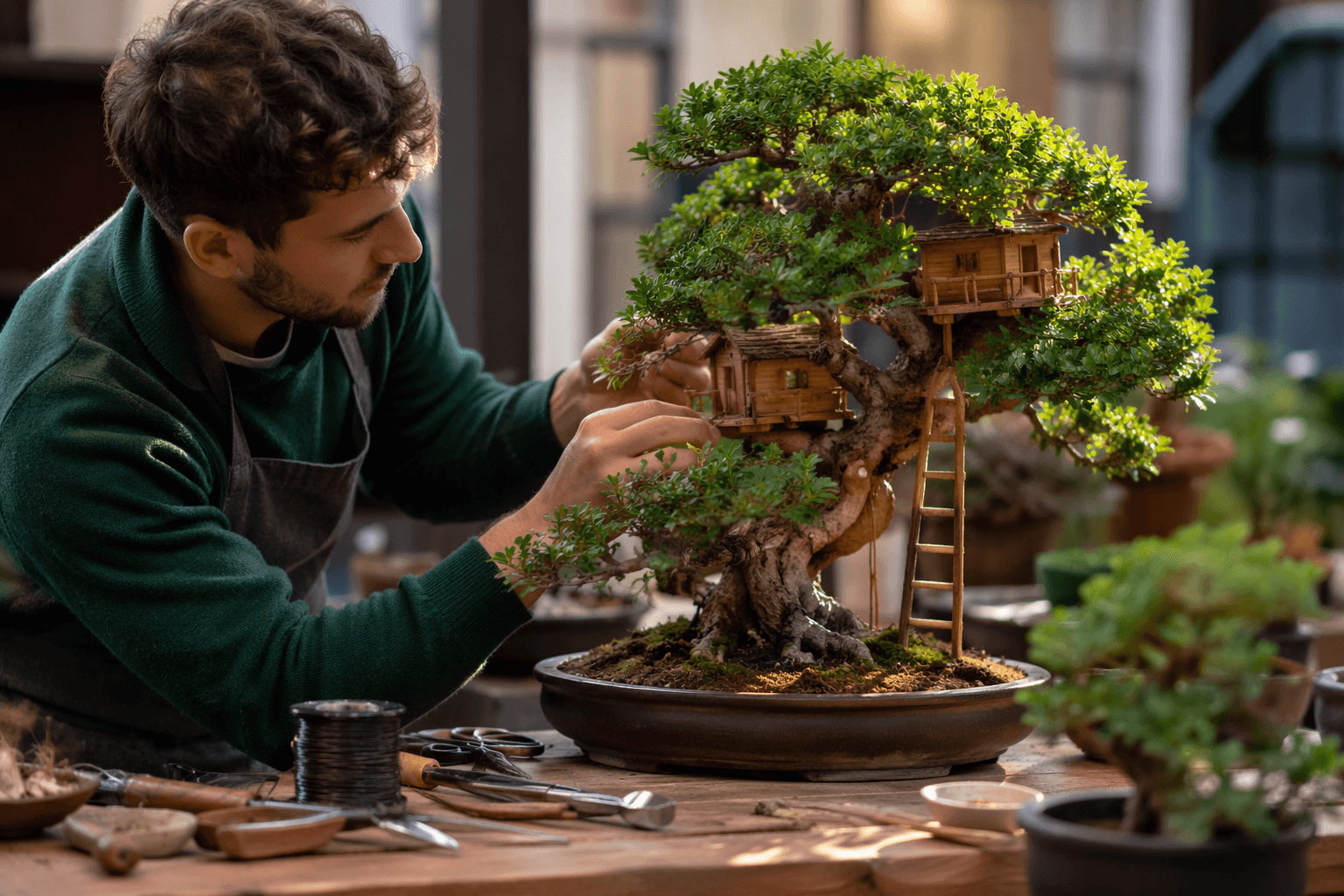
Beginners get the most value from three tools, bonsai shears, an 8-inch concave cutter and a quality wire cutter, because they protect tree health and speed learning.

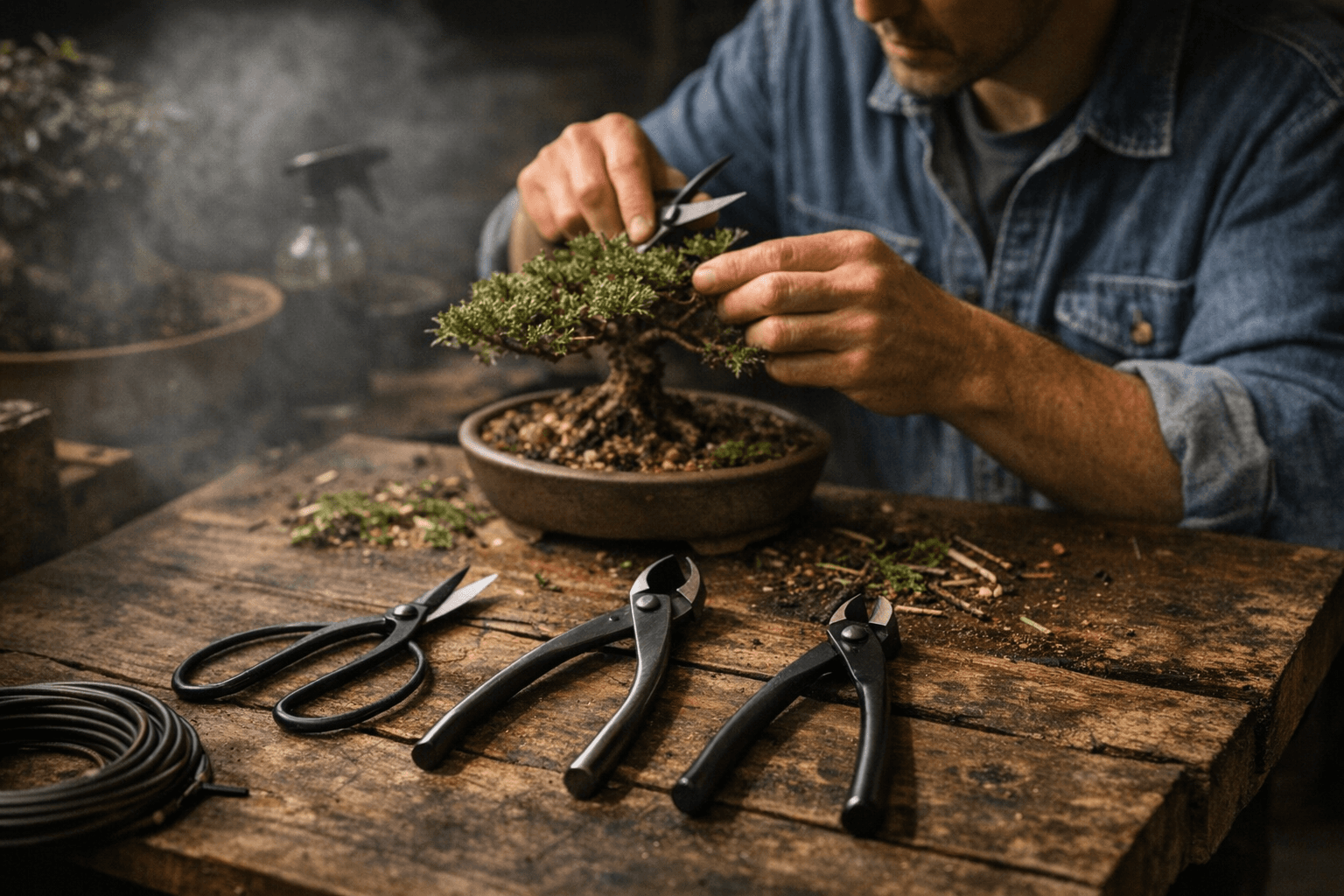
A compact, high-value starter kit will take a new bonsai grower a long way. Across how-to guides and community threads, the consensus points to three essentials: bonsai shears for everyday pruning, an 8-inch concave branch cutter for flush healing, and a reliable wire cutter for wiring without damaging bark. Buying well-made versions of those tools matters because they preserve tree health and make techniques easier to learn.
Pruning shears are the workhorse. Bonsai Trader summarizes their role: “everyday pruning and leaf trimming,” and gives practical sizing: “Fast Specs: 7 inches to 8 inches overall, scissor-action blades, replaceable springs.” The publication’s user experience illustrates the difference: “My cheap garden snips mangled a ficus branch. Switching to purpose-built bonsai shears felt like cutting butter with a hot knife. A narrow tip slips between internodes, and long handles give leverage for thumb-controlled power.” Choose a shape that matches your tree size and canopy access - narrow, long blades for dense centers and wider blades for thicker twigs.
A concave cutter is the second non-negotiable. Proper concave cuts encourage callus tissue to grow flat with the bark, improving healing and final appearance. “Most bonsai experts recommend the 8-inch size for starters - big enough for 1/2-inch branches, but small enough for tiny Shohin work,” Bonsai Trader says, and adds an upgrade tip for longevity and sharpenability: “Yasugi carbon steel tempered to 60 HRC provides a sweet spot between edge retention and sharpenability.” The same writer recalls a practical payoff: “The day I trimmed a juniper with my first Japanese concave cutter the wound healed so flush I had to squint to find it three months later.”
Wire cutters close out the trio because wiring is inevitable once shaping begins. Poor tools crush bark; “I once tried to snip 1.5 mm aluminum wire with household pliers. I ended up crushing the bark and leaving a dent,” Bonsai Trader warns. Portlandbonsai recommends choosing a capable compound cutter: “Buy the Knipex brand. I bought a cheaper $20 version and they hurt my hand and were trashed by steel wire.” The Knipex models cited will cut 4 gauge hardened copper wire without damage, a sound investment if you plan to work with heavier wire.
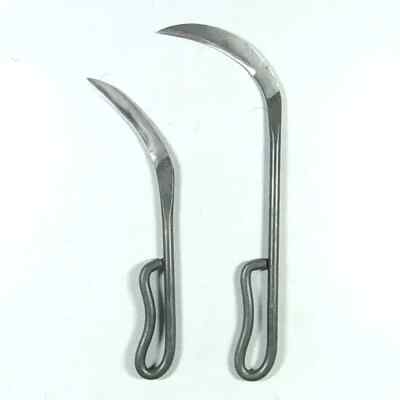
Beyond those essentials, hobbyists will add root hooks for repotting, a folding saw for larger cuts, a knob cutter for deciduous clean-up, and specialty items like rotary tools for Shari, but many advanced implements are optional. Portlandbonsai cautions that branch splitters and small bending jacks are often unnecessary for most home growers.
Tool care is part of the purchase decision. Clean and dry implements extend life and guard trees; forum advice recommends wiping tools with isopropyl alcohol between trees, while Bonsaiempire suggests rust erasers, grindstones for sharpening and gun oil or camellia oil for hinges. Community voices echo the practical path: Shabba on Jan 8, 2022 wrote, “The concave cutter is arguably the most used tool in the bag,” and Keith-in-UK added the social angle on Jan 9, 2022: “Once you have the basic tools you can then get family and friends to buy you the others for birthdays and christmas. Worked for me!!”
Start simple, buy quality where it counts, and keep tools clean. The payoff is healthier, faster-healing trees and a smoother learning curve as you move into repotting, wiring and styling. In the end, as one guide puts it, “your only goal should be a healthy and growing bonsai.”
This article was produced by Prism’s automated news system from verified source data, official records, and press releases, then run through automated quality and moderation checks before publishing. The system is built and supervised by the people who set the standards it runs under. Read our full AI policy.
Did this article answer your question?