Sacramento talk links clear comprehension, mindfulness and the brain
Rick Maddock's Sacramento talk turns sampajañña into a daily tool, linking body, speech and mind to neuroscience and the habits that shape who you become.

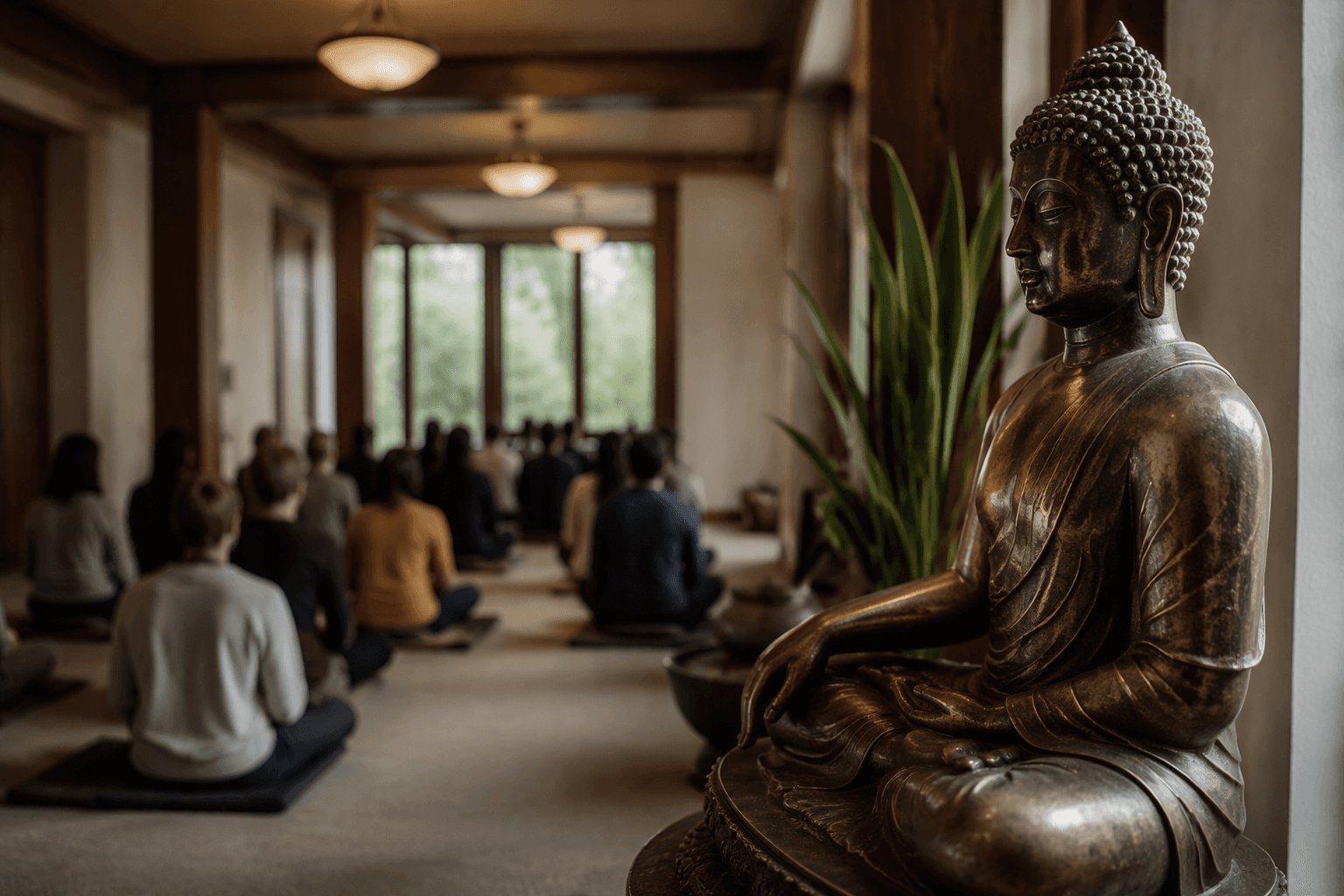
Sacramento Insight Meditation’s July 30, 2026 talk, “Clear Comprehension, Everyday Mindfulness and the Brain,” paired clear comprehension, sampajañña in Pali, with a neuroscience lens.
Clear comprehension as everyday mindfulness
Clear comprehension is an essential part of the mindfulness practices taught by the Buddha, not a side note or a technical add-on. In that framing, mindfulness is not just bare attention in the abstract, but awareness of what body, speech and mind are doing while life is already in motion. That is a different and more demanding way to understand practice, because it asks you to see how each ordinary choice leaves a trace.
When a reaction is forming in the body, a sentence is about to come out of the mouth, or the mind is already rehearsing the next task, clear comprehension gives you a moment to notice the shape of the habit before it hardens. The teaching presents that concrete angle as a way to understand how people are continually becoming through what they do, say and think.
Why the brain belongs in the same conversation
The talk was framed not only as a dharma teaching, but as a bridge to neuroscience. It would explore how the mind can be shaped or transformed by practice, including findings from modern neuroscience that converge with Buddhist teaching. That gives meditators a practical explanation of why attention training matters outside the meditation hall.
The neuroscience angle also broadens the audience beyond long-time practitioners. For people who come to insight practice through stress, therapy, or a curiosity about how habits work, the idea that the mind can be trained and transformed gives the teaching a tangible edge. It also fits a wider pattern in modern Buddhism: insight meditation has been one of the fastest-growing Buddhist meditative disciplines in the United States since the early 1980s, and the relationship between Buddhism and Western psychology has been examined for more than a century.
Rick Maddock’s established lane in the Northern California network
A Sati Center event recorded on December 12, 2022 carried the title “Perceiving and Remembering - Converging Views from Neuroscience and Early Buddhism with Rick Maddock.” He had already been presenting this meeting point between early Buddhism and brain science. Mountain Stream Meditation listed him in 2018 and 2019 as a visiting or guest speaker for talks on recent discoveries in neuroscience and how they relate to meditation practice and Dharma.

Those earlier listings placed Maddock in a familiar Northern California teaching network. One Mountain Stream listing identified him as a neuroscientist from UC Davis. Sacramento Insight Meditation’s archive page for Maddock shows that he had been a recurring speaker for the organization rather than a one-time visitor.
What this teaching looks like off the cushion
Clear comprehension here is less about sitting still and more about catching the live mechanics of habit while you are walking, speaking, typing or deciding what to do next.
- before you answer a message, when the hand reaches for the phone and the tone is already forming
- in the middle of a conversation, when the body tightens before the words do
- while moving through a crowded day, when switching tasks turns the mind scattered and reactive
A simple way to hear the teaching is to watch for three places where body, speech and mind reveal themselves:
The talk translated sampajañña into a usable skill: noticing how attention, habit and bodily feeling are already shaping the next moment.
A familiar Buddhist question, now with a modern vocabulary
Insight Meditation Center writings on mindfulness place the Buddha’s instruction to Ānanda around diligent practice, keeping the emphasis on disciplined attention rather than vague relaxation. A 2024 St Andrews Encyclopaedia of Theology entry on Buddhism and Western psychology notes that psychologists, psychiatrists and psychoanalysts have been studying, adapting and sometimes absorbing Buddhist ideas for more than 100 years.
This article was produced by Prism’s automated news system from verified source data, official records, and press releases, then run through automated quality and moderation checks before publishing. The system is built and supervised by the people who set the standards it runs under. Read our full AI policy.
Did this article answer your question?