Call of Duty Ranked Play battles cheating, smurfing, and device abuse
Ranked Play now lives or dies on trust: if RICOCHET and device bans hold, SR finally means skill instead of loopholes.
Ranked Play is being judged on trust, not just gunskill
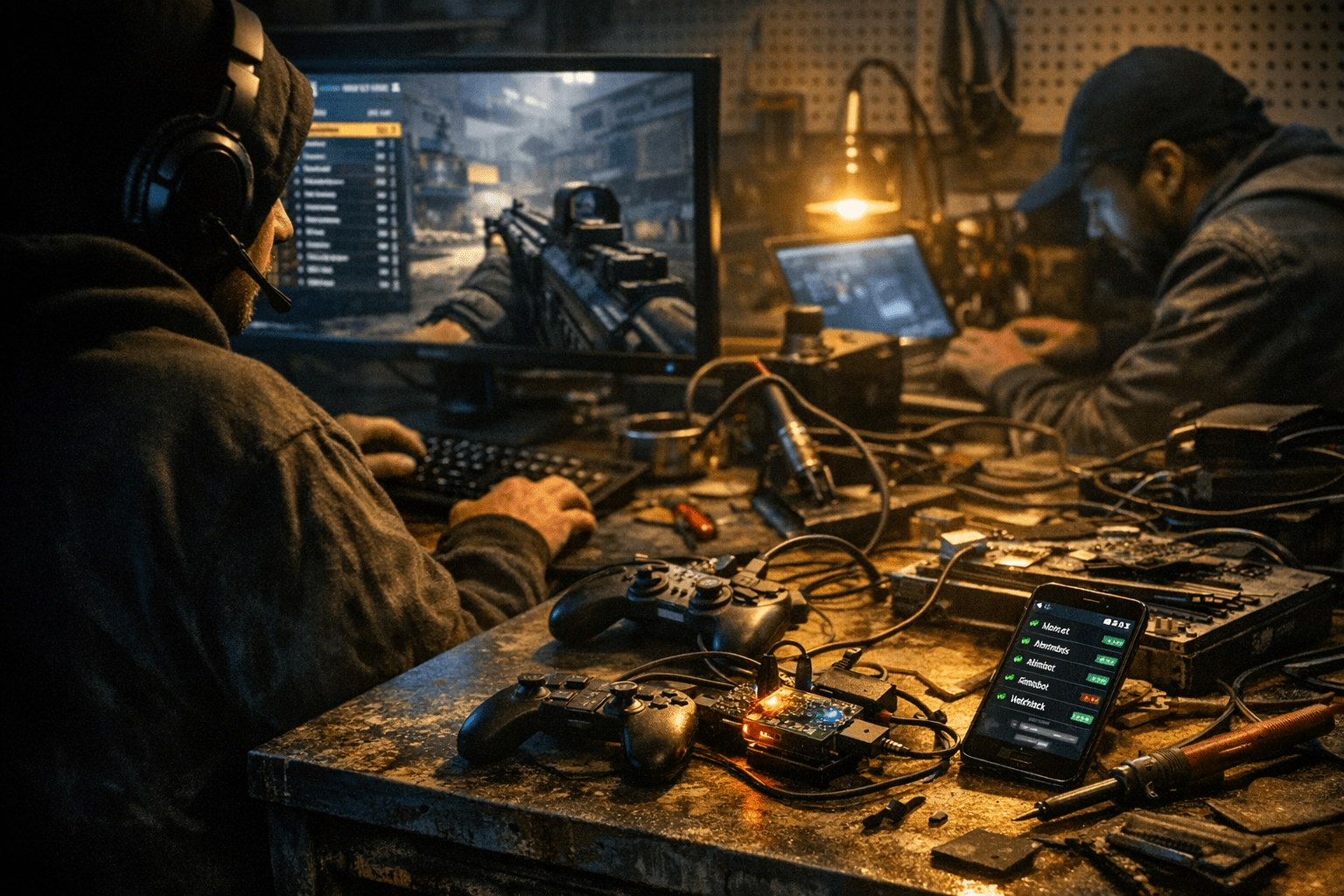
The hardest fight in Call of Duty Ranked Play is no longer only the one inside the match. It is the larger question hanging over every lobby: did that climb happen because of clean aim, smart rotations, and teamwork, or because someone leaned on outside tools, smurfed through lower skill bands, or abused a device that changes how the game feels to everyone else?
That is why RICOCHET anti-cheat, Ranked Play integrity, and enforcement against devices like Cronus Zen and XIM Matrix have become central to the mode’s future. In a ladder built around SR progression, every suspicious win does more than frustrate one opponent. It chips away at competitive identity, weakens trust in the board, and makes legitimate players wonder whether their time investment still means anything.
Why ranked players feel the damage first
Ranked Play is where Call of Duty’s fairness problems become easiest to feel and hardest to ignore. The mode is built around precision, repeatable gunskill, and tightly controlled rule sets, so even small forms of cheating or input manipulation can distort the entire experience. A public playlist can absorb some chaos. A competitive ladder cannot.
That is especially true when the same ecosystem serves casual players, high-volume grinders, and esports-focused competitors. Once enforcement slips, the effects spread fast. Clean players start to lose faith in close fights, creators start to question whether highlights are real, and serious competitors start treating the ladder like a stress test for the anti-cheat rather than a meaningful measure of skill.
Smurfing adds a second layer of damage. It is not just annoying to run into a much stronger player under a lower-rank account. It also pollutes SR progression, distorts matchmaking, and creates false signals about where a player actually belongs. In a mode where ladder position is part of competitive identity, that kind of distortion matters.
What device abuse changes in a match
The newest pressure point is not always a classic cheat in the old sense. Device abuse and controller modifications blur the line between legitimate play and unfair advantage, which is exactly why they have become such a flashpoint. When a device is used to automate recoil behavior or smooth out input in ways the game was never meant to allow, the result is not just a technical violation. It changes how opponents experience every gunfight.
That matters because Ranked Play is defined by repeatability. Players grind for consistency, not chaos. If one side can make their shots easier to control through outside hardware while everyone else is playing straight, the ladder stops rewarding the same skill set across the board. At that point, SR no longer feels like a clean record of performance. It becomes a record of who found the better workaround.
The community has grown sharper about this because the damage is so visible. A match that feels off does not need a long explanation. Players can tell when something about the pace, accuracy, or fight timing does not line up with what they expect from a normal ranked lobby.
Why RICOCHET matters more than another promise
Anti-cheat updates used to be treated like background maintenance. That mindset does not hold anymore. In today’s Call of Duty, RICOCHET is part of the competitive structure itself, because it helps determine whether a ranked ladder can still be trusted at all.
That is why enforcement is no longer just a technical footnote. It is a product feature, a community-management issue, and an esports safeguard at the same time. Stronger detection can restore confidence in public ladders, reduce the frustration that pushes legitimate users away from the mode, and make top-ranked players look like what they are supposed to look like: the best competitors on the server, not the best exploiters.
It also changes how the community talks about skill. When enforcement is credible, a climb through SR reflects game sense, teamwork, disciplined mechanics, and decision-making under pressure. That is the version of Ranked Play that supports the rest of the franchise, from solo queue grinders to viewers who care about high-level competition.
What a healthier ladder would actually look like
A better anti-cheat environment does not just make bad actors easier to remove. It changes the daily rhythm of Ranked Play in practical ways. Clean matches become more believable. Tough losses feel more like honest losses. And SR progression starts to carry the weight it is supposed to carry.
- Players trust close maps and clutch rounds more because the result feels earned.
- Top-ranked accounts gain more credibility because their position looks like proof, not suspicion.
- Content creators can cover competitive play with more confidence, which helps serious ranked gameplay get more attention.
- Esports discussion becomes more useful, because spectators can focus on tactics and execution instead of arguing over hidden advantages.
That is the real reason this issue has climbed to the center of the conversation. Ranked Play is not just a playlist where people chase rewards. It is the public-facing version of competitive Call of Duty, and its legitimacy affects how the whole game is perceived.
What players should watch for next
Any future Ranked Play overhaul will be judged by one simple standard: does it protect match integrity? If enforcement improves, more players will trust the ladder, more creators will treat competitive play as a serious story, and more spectators will see top-tier Call of Duty as a fair contest instead of a constant arms race.
That is why the current debate matters so much. Smurfing, device abuse, and cheat assistance do not just ruin isolated matches. They threaten the basic promise that SR means something. If RICOCHET and stronger enforcement can keep that promise intact, Ranked Play becomes more than a grind again. It becomes a ladder people can actually believe in.
This article was produced by Prism’s automated news system from verified source data, official records, and press releases, then run through automated quality and moderation checks before publishing. The system is built and supervised by the people who set the standards it runs under. Read our full AI policy.
Did this article answer your question?