Call of Duty’s server shutdowns reveal the franchise’s live-service priorities
When a Call of Duty server goes dark, it is not just nostalgia that disappears. It is a clue to where the franchise now places its money, players, and long-term trust.
Why a shutdown is never just a shutdown
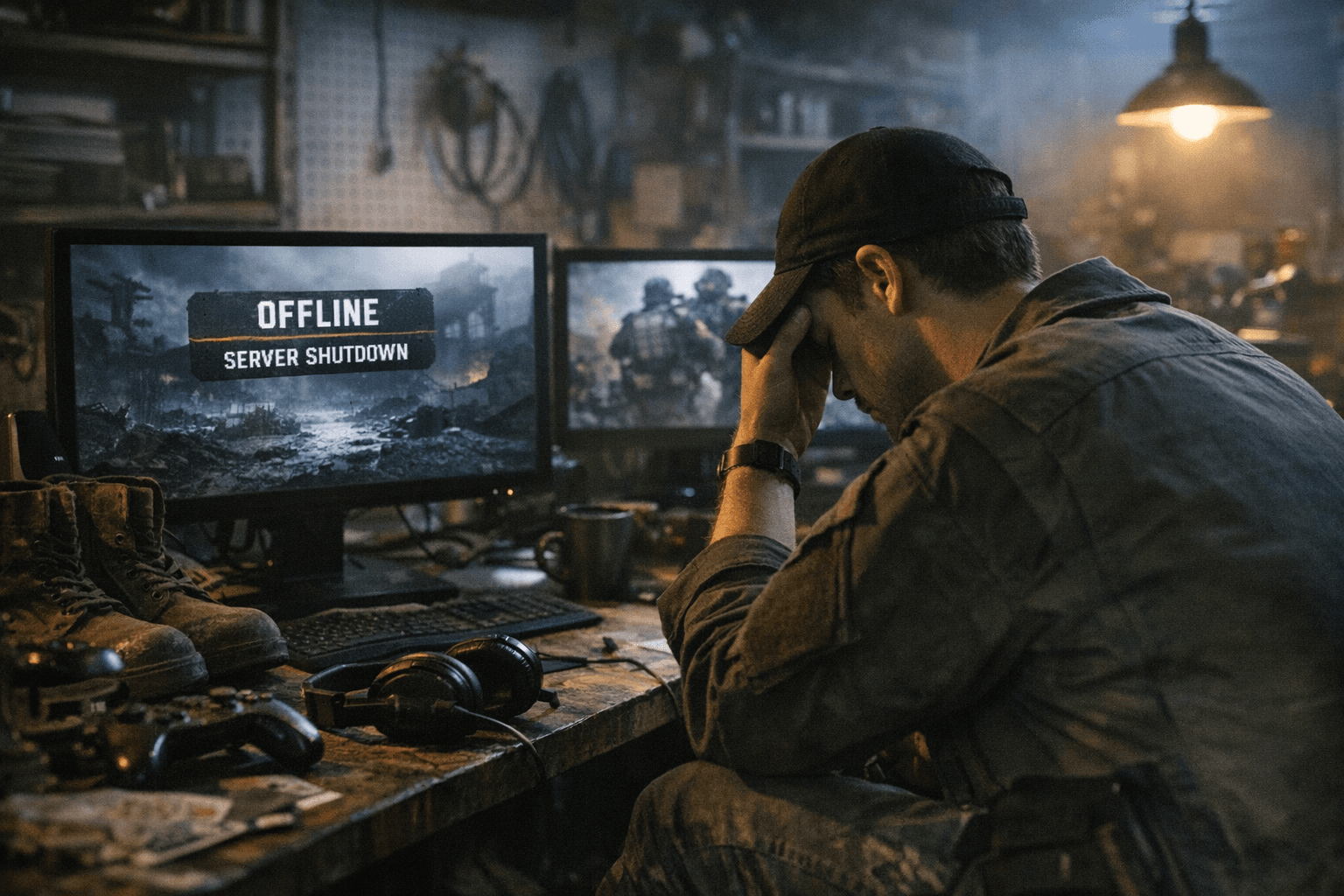
In Call of Duty, a server sunset is never only a technical note. It tells you how much value a game still has inside a franchise that now runs as a network of connected experiences, not just one yearly release. When support shrinks or ends, the impact reaches far beyond the title itself: matchmaking gets thinner, progression can stop meaning the same thing, store content loses its purpose, and the squads you built around a mode or game can scatter overnight.
That is why these moments hit harder in Call of Duty than in a lot of other series. The franchise spans years of multiplayer, Warzone integration, Zombies support, and mobile spin-offs, so every support transition affects a different slice of the ecosystem. If you have spent time, money, and social energy inside one of those slices, a shutdown can feel less like a maintenance decision and more like a verdict on the value of your investment.
What the shutdown pattern says about live-service priorities
The pattern is clear: Call of Duty is increasingly prioritizing the parts of the platform that keep the most players active and the most revenue streams efficient. That usually means heavier attention on the newest premium title, the dominant battle royale environment, and the most engaged competitive modes. Older products and less efficient services are the ones most likely to lose support when the business math changes.
That does not mean every old mode is doomed, but it does mean the franchise is making a louder statement about where the future lives. If a title is no longer central to player traffic, monetization, or infrastructure strategy, its odds of long-term support fall fast. The signal is not subtle: the ecosystem is being trimmed toward the spaces where engagement is strongest and maintenance makes the most sense.
The three pressure points that matter most
- Matchmaking health: If population drops, queues get slower and lobbies get worse.
- Progression continuity: If unlocks, stats, or rank systems no longer carry the same weight, the grind loses value.
- Store and social continuity: If store content, party networks, and long-running squads cannot survive a transition cleanly, the game stops feeling like a living home base.
Those are the first places a shutdown or support downgrade hurts. They are also the clearest signs that a title is slipping from active priority to managed wind-down. When those systems start to fray, the game is already telling you how much longer it expects to matter.
Why this feels different from simple nostalgia
Legacy support is rarely about sentiment alone. Players do not just lose access to a mode when a title goes dark. They lose a place where they formed squads, accumulated stats, built routines, and kept the game as part of their weekly habit. That is why shutdowns trigger such strong reactions even when the business case is easy to understand.
In Call of Duty, the emotional hit is tied to utility. A dead server means the social fabric of the game weakens, and that matters because the franchise has always been built around repeat play. Once the infrastructure backing that repeat play starts to disappear, the whole experience can feel less durable, even if the software still technically exists somewhere on your hard drive.
What to watch if you care about where to invest time and money
If you are deciding where to sink your hours, the most important question is not whether a game is fun today. It is whether the ecosystem around it still looks like it has a future. The research points to three things that should be on your radar: account migration rules, downloadable content ownership, and whether progression systems are shared across related products.
Those details matter because they determine how much of your investment survives a transition. A game that lets you move with your account, preserve ownership, or keep progression aligned with related products is a safer bet than one that strands everything in a closed-off version of the past. If a title or mode sits outside those systems, you should assume its long-term value is more fragile.
The practical consequences for players
- If your social circle is tied to one game, a shutdown can erase the easiest place to squad up.
- If your progress lives in a system that is not shared, your time can become harder to carry forward.
- If DLC ownership is messy, old purchases can stop feeling like investments and start feeling like sunk costs.
That is the consumer consequence that matters most. Server support is not just about whether a game runs. It is about whether the time and money you already spent still compound into something useful tomorrow.
Which parts of Call of Duty look most vulnerable
The most exposed parts of the franchise are the ones least aligned with current player concentration and infrastructure efficiency. That means older or less efficient services are the first candidates to fade, while the newest premium title, the main battle royale space, and the most active competitive modes get the strongest long-term support. Mobile spin-offs can face the same logic if they stop fitting the platform strategy cleanly.
That is the service map hidden inside every transition. Call of Duty is deciding, over and over again, which experiences deserve to stay connected to the future and which ones are allowed to become historical artifacts. Once you understand that pattern, shutdowns stop looking random. They become a guide to the franchise’s priorities.
What this means for the next wave of players
The future of Call of Duty will depend on how well it moves players between experiences without making them feel like their previous time, purchases, or achievements vanished into a void. That is the real test. A live-service franchise can afford to evolve, but it cannot afford to make every transition feel like abandonment.
So the lesson is straightforward: pay attention to support changes early, not late. The first signs of thinning infrastructure, weaker continuity, or awkward migration rules usually tell you more about a game’s long-term value than any marketing beat ever will. In Call of Duty, a server shutdown is not just the end of one space. It is the clearest signal yet about where the franchise expects the next war to be fought.
Know something we missed? Have a correction or additional information?
Submit a Tip