Call of Duty’s XR-3 Ion Vulcan turns a sniper into a minigun
The XR-3 Ion Vulcan makes the XR-3 Ion spray like a minigun, but the no-optic tradeoff keeps it tied to tight maps and close-range chaos.
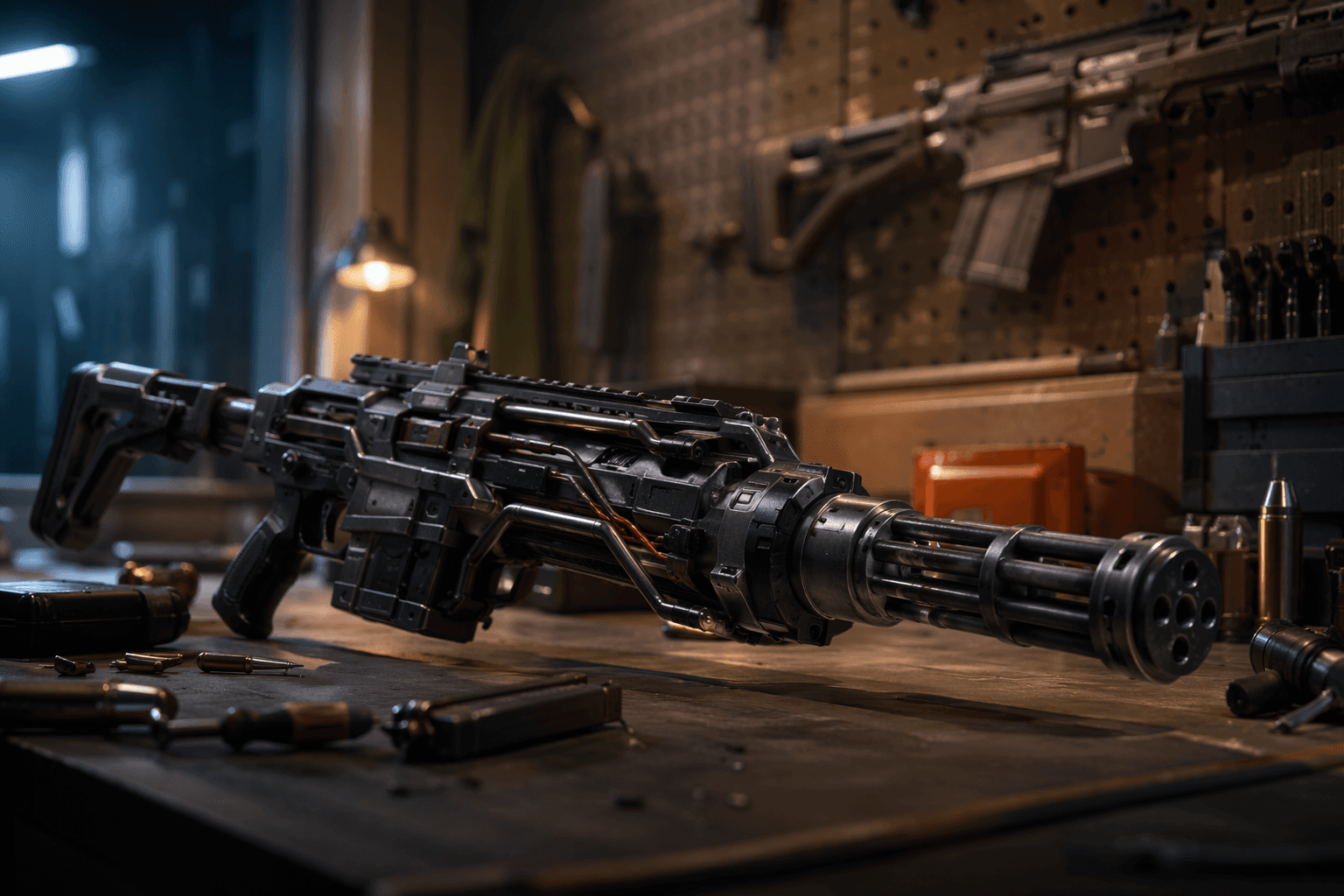
The XR-3 Ion Vulcan turns a three-round burst sniper rifle into a side-mounted, rotary-style close-range hybrid. The catch is just as important: you give up an optic, so this is not a cleaner sniper build, it is a deliberate swap into a much narrower job.
What the Vulcan actually changes
The XR-3 Ion is a three-round burst sniper rifle with high power, low recoil, slower handling, and a short pre-fire delay. That baseline matters, because the Vulcan is not replacing those traits with a traditional SMG profile. The attachment is a side-mounted foregrip-style add-on that gives focused hip fire, reduced spread, and improved aiming movement speed. In plain terms, it is built to let the XR-3 Ion survive in the spaces where snipers usually get bullied, not to make it a comfortable lane-holder.
That is why the attachment reads less like a joke and more like a pressure weapon. A sniper that can lean into hip-fire consistency and move better while aiming can create ugly fights at corners, stairwells, and objective entrances. It is still carrying the DNA of a hard-hitting rifle, but the Vulcan is designed to let it win the first contact when the engagement collapses into a panic spray.
Why the no-optic rule is the real tradeoff
The optic restriction is the part that decides whether the Vulcan becomes a legitimate build or a clip-friendly novelty. If you cannot run a sight, you are giving up the XR-3 Ion’s normal long-range comfort and forcing yourself into a very specific envelope. That means the attachment is not asking whether the rifle can still beam lanes; it is asking whether you want a sniper that can function like a point-blank bully when someone rounds the corner.
That tradeoff also limits how much of the gun’s identity survives. High power and low recoil are still on the card, but the slower handling and short pre-fire delay mean the weapon is not magically becoming a fast swap monster. You are getting a tighter, more controlled close-range profile, not a free pass to run the XR-3 Ion like a conventional automatic.
How it plays in real matches
The best way to think about the Vulcan is as a hybrid that wants to live between sniper and crowd-control weapon, and that makes the usual combat questions more important than the novelty. TTK becomes attractive only if you are consistently landing the early shots, because the XR-3 Ion still pays a handling tax that keeps it from feeling like a true SMG. In practice, that makes the opening burst or hip-fire burst the whole story: if the first contact lands, the rifle can feel oppressive; if you miss, the delay and reload rhythm can expose you badly.
Recoil control looks like the attachment’s safest selling point. The base XR-3 Ion already has low recoil, and the Vulcan’s reduced spread and focused hip fire should make the weapon easier to keep on target when you are not aiming down a sight. That matters most in cramped interiors and at the edge of objective circles, where stable spray control often decides whether you win the trade or get deleted before your second burst matters.
Mobility is the other half of the appeal. Improved aiming movement speed means the gun should feel less glued to the floor than a normal sniper setup, which is exactly what you want if you are using it to contest aggressive pushes. The tradeoff is that mobility alone does not erase the XR-3 Ion’s slower handling, so this is still a build that rewards pre-aiming, smart spacing, and knowing where enemies are forced to appear.
Ammo burn and the hidden cost of spraying
The minigun fantasy is fun until the ammo counter starts draining. A build that leans on hip fire and sustained pressure will chew through rounds much faster than a standard sniper rhythm, especially if you start taking loose fights instead of picking your moments. That makes ammo burn a real balancing factor, because the attachment’s strongest moments come from force, not restraint.
In other words, the Vulcan gets expensive fast when you miss. If you are used to a sniper rifle that can hold a lane patiently and wait for perfect targets, this setup asks you to spend more bullets, take more fights, and accept more waste.
Where it makes the most sense
The Vulcan is at its best in tight, chaotic spaces where sightlines are short and people chain pushes into one another. Small maps, hardpoint breaks, hill defenses, staircase fights, and building interiors all favor the attachment’s hip-fire and spread control. It is also the kind of build that can punish teams who overcommit to close-range timing, because the XR-3 Ion’s power still gives each successful burst more punch than a normal automatic.
It is much shakier in open lanes and long-range holds. If you need to watch cross-map approaches or anchor a space with an optic, the Vulcan is working against the rifle’s natural strengths. It is not a universal upgrade; it is a specialist conversion for players who want a sniper that behaves like a bruising rush weapon.
How to unlock it and why the timing matters
The attachment arrives through Weekly Challenges after the mid-season update, and weekly rewards come from completing any six challenges across the four supported modes: Multiplayer, Endgame, Zombies, and Warzone. The Vulcan sits inside a pool of 24 available challenges, so the unlock path is broad rather than mode-locked. That lowers the barrier for players who bounce between modes instead of living in one playlist.
Season 04 began on June 4, 2026, and Reloaded launches June 25, 2026. The same update also brings the DS20 Mirage Dual Fire Kit and the Velox 5.7 Carbine Chassis, while the broader Season 04 roadmap includes the M10 Breacher Argus Lever and the weekly-challenge rewards pool. The update also includes the Black Ops 7 Multiplayer and Zombies free trial, excluding Multiplayer Ranked Play.
This article was produced by Prism’s automated news system from verified source data, official records, and press releases, then run through automated quality and moderation checks before publishing. The system is built and supervised by the people who set the standards it runs under. Read our full AI policy.
Did this article answer your question?