An Jung-geun calligraphy sells for record 2.7 billion won in Seoul
An Jung-geun’s calligraphy hit 2.7 billion won in Seoul, with a century of custody, a left-palm imprint and a court ruling pushing it into record territory.
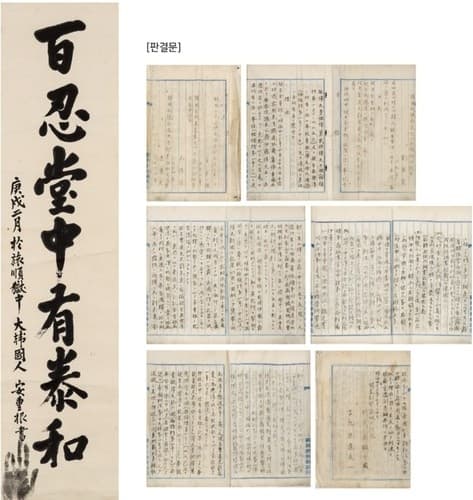
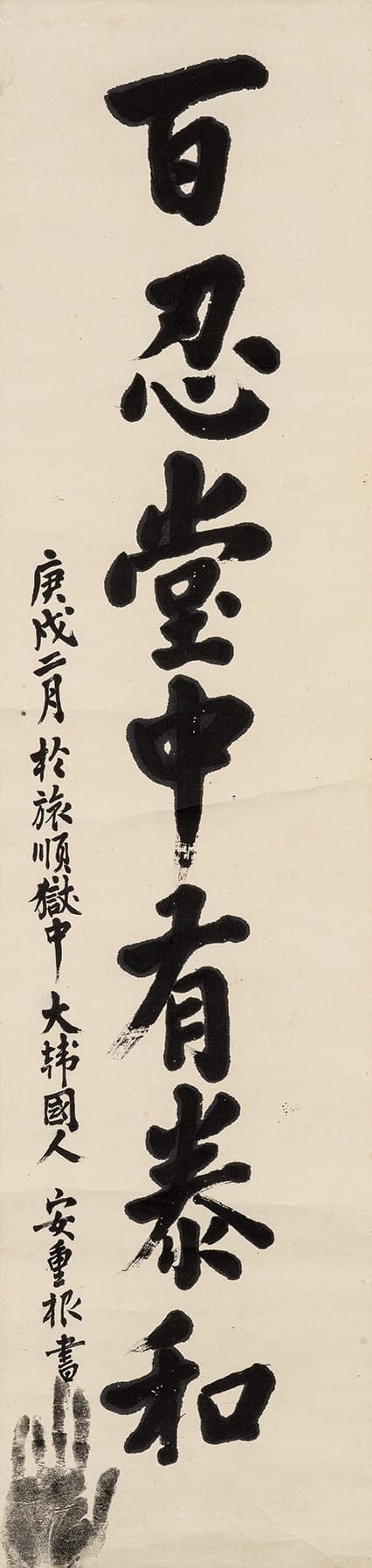
An Jung-geun’s calligraphic work drew 2.7 billion won at auction in Seoul, setting a new domestic record for one of his pieces and turning a sheet of brushwork into a blue-chip historical object. The sale paired the calligraphy with a printed copy of the ruling that sentenced him to death, sharpening the sense that this was as much a document of political memory as a work of art.
Bidding opened at 1.6 billion won and climbed quickly before closing 1.1 billion won higher. That kind of jump is rare in calligraphy, but the work carried three things collectors prize at once: a name tied to Korean independence, a surviving legal document from the same moment in history, and the kind of scarcity that only comes when a piece has spent more than a century out of circulation.
The text itself was written shortly after An’s death sentence and was preserved for more than 100 years. It was acquired in Manchuria during the Japanese colonial era and remained with one family until it surfaced through the auction. That custody history mattered as much as the brushwork, because provenance in historic calligraphy often decides whether a piece sits in the realm of heritage or simply old paper.

An’s left-palm imprint gave the work another layer of force. In calligraphy, a handprint can do more than authenticate a piece; it fixes the maker’s body in the object, and here it made the work feel less like an abstract text and more like a personal trace from a man who became a symbol of resistance. The phrase was presented as one about patience, peace and harmony, a combination that reads differently when set against An Jung-geun’s execution and place in modern Korean memory.
The work is designated National Treasure No. 569-1, which places it firmly inside South Korea’s cultural heritage system rather than only the auction market. That status helps explain why the sale was watched as a test case for historic calligraphy: a field where meaning, condition, rarity and provenance can outweigh simple age or aesthetics.
The previous auction record for an An Jung-geun calligraphic work was set in December 2023, and another piece sold for a lower amount last year. Put together, those results show that the market is not just paying for a famous name. It is paying for the collision of politics, brushwork and documented history, the exact mix that pushed this Seoul sale into record-setting territory.
This article was produced by Prism’s automated news system from verified source data, official records, and press releases, then run through automated quality and moderation checks before publishing. The system is built and supervised by the people who set the standards it runs under. Read our full AI policy.
Did this article answer your question?