Fatima Alsharshani brings Arabic calligraphy to Montreal mural festival
Fatima Alsharshani turned Arabic script into a street-scale mural at Montreal’s MURAL Festival, linking a Margaret Atwood prompt to Qatar Canada and Mexico 2026 Year of Culture.
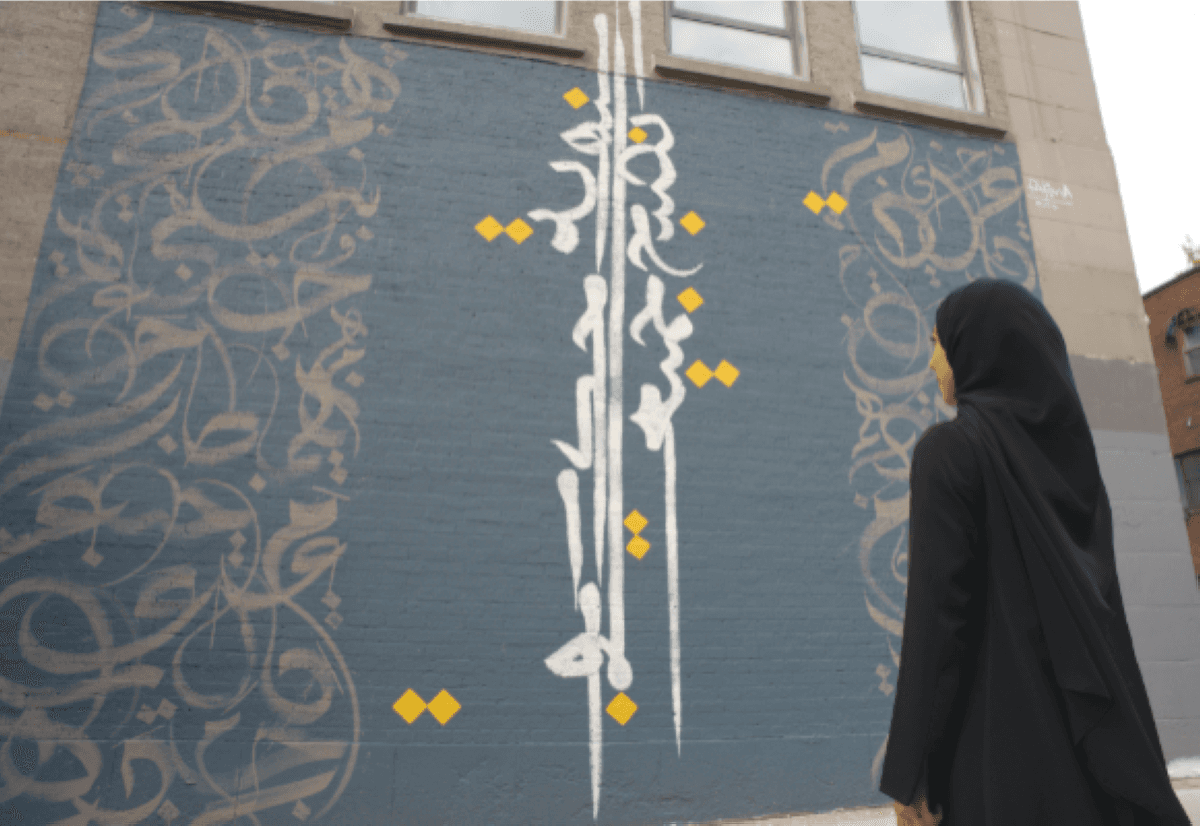
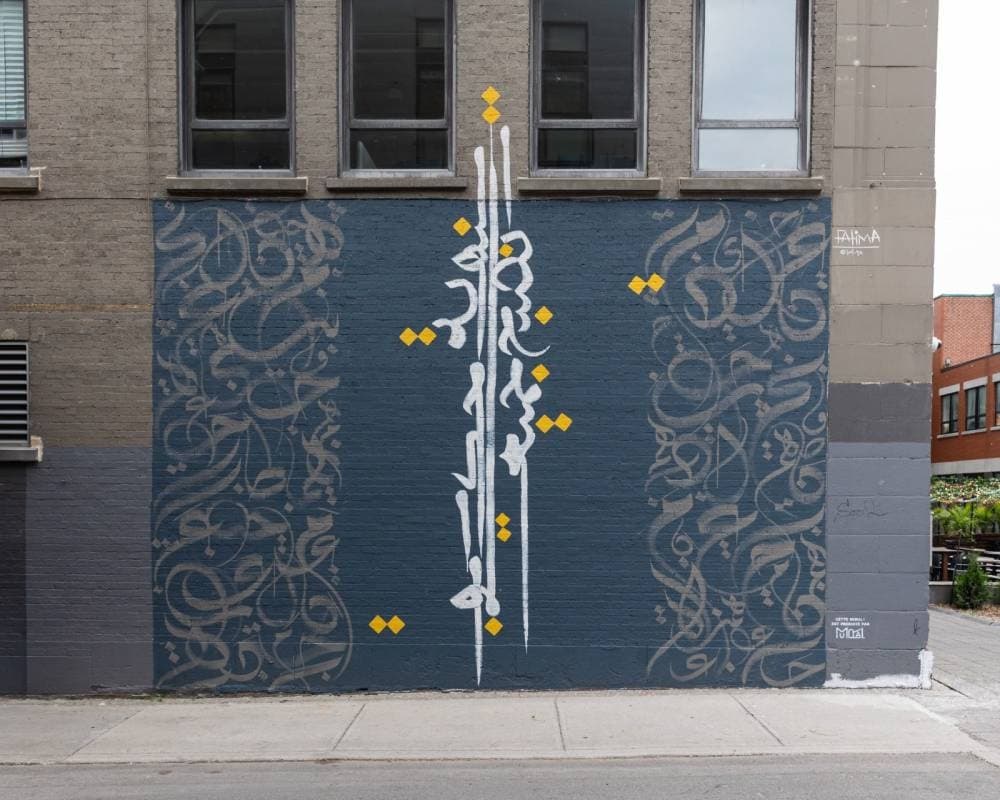
Fatima Alsharshani put Arabic calligraphy in front of Montreal’s street-art crowds at the MURAL Festival, where her mural on Saint-Laurent Boulevard turned script that usually lives on paper into a wall-sized public read. The Qatari calligraphy and calligraffiti artist used the project to connect memory, identity and cultural exchange in one of North America’s most visible mural settings.
The mural was inspired by a line from Margaret Atwood about people becoming stories, but Alsharshani’s work pushed beyond literary reference. On a boulevard known as an open-air gallery, Arabic letters had to do more than sit beautifully on a page. They had to hold up at distance, carry motion across a large surface and stay legible to people passing by in the flow of festival traffic rather than standing still in a studio or gallery.

That shift in scale matters in calligraphy, especially for a tradition built on control, rhythm and proportion. On a mural wall, every curve has to survive urban distance and changing sightlines, while still preserving the sweep that makes Arabic script feel alive. Alsharshani’s piece placed that visual language in the middle of contemporary street art, where the audience included regular festivalgoers, casual passersby and readers who may never have approached calligraphy as an art form rooted in technique and heritage.
The project also carried the diplomatic weight of the Qatar Canada and Mexico 2026 Year of Culture. That frame gave the mural a second life beyond Montreal, positioning it as part of a broader exchange between Doha and the city’s public art scene. Saint-Laurent Boulevard, which draws large crowds each year, became the setting for that exchange, and the mural read as both an artwork and a shared cultural gesture.
The connection between the two cities was built earlier, when MURAL Festival founder Nicolas Munn Rico visited Doha during World Wide Walls in December 2025. That meeting helped set up a collaboration that now places Arabic script in one of Montreal’s most public settings. Alsharshani said the theme of traces and legacy resonated with her because it asks what people leave behind through choices, relationships and influence. On that wall, Arabic calligraphy did what it does best: it carried memory outward, in full public view, and made the act of reading feel like part of the street itself.
This article was produced by Prism’s automated news system from verified source data, official records, and press releases, then run through automated quality and moderation checks before publishing. The system is built and supervised by the people who set the standards it runs under. Read our full AI policy.
Did this article answer your question?