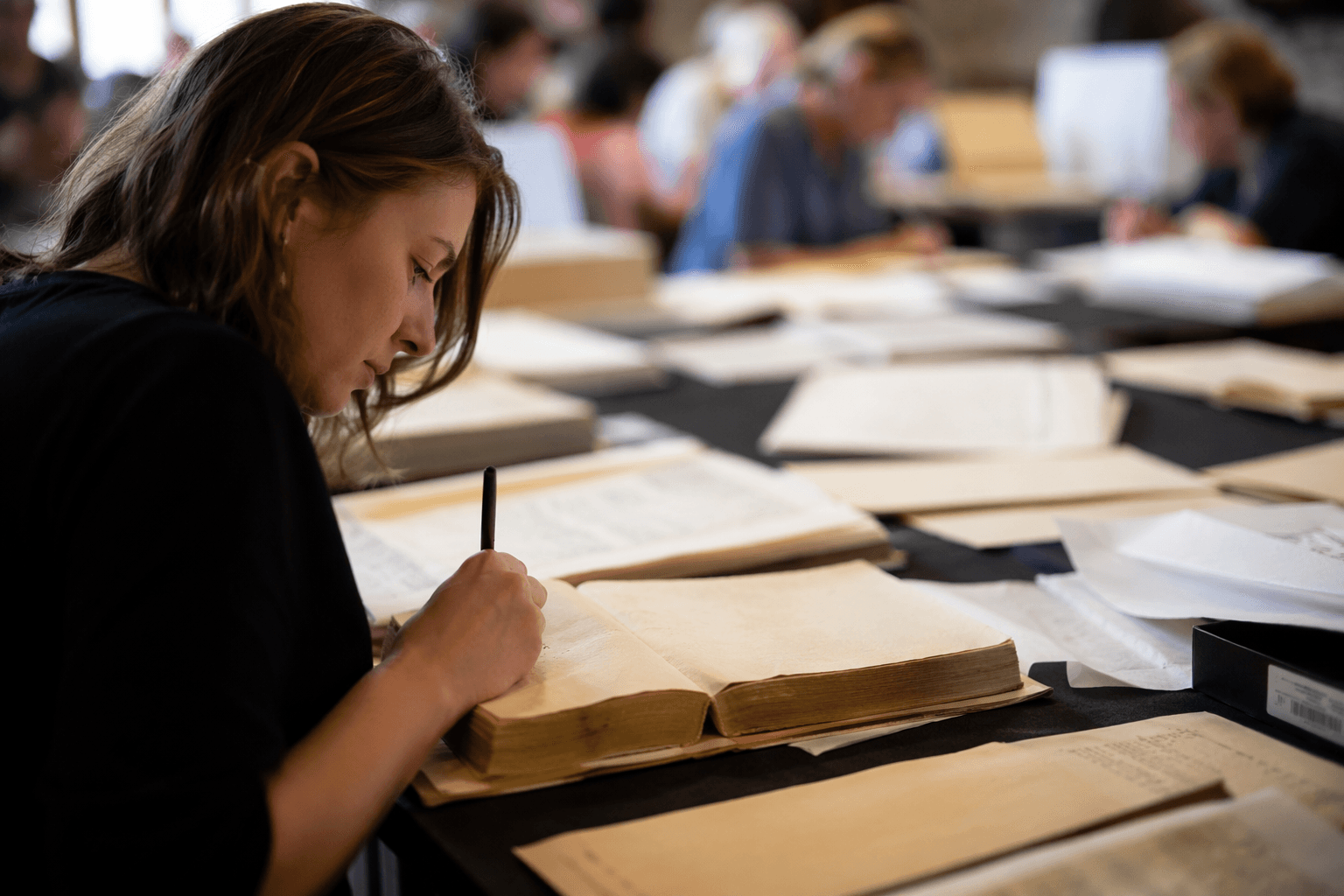
Spokane calligraphy guild keeps beautiful handwriting alive amid cursive decline
Spokane’s calligraphy guild is turning lost cursive lessons into workshops, exhibits, and steady beginner access. Its monthly meetings keep decorative handwriting practical, social, and very alive.

The Spokane Calligraphy Guild is doing the quiet, stubborn work of keeping beautiful handwriting visible in a city where cursive no longer gets much room in school. Founded in 1982, the guild still meets monthly from September through June at Spokane Art Supply on North Monroe Street, giving people a place to practice lettering instead of just admiring it from afar.
A guild built around regular practice
That monthly rhythm matters. Calligraphy does not stay sharp on inspiration alone, and a standing meeting gives local letterers a place to compare nibs, paper, ink, and letterforms without turning the craft into a one-off hobby. Spokane Art Supply, at 1303 N. Monroe St. in Spokane, has become the natural home base for that work because it is already a local hub for classes and workshops.
The guild’s strength is that it treats calligraphy as something learned in community. A beginner can walk into a meeting and see the difference between formal scripts, playful lettering, and the slower, more deliberate hand that calligraphy demands. That kind of repeated exposure is exactly what schools used to provide and now often do not.
The library partnership makes the craft public
The Spokane Public Library partnership pushes the guild beyond its own membership and into the broader public square. The exhibit, titled “Calligraphy: The Art of Beautiful Lettering,” pairs work from guild members with items from the library’s Inland Northwest Special Collection, which gives the show both craft and context. It is not just a display of pretty alphabets; it is a reminder that handwriting has a local history worth preserving.
The library also hosted “Whimsical Hand Lettering,” a beginner-friendly workshop presented by the guild. The workshop was framed as a fun way to add delight to handwriting for name cards, envelopes, and creative projects, which is exactly the right entry point for people who think calligraphy is too formal or too advanced to try. Start with a name card or an envelope, and the craft suddenly feels usable instead of intimidating.
That practical angle is important. A lot of people do not come to calligraphy looking for a museum piece. They come because they want their holiday cards, place cards, or art journals to look better, and a workshop that connects letterforms to real-world uses lowers the barrier fast.

Why the guild’s work lands in the middle of a school gap
The Spokane guild’s role makes more sense once you look at what has happened to cursive instruction. Washington state’s current learning-standards materials describe the K-12 ELA standards as a revision of the Common Core adopted in 2011, and those materials emphasize broader literacy expectations rather than cursive specifically. That leaves handwriting less visible in the classroom than it once was.
State legislative records also show that Senate Bill 5238 in 2017 tried to add “handwriting including cursive writing” to the required subjects in common schools. The bill is a useful marker because it shows that the loss of cursive was not just a nostalgic complaint from adults who learned it decades ago. It had become a real policy issue.
The academic side of the debate has not gone away either. At the University of Washington College of Education, professor Virginia Berninger has researched print and cursive writing and their impact on student learning. Her work keeps the conversation grounded in how handwriting affects literacy, not just how it looks on the page. That matters in Spokane, where the guild is effectively carrying forward a skill that still has educational value even when schools no longer center it.
School exposure still shapes who picks up the pen
Vicki Hall’s path into calligraphy shows how much a single class can matter. She says a high school lettering class introduced her to the craft, which is the kind of small, early exposure that can turn into a lifelong practice. Once that doorway disappears from schools, guilds like Spokane’s become the place where the first spark is more likely to happen.
That is why beginner access is not a side benefit here. It is the whole model. When a guild offers monthly meetings, a public library workshop, and an exhibit that shows what members can do, it creates more than a showcase. It creates a route in.

What Spokane’s calligraphy scene offers beginners
For someone trying calligraphy for the first time, Spokane has a straightforward path into the craft:
- Start with a public workshop such as “Whimsical Hand Lettering,” which is built for newcomers and practical projects.
- Visit the guild’s monthly meetings at Spokane Art Supply, where regular practice makes the basics easier to absorb.
- Look at the library exhibit to see how members combine technique, design, and local history.
- Treat the first tools as part of the learning curve, not a barrier. In calligraphy, paper, pen, and patience matter as much as talent.
That combination of instruction, visibility, and repeated practice is what keeps a niche craft from shrinking into private nostalgia. The guild does not just preserve a script style. It keeps the social machinery around lettering intact, which is how skills survive after formal instruction thins out.
Part of a wider network that still teaches
Spokane is not working alone. Other regional calligraphy groups and national societies continue to support instruction, exhibits, and scholarships for handwriting study, which gives the craft a broader support system beyond one city or one club. That wider network matters because it keeps the practice connected to teaching, not just collecting.
Spokane Art Supply sits at the center of that local effort, but the real story is bigger than one venue. A guild founded in 1982 is still meeting, still teaching, and still pulling new people toward the page. That is how cursive survives when schools stop teaching it: one workshop, one meeting, and one careful letter at a time.
This article was produced by Prism’s automated news system from verified source data, official records, and press releases, then run through automated quality and moderation checks before publishing. The system is built and supervised by the people who set the standards it runs under. Read our full AI policy.
Did this article answer your question?