2026 yacht design trends, hard tops, solar power reshape catamarans
The big 2026 catamaran story is utility, not flash: hard tops, solar roofs and easier deck flow are becoming the features that change how cats live and cruise.
The clearest design shift for catamarans is not a flashy hull shape or a prettier logo on the transom. It is the way builders are turning every usable surface into shade, power and living space, while making the boat easier to move around once you are aboard. That is the real lesson running through the current yacht-design conversation: the multihull is still the platform where practical innovation lands first.
Hard tops are becoming part of the catamaran’s identity
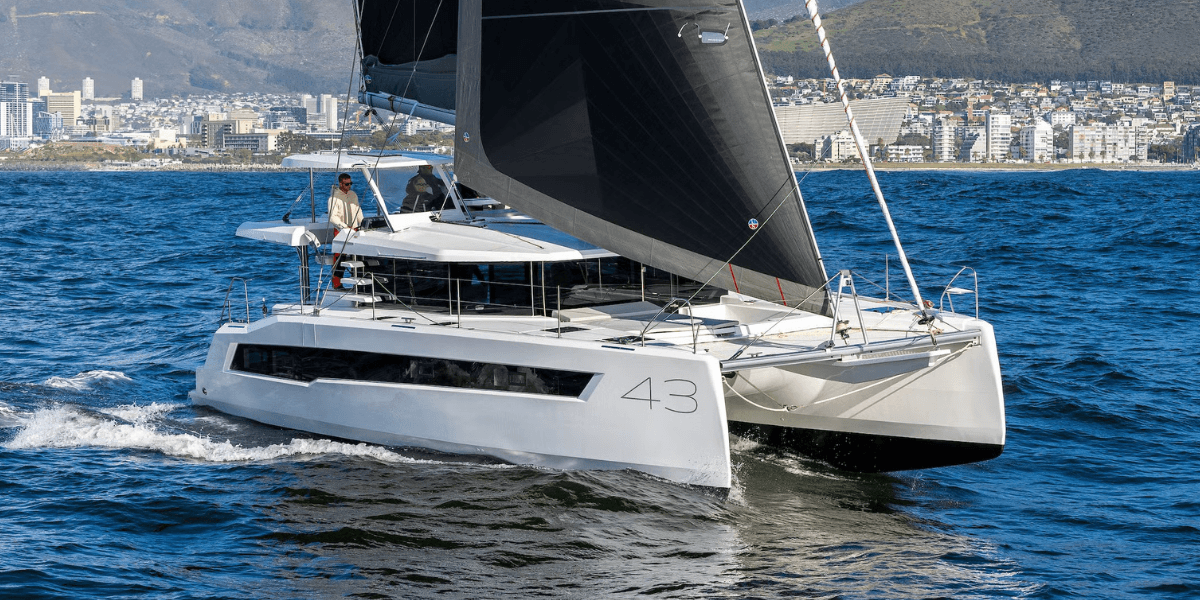
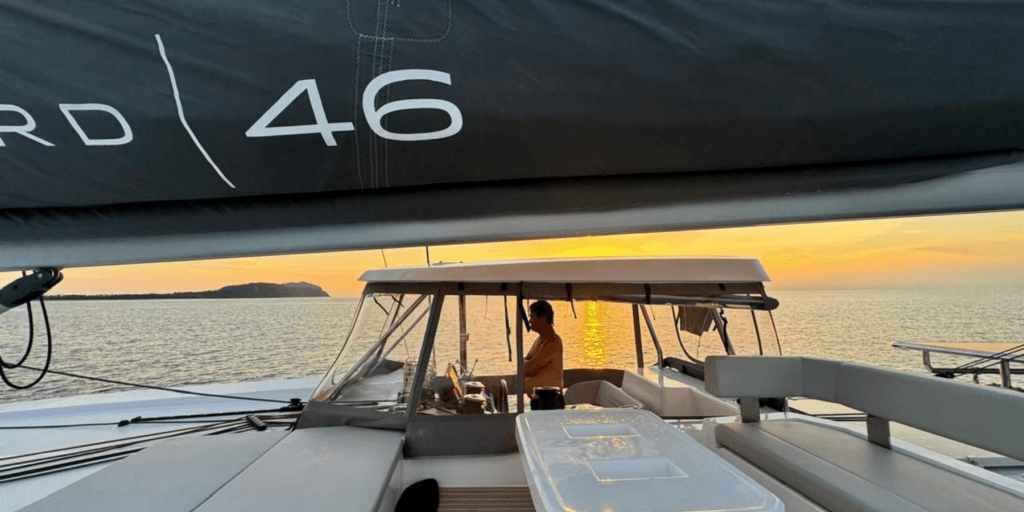
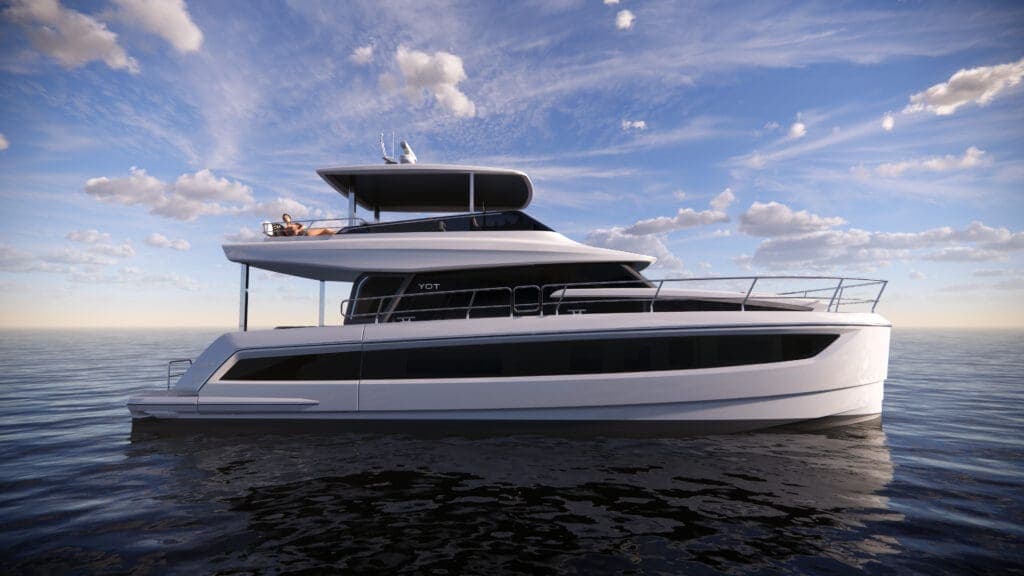
Hard tops have moved far beyond the old idea of a fixed roof as a simple weather cover. On a catamaran, they now do triple duty: they provide shade, create shelter in wet or windy conditions, and open up a strong structural platform for solar arrays. Because cats already offer broad beam and protected outdoor living, a well-designed hard top can make the whole boat feel more like a floating terrace than a compromise between interior and deck space.
For buyers, the real question is not whether the boat has a hard top, but how that structure is integrated. Look at sightlines from the helm, drainage, access to maintenance areas and whether the roof steals headroom or creates dead space. A good hard top should feel like a natural extension of the catamaran’s volume, not an add-on that just adds weight and windage.
Solar is no longer a lifestyle garnish
Solar is now one of the clearest reasons catamarans are attracting attention in the first place. Bigger energy demands from electric propulsion, induction cooking and more elaborate onboard systems are pushing builders to treat every square foot of roof and deck as a potential power source. Flexible deck-mounted panels are part of that push, because they let designers capture energy from surfaces that would otherwise sit idle.
Sunreef Yachts has been especially explicit about this direction, presenting Solar Skin 3.0 as part of a broader design evolution across its catamaran lineup. Silent Yachts gives the trend historical depth: its first prototype, the Solarwave 46, launched in 2009 as a fully solar-electric, self-sufficient ocean-going catamaran, and the company says its yachts have since cruised many tens of thousands of nautical miles. That matters because it shows solar cats are not a fad chasing a trade-show buzzword, but a platform that has been proving itself for years.
The practical takeaway is simple. If you are comparing boats, ask how the solar system works in the real world: how much panel area is genuinely usable, how shading affects output, where the batteries live, and whether the electrical architecture can keep up with the boat’s habits. A catamaran with a generous roof and a serious energy plan will age better than one that looks efficient in a render but struggles once the air-conditioning, galley and propulsion are all running.
Deck flow is where the multihull advantage shows up every day
Another trend that matters far more than glossy styling is easier circulation on deck. Builders are increasingly designing walk-throughs and cockpit-to-side-deck routes that reduce awkward climbing and make life aboard more accessible. On a catamaran, that is not a minor comfort feature. It is the difference between a boat that feels naturally open and one that forces you into little compromises every time you move from helm to bow or from cockpit to dock.
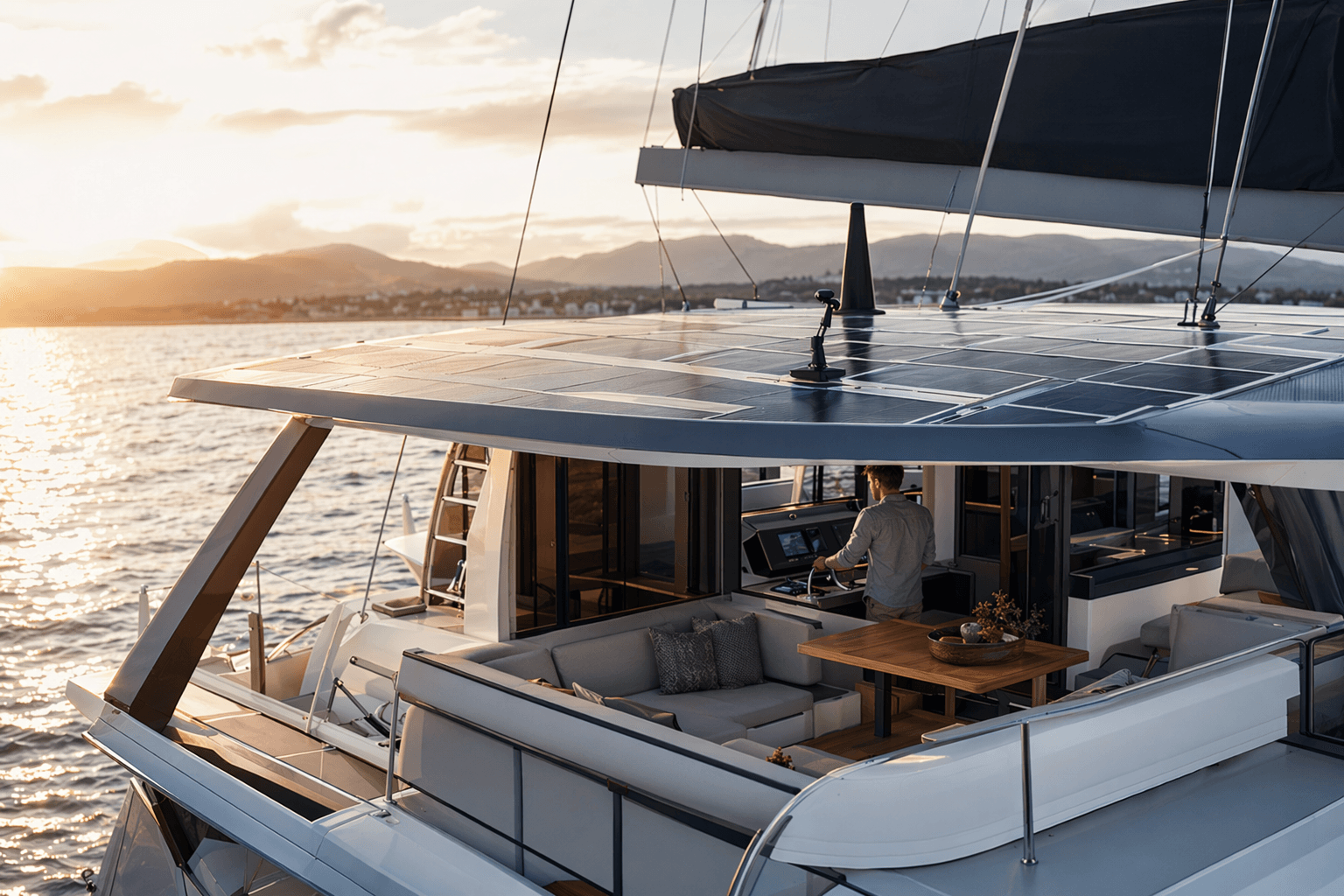
This is also where cats quietly beat a lot of monohull design chatter. Some of the industry’s obsession with sleek profiles and low visual drama does not translate as well to a multihull, because the cat already wins on volume, separation of spaces and protected movement. What really matters is whether the layout lets you move with one hand free, whether the side decks are genuinely usable and whether the helm position makes sense when you are docking in crosswind or handling lines under pressure.
- Can you move from cockpit to side deck without a step-over gymnastics routine?
- Can one person dock the boat without losing visibility or control?
- Are the handholds, helm controls and sail controls placed where real crew will use them?
- Does the layout still feel easy when the boat is loaded for cruising, not just photographed at the dock?
For a buyer or refit owner, the deck-flow checklist should be brutally practical:
Chart tables are back because serious cruising never went away
The return of chart tables is not nostalgia for paper alone. It is a sign that sailors still want a dedicated place to work, read weather, plan passages and manage logistics without turning the saloon into a temporary command center. On cruising catamarans especially, that matters because the modern open-plan interior can be so expansive that it actually needs a defined working corner to keep the boat organized.
This is one of those areas where multihulls have always had an edge, because volume makes it possible to build both social space and a useful nav station. If your boat is aimed at long-range cruising, a chart table should not be decorative. It should support the way you actually sail, whether that means passagemaking, weather routing or simply keeping a clean handoff between relaxed living and serious boat management.
The show calendar shows where the pressure points are
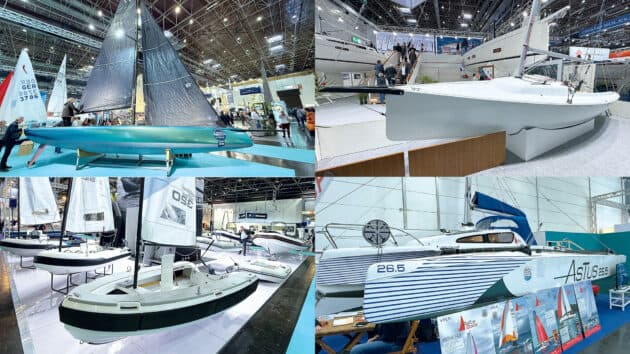
The broader market mood around all of this is cautious but active. boot Düsseldorf says its 2026 event runs from January 17 to 25 and will host more than 1,500 exhibitors from 68 countries across 16 halls, while Cannes Yachting Festival is scheduled for September 8 to 13 and describes itself as Europe’s leading in-water boat show and the world’s no. 1 show for large sailing boats. Those are not just date markers; they are where the industry tests which ideas have enough momentum to become standard equipment.
That matters for catamaran owners because the multihull sector is increasingly treated as the innovation lane. The current market spans solar-electric, hybrid and performance-focused models, which is another way of saying catamarans are no longer just about charter volume or liveaboard comfort. They are becoming the platform where energy systems, layout logic and long-range self-sufficiency are all being worked out at once.
The recognition is showing up in awards and brand strategy too. Several Aquila catamaran models have been shortlisted for the 2026 Yacht Style Awards, a sign that the industry is rewarding designs that solve real ownership problems. With Silent Yachts and Nuvolari Lenard moving toward a new solar yacht range for 2026, the message is hard to miss: the multihull world is not borrowing the future from monohulls. It is helping define it.
This article was produced by Prism’s automated news system from verified source data, official records, and press releases, then run through automated quality and moderation checks before publishing. The system is built and supervised by the people who set the standards it runs under. Read our full AI policy.
Did this article answer your question?