Archipelago 47 targets Norway's fjords with hybrid multihull design
Archipelago’s A-47 is being pitched as a fjord-ready hybrid cat, built for quiet, low-emission cruising where access matters as much as speed.
Why Norway is the real proving ground
Norway’s fjords are where this idea gets tested for real. With commercial guest nights hitting 40.6 million in 2025, the country is drawing more visitors than ever, and the appeal is obvious: steep-sided scenery, remote anchorages, UNESCO-listed waterways, and a kind of privacy that feels built for charter guests who want more than a marina loop. That is the setting Archipelago is aiming at with the 47, and it is a smarter bet than a generic “eco yacht” pitch because the destination itself demands something different.
The case for the boat is simple enough. In fjord country, weather changes fast, distances are long, anchorages can be isolated, and emissions rules are increasingly part of the conversation. A yacht that can slip into shallow water, stay quiet, and keep the comfort level high is not a gimmick here. It is the difference between a boat that merely visits Norway and one that actually works in Norway.
What the Archipelago 47 is built to do
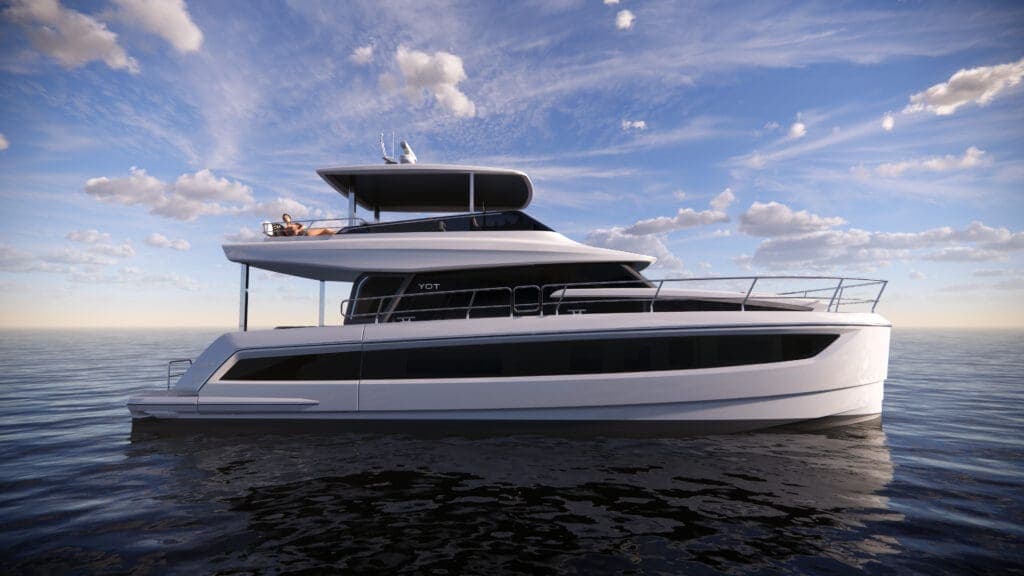
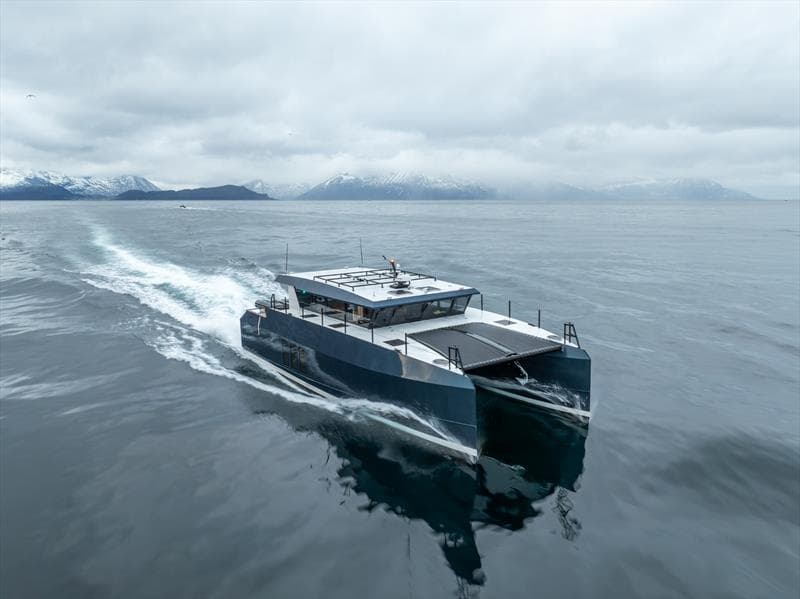
The Archipelago 47 is not trying to imitate a flybridge motoryacht and call it good. It is built from marine-grade aluminum, draws just 1 meter, and can be fitted with hybrid or electric propulsion depending on the requirement. That shallow draft matters more in the fjords than any glossy spec sheet ever will, because it lets the boat reach places deeper-drafted craft simply cannot.
Archipelago says the A-47 offers more than 3,000 nautical miles of range, a top speed of 30 knots, and accommodation for up to eight people. Those numbers matter because they show this is not just an overnight toy for sheltered water. It is being positioned as a genuine cruising platform, with enough legs for long Norwegian passages and enough pace to make a charter week feel flexible rather than fixed.
The other detail that deserves attention is the emissions angle. The hybrid system can operate without producing carbon emissions in environmentally sensitive areas, which is exactly the kind of capability that turns “responsible cruising” from marketing copy into something charter operators can actually sell. In places where the scenery is the product, that is a real commercial advantage.
A layout made for cold-water comfort, not showroom drama
What makes the A-47 feel purpose-built is the way the interior is split. The protected wheelhouse handles navigation, which makes sense in a cruising ground where wind, spray, and shifting conditions are part of the job. Then there is the bright saloon, which gives guests a more relaxed living space instead of forcing everyone into a single hard-edged command zone.
That layout is practical in a way premium buyers will recognize immediately. You want the helm separated from the social space when the weather turns, but you also want the social space to feel warm, open, and civilized when the fjords are doing what fjords do. Archipelago’s standard wheelchair accessibility is another meaningful detail here, because it signals that the boat is being thought through as an experience platform, not just a performance machine.

There is also a broader design story behind that comfort. Hybrid multihulls are increasingly being judged on how well they erase friction from the trip: easier access, lower noise, less fuel burn, and more usable space. The A-47 fits that logic neatly, with a package that is less about showing off and more about making the cruising day smoother.
Why the fjords fit the multihull mindset
The Norwegian fjords are exactly the kind of place that reward a power catamaran. Visit Norway describes Geirangerfjord and Nærøyfjord as UNESCO World Heritage sites, awarded that status in 2005, and Geirangerfjord in particular is the sort of landscape that changes the conversation. It is a 20-kilometre branch of the Storfjord, nearly 260 metres deep, with surrounding peaks rising to 1,600 to 1,700 metres above sea level.
That scale is why the destination-first framing works so well here. You are not buying a yacht just to move from A to B. You are buying a way to get close to glaciers, waterfalls, and the steep edges of the landscape while still sleeping aboard, staying off the grid, and keeping the trip quieter than a conventional powerboat would allow. In summer, the Midnight Sun adds another layer; in winter, the Northern Lights do the rest.
For premium charter, that is a powerful combination. Exploration, exclusivity, and authenticity are the currencies Norway sells best, and a hybrid multihull slots into that proposition almost too neatly. It gives operators a way to promise access without compromising the atmosphere that makes the place worth visiting.
What charter guests get in Tromsø
Archipelago says the A-47 is available to charter in Tromsø through its partnership with Northern Yachting, and that is where the concept stops being theoretical. Northern Yachting CEO Håkon Enga has framed the appeal in plain terms: “rare access, privacy, and unforgettable nature-based experiences.”
That quote gets at the heart of the matter. The boat is not just about reducing fuel burn or ticking an emissions box. It is about delivering a charter week that feels more secluded, more personal, and more closely tied to the landscape than a standard luxury itinerary usually manages. Tromsø is a sensible staging point for that story, because it sits close enough to dramatic northern waters to make the product feel immediate rather than aspirational.
The big picture is that Archipelago is betting on a shift already visible across premium travel. The days of sun-and-resort sameness are fading, and the high-end guest increasingly wants the trip to feel like access, not consumption. In that market, a hybrid powercat with shallow draft, long range, and the ability to cruise quietly through Norway’s fjords does not look like a curiosity anymore. It looks like the shape of the next charter conversation.
This article was produced by Prism’s automated news system from verified source data, official records, and press releases, then run through automated quality and moderation checks before publishing. The system is built and supervised by the people who set the standards it runs under. Read our full AI policy.
Did this article answer your question?