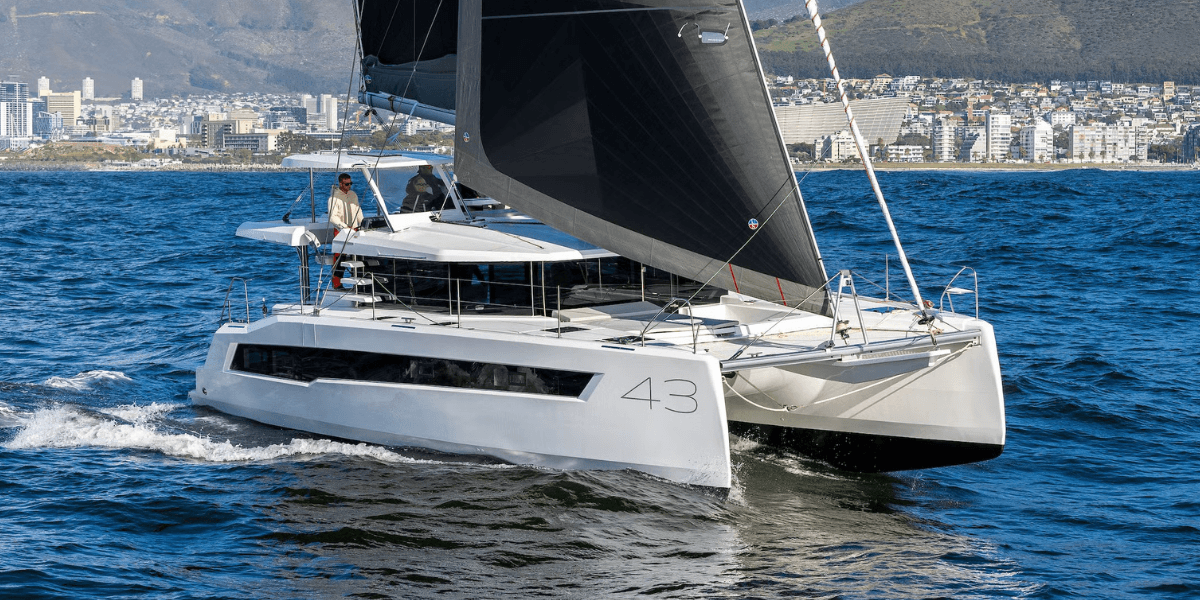
C-Cat 56 aims to blend long-range comfort with performance</final
The C-Cat 56 is built to answer a hard catamaran question: can a 56-footer stay lively offshore without giving up the space buyers expect?
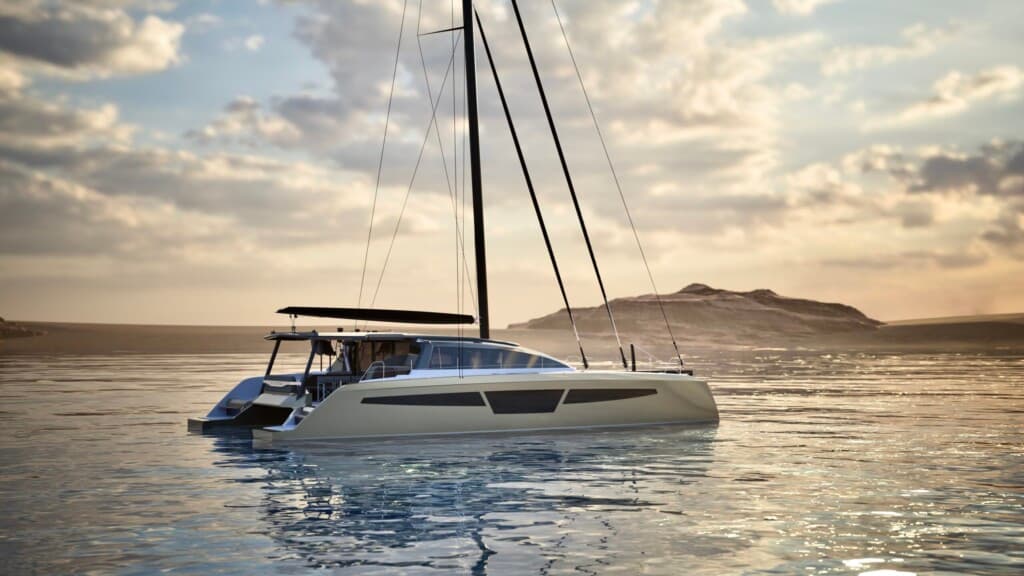
The C-Cat 56 is trying to solve the multihull buyer’s favorite contradiction. It wants to be quick enough to feel alive at sea, yet roomy and forgiving enough for family cruising, and every detail in the boat points to that balancing act rather than to brochure fantasy.
Presented at the International Multihull Show in La Grande Motte, the 17-metre catamaran sits in the middle of a busy European launch stage that featured 82 multihulls and 11 world debuts. Comar Yachts says the boat is scheduled to launch in July 2027 and is meant to carry forward the spirit of the C-Cat 65, with world cruising for family or friends as the target brief. The design is credited to François Perus and Amadio & Partners, while other material also names Marco Amadio and Enrico Contreas, which suggests a broad studio effort behind the project.
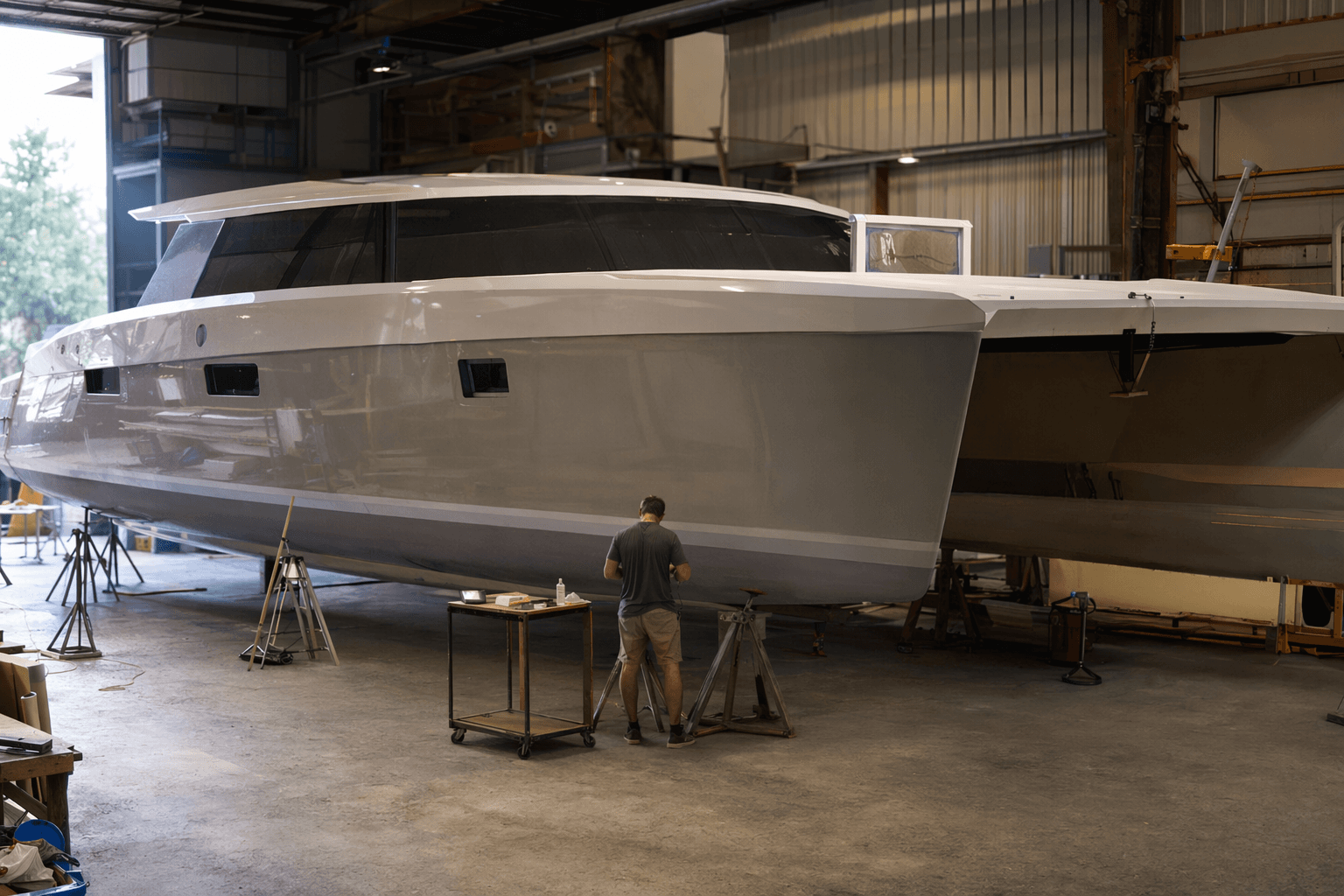
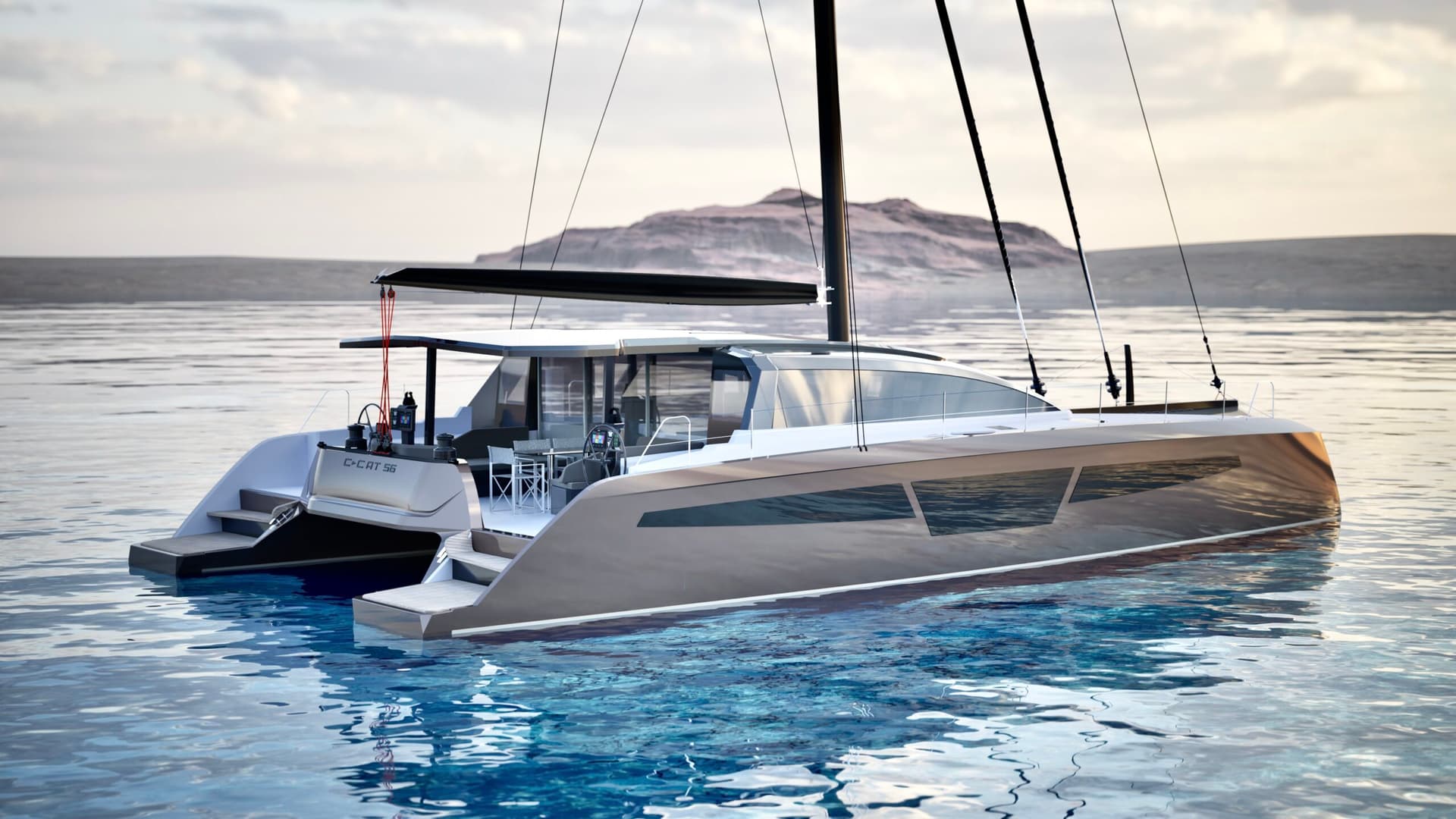
The numbers show a boat built for serious passagemaking rather than marina theater. Official specifications put the C-Cat 56 at about 18.00 metres overall including bowsprit, 17 metres on the hull and 7.6 metres across the beam. Displacement is listed at 13.5 tonnes empty and 16 tonnes fully laden, with Category A certification for 10 people. The sail plan is equally substantial, with 105 square metres of mainsail, 65 of genoa, 48 of self-tacking jib and 116 of Code 0. Twin 60 hp Lombardini Marine engines, twin 220-litre water tanks and twin 200-litre fuel tanks round out the cruising package.
The key question for a boat like this is not whether it has volume, but whether it can keep its shape in a seaway. The builder’s answer starts with structure and weight control. The hull uses epoxy and Corecell composite with multi-axial fiberglass and carbon fiber, while carbon also appears in the deck, bimini, bulkheads, mast, transom, compression beam and bowsprit. The Dutch C-Catamarans material says the boat has four airtight compartments, crash boxes in the bows and daggerboards with fracture surfaces designed to fail without damaging the hull in a severe collision.
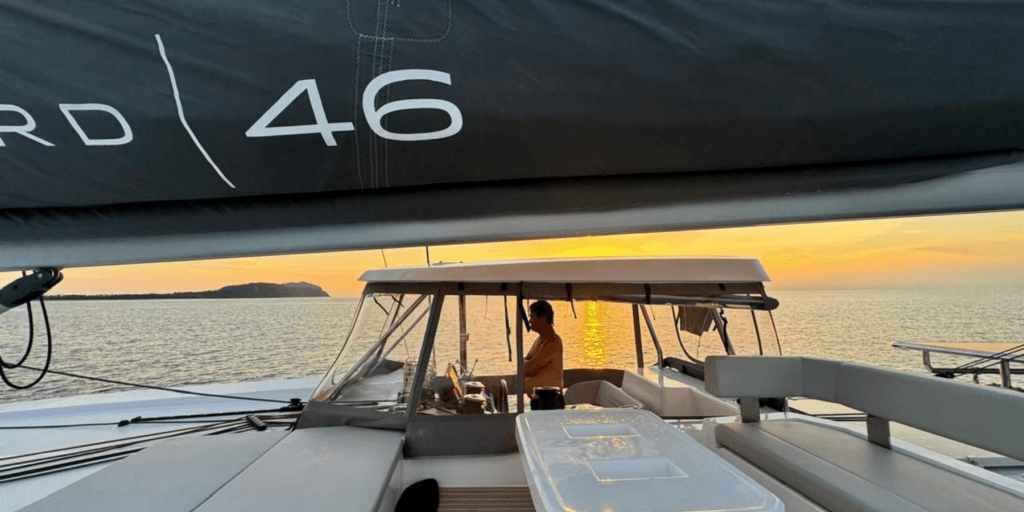
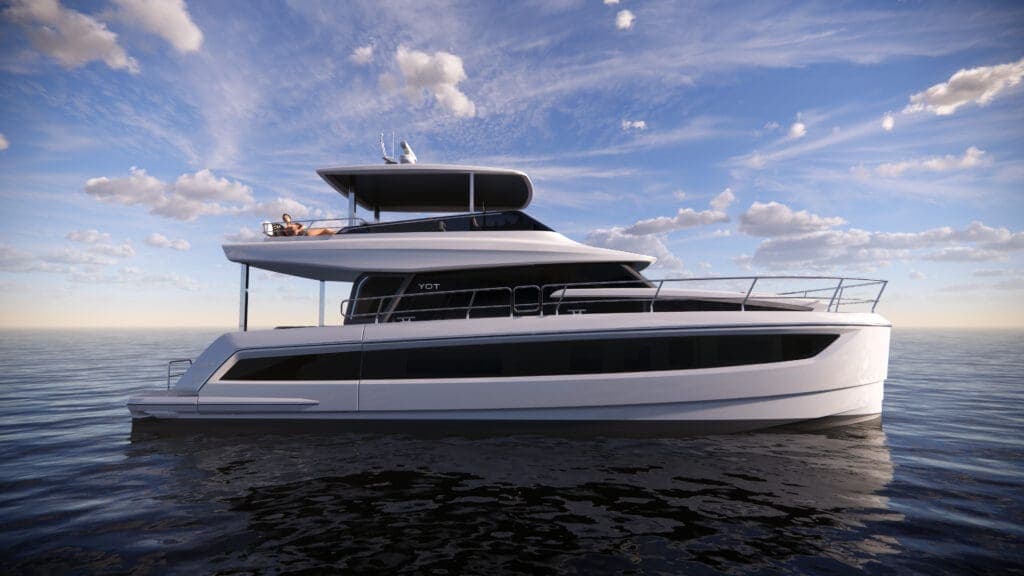
Layout choices do just as much work as the materials. Gran Turismo uses twin aft helm stations and daggerboards for a more performance-led setup, while Itinere moves to a raised central helm and mini fixed keels for better visibility and longer-crossing practicality. In both cases, the wheelhouse is integrated into the superstructure to open the deck plan and reduce interruptions from stern to bow, while the interior mixes wood and modern finishes under large windows. That is the real promise of the C-Cat 56: not a floating apartment, but a proper deep-sea catamaran that still remembers people have to live aboard it.
This article was produced by Prism’s automated news system from verified source data, official records, and press releases, then run through automated quality and moderation checks before publishing. The system is built and supervised by the people who set the standards it runs under. Read our full AI policy.
Did this article answer your question?