Catamaran yacht basics: how twin hulls, bridge decks work
Look past the big saloon: bridgedeck clearance, crossbeams, and boards decide how a catamaran rides, how it points, and how much upkeep you inherit.
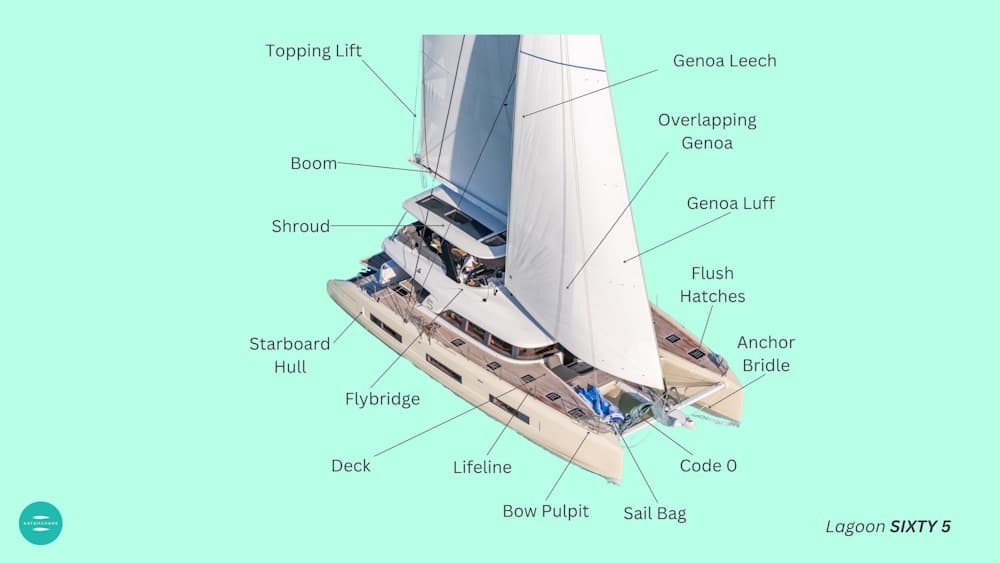
The bridge deck, crossbeams, rudders, daggerboards or keels, mast step, and rig work as one system on a catamaran. The wide saloon, separated hulls, and instant sense of space sell the first impression, but the smarter buy starts underneath that furniture-show feeling. If you understand how those parts affect space, handling, and maintenance cost, you can read a listing, step aboard with a sharper eye, and spot the boats that will be pleasant to live with instead of expensive to explain.
Space: what the twin-hull layout really gives you
The obvious advantage of a catamaran is volume, but the trick is that not all volume is equally usable. The two hulls carry the load, while the structure joining them shapes the saloon, the cabin footprints, and the amount of headroom and stowage you can actually use day to day. That is why a glossy “open-plan” interior can still hide awkward bottlenecks if the bridge deck is low, the crossbeams intrude, or the hulls are drawn too narrow for the intended use.
Terminology matters here, especially when you are comparing brokerage listings. In nautical usage, beam means the maximum width of a hull at its widest point, so on a catamaran the hull beam is not the same thing as the yacht’s overall beam across both hulls. That distinction matters when you are trying to judge marina fit, slip fees, and how much separation you really get between the two sides of the boat.
At a boat show or broker viewing, look at the catamaran as a set of living zones, not one big room. The hulls usually give you the privacy buyers want, while the bridge deck and crossbeams decide how cleanly the interior links together. A boat that feels generous at the dock can still feel cramped if the structure steals headroom or if the saloon is built around compromises you only notice once you start storing bags, spares, and provisioning for a week aboard.
Handling: the underside of the boat decides a lot more than most buyers expect
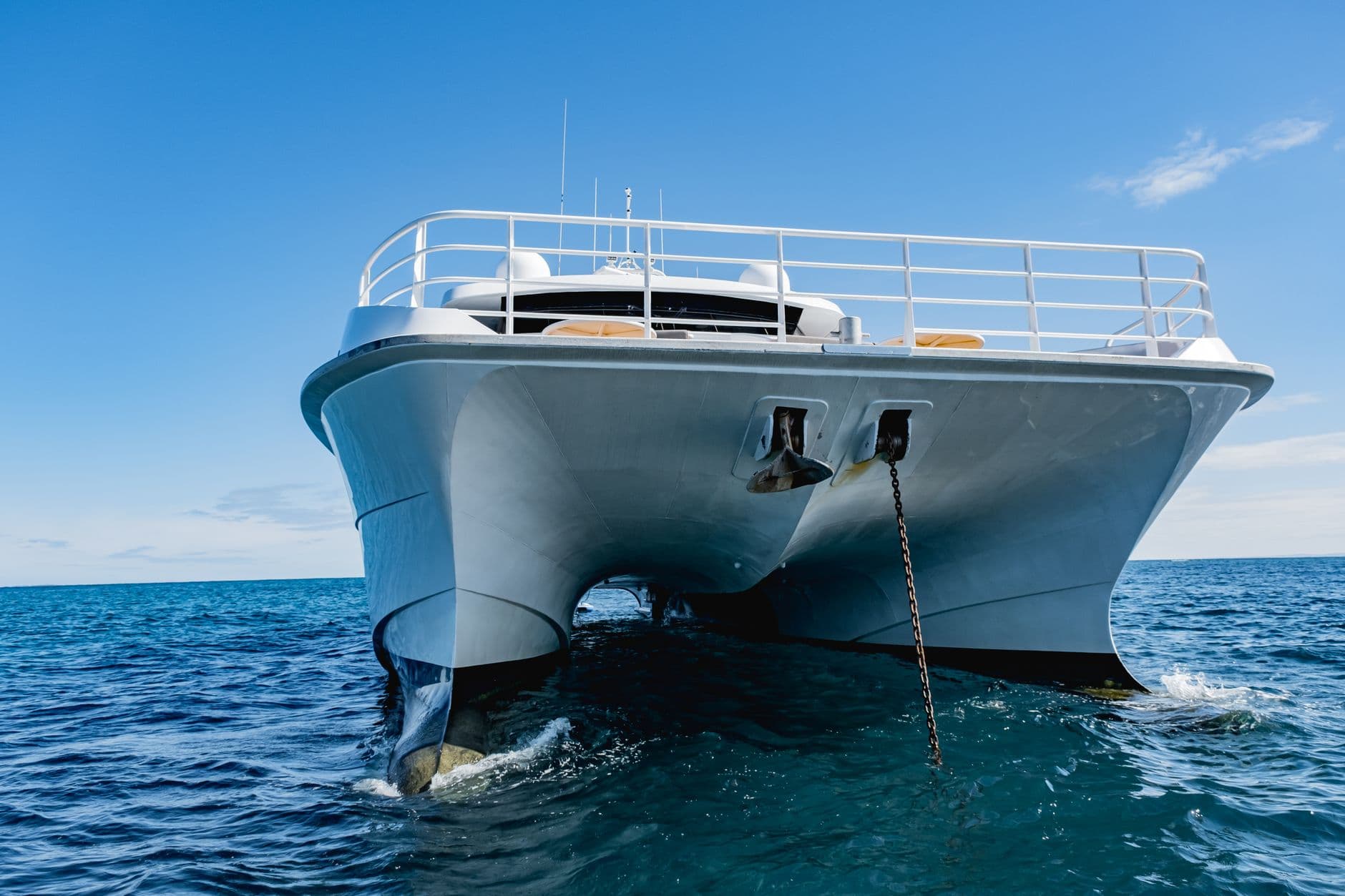
Bridgedeck clearance is the vertical distance between the sea and the underside of the structure that links the two hulls, and it is one of the most important numbers on a sailing catamaran. Designers treat it as a major factor in offshore comfort because it helps determine whether the boat glides over waves or pounds into them. Low clearance usually means more bridgedeck slamming, especially when sailing to windward in heavy seas.
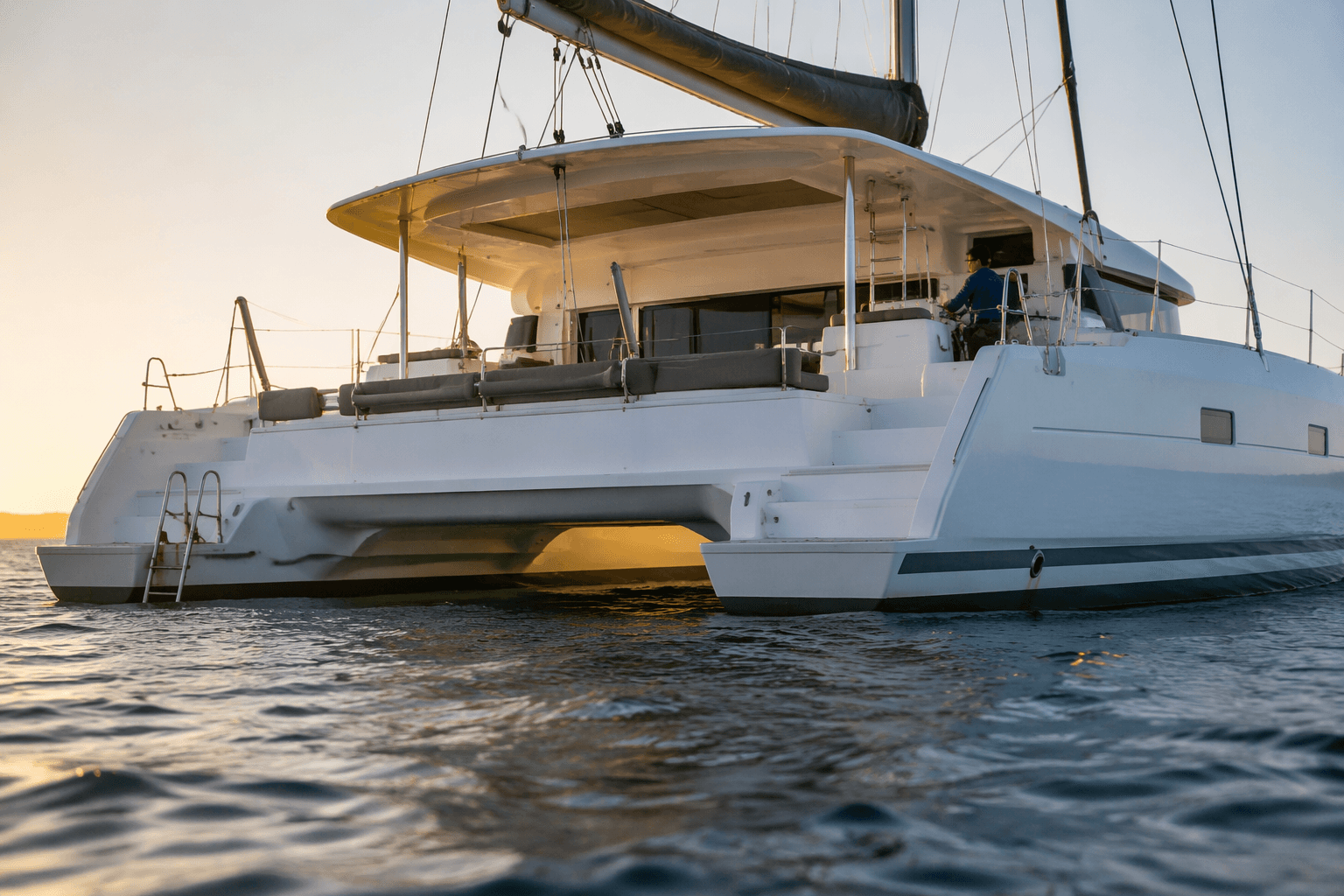
That pounding is not a theoretical flaw. Slamming can sometimes be eased by heading 20 to 30 degrees off the wind, which tells you how directly the bridge deck is interacting with the wave pattern. A rule of thumb is about 30 inches of underwing clearance as a minimum benchmark for comfortable bluewater sailing, but the real answer depends on the boat’s loaded waterline. Put weight on board, load water, fuel, provisions, and gear, and the clearance changes with it.
Crossbeams matter just as much as the bridge deck, even if buyers rarely talk about them. They keep the hulls aligned and transmit rigging loads from one side of the boat to the other, and they are among the most complicated parts of a catamaran to build. If you are looking for a boat that feels stiff and composed under sail, that hidden load path is where a lot of the personality lives.
The steering and lateral-grip gear are the next layer. Rudders control low-speed maneuvering and dockside confidence, while daggerboards or fixed keels decide how much the boat slips sideways and how cleanly it points upwind. Daggerboards generally improve pointing compared with equivalent fixed stub keels because they reduce leeway and drag, and they can also improve speed and even safety. That is why performance catamarans often treat daggerboards as essential, while fixed-keel or keel-equipped cruising cats are usually simpler, shallower, and more forgiving if your priorities lean toward easy ownership instead of max performance.
Maintenance cost: where the real tradeoff shows up over time
A bridge deck that slams hard will not just annoy your crew, it can also punish fittings, cabinetry, and the parts of the boat that live nearest the noise and vibration. Crossbeam structure is another clue, because complicated beams and load-transfer points mean more to inspect, more to seal, and more places where small problems can become expensive ones if you ignore them.
Daggerboard boats ask for a different kind of attention. The boards, trunks, and control gear need to operate cleanly, and a buyer should expect more complexity in exchange for better upwind performance and lower drag. Fixed-keel cruising cats give up some of that performance, but in return they usually offer simpler maintenance and a friendlier relationship with shallow water or the occasional grounding.
A sailor who values speed and pointing will see a daggerboard cat as a feature, while someone who wants fewer moving parts and lower stress around maintenance may be happier with a more straightforward keel arrangement.
The history behind the shape
The modern catamaran story was reshaped by two very different figures. James Wharram made his first Atlantic crossing by catamaran in 1956 and became a pioneer of offshore multihulls. Then Hobie Alter pushed the idea in a different direction, and the Hobie Cat 14 was introduced in 1967, with the wider Hobie Cat story traced to his 1968 vision for a lightweight, beachable catamaran.
One branch of catamaran design chases speed, beachability, and simple sailing surfaces; the other aims at offshore comfort, load carrying, and liveaboard practicality.
What to check before you buy
A good walkthrough is less about admiring the saloon and more about interrogating the structure.
- Measure or ask about bridgedeck clearance, then picture the boat loaded for cruising, not empty on the sales dock.
- Look under the middle of the boat for signs of slamming wear, repairs, or distorted fittings.
- Inspect crossbeam attachments closely, because they hold the hulls in alignment and carry rigging loads.
- Ask whether the boat uses daggerboards or fixed keels, and decide whether you want performance, simplicity, or a compromise.
- Check how the rudders feel at slow speed, because dockside control matters long before you get to the first breeze.
- Be precise about beam terminology, because hull beam and overall beam are not the same number.
This article was produced by Prism’s automated news system from verified source data, official records, and press releases, then run through automated quality and moderation checks before publishing. The system is built and supervised by the people who set the standards it runs under. Read our full AI policy.
Did this article answer your question?