Earthling E-40 Powercat Debuts in Europe, Emphasizes Low-Drag Efficiency
The E-40 brought sailing logic to a powercat format, using low-drag hulls and a serial hybrid layout to chase range, not just speed.
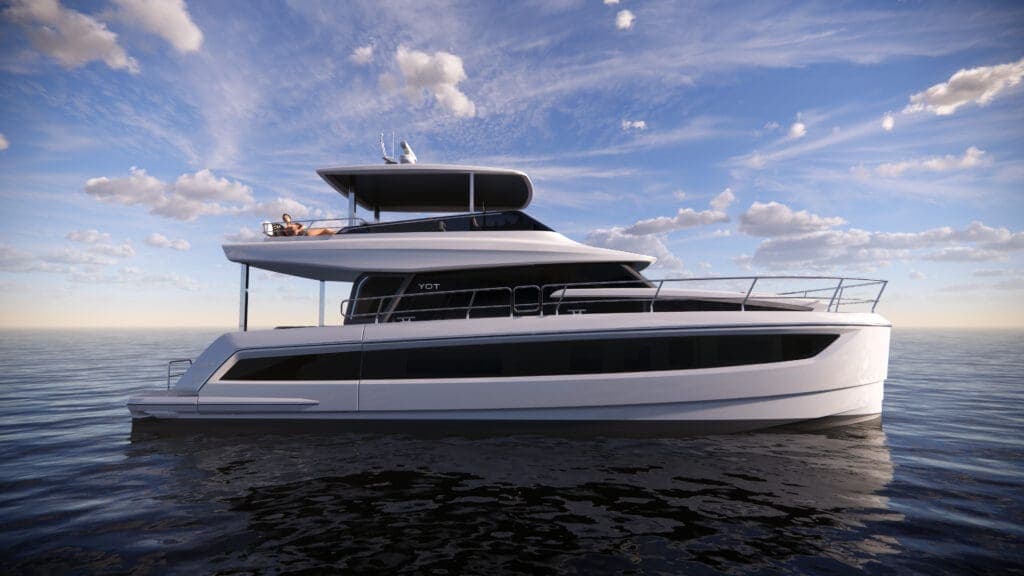
Earthling’s E-40 stood out in La Grande-Motte because it did not try to look like a conventional motor catamaran. The 12-metre powercat used sailing-style hull thinking to cut resistance, and that was the whole point of its Europe debut at the International Multihull Show. Instead of chasing a flashy silhouette, Earthling pushed a boat that was meant to be efficient at low and medium speeds, quiet underway, and practical in shallow cruising grounds.
The numbers made the case. The E-40 carried twin 50 kW motors and four 11 kWh battery modules, two in each hull, with a cruising speed of about 10 knots and a top speed of 18 knots. MOLABO described the arrangement as a serial hybrid with autonomous powertrains in each hull, while Earthling added dual 8.5 kW generators and solar support to keep the boat moving without draining the batteries. The company’s pitch was simple: less fuel use, less maintenance, less noise, and less dependence on port power.
What makes the design interesting to real powercat owners is the hull work. Reports described the E-40 as generating very little drag at low and medium speeds because of the fineness of its hulls, and its keels were shaped so the cat could take the ground while protecting the rudders. That matters for tidal harbors, drying moorings, and the kind of anchorages where a deeper, conventional powercat starts feeling compromised. With a draft of just 0.75 metres, a beam of 5.5 metres, and displacement listed at 3.5 tonnes, the E-40 was built around easy motion rather than brute force.
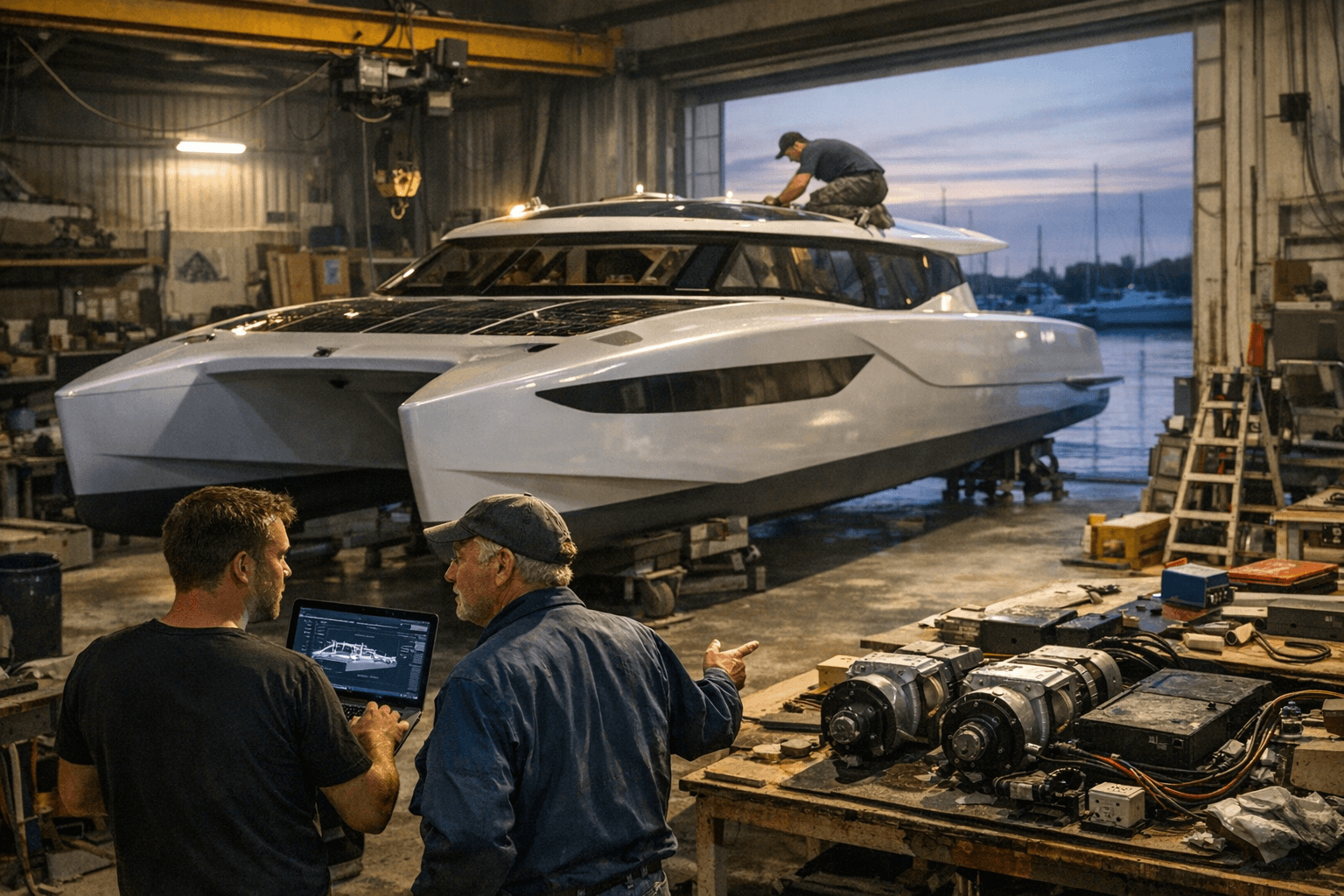
Earthling’s own backstory helped explain why this boat felt more like an engineering project than a styling exercise. John McGettigan had already made his name with a previous Earthling sailing catamaran in New Zealand, known for its automated leach control and distinctive silver-gold finish. For the E-40, Asia Catamarans built the hull in Phuket, then shipped it to Auckland for Earthling’s fit-out. A technical case study said the hulls were stretched from a 36-foot Stealth design to 40 feet, with reduced rocker and smoother flow to suit the low-speed electric brief.
The boat also arrived with real miles on it. Coverage described a solo delivery from Genoa to Barcelona of roughly 650 nautical miles, and other reporting placed it in Barcelona after a voyage from New Zealand before its appearance at the Barcelona Electric Marine Show 2026. That gave the E-40 something many concept boats never get: proof that a low-drag, hybrid powercat can work beyond the dockside demo. With prices listed from €685,000 to €895,000 ex tax, it sat firmly in premium territory, but it also pointed to where the segment is headed, toward efficiency, autonomy, and a more intelligent way to run a powercat.
This article was produced by Prism’s automated news system from verified source data, official records, and press releases, then run through automated quality and moderation checks before publishing. The system is built and supervised by the people who set the standards it runs under. Read our full AI policy.
Did this article answer your question?