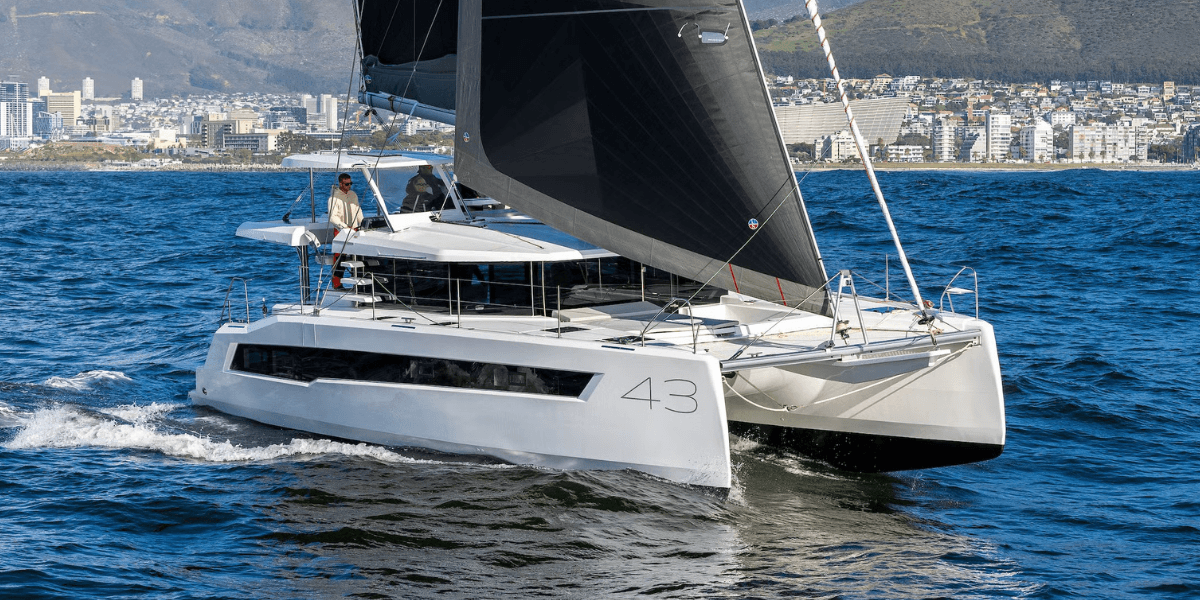
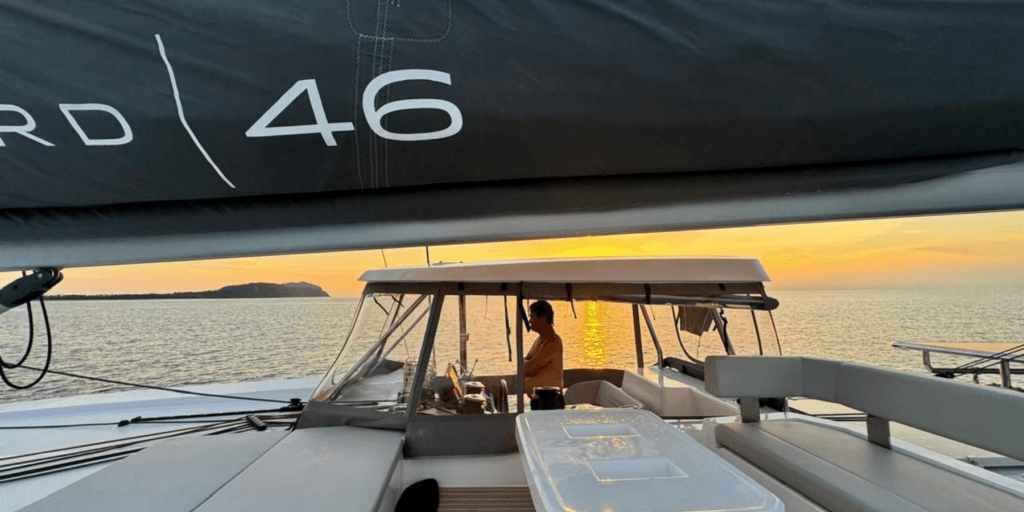
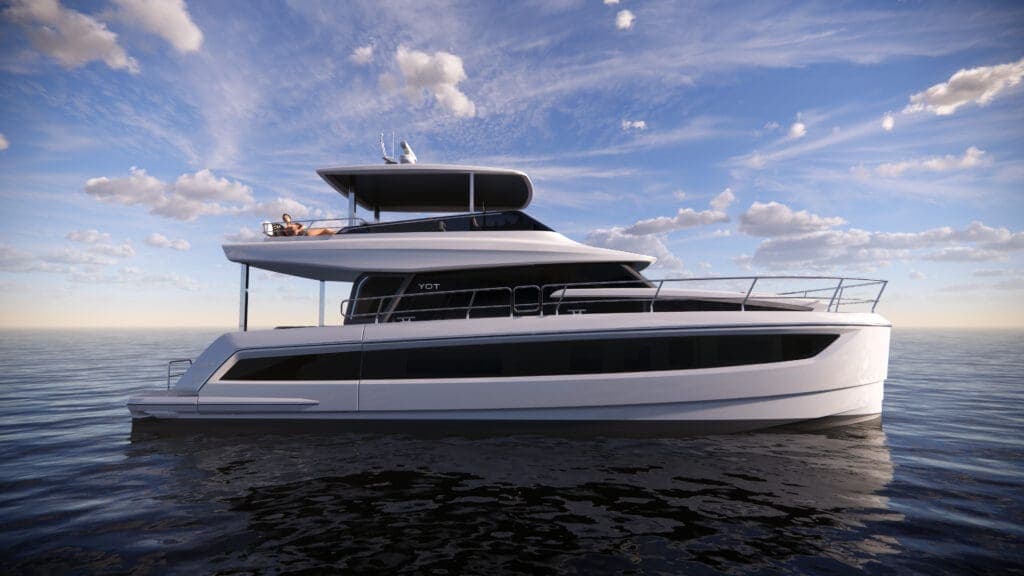
Evo 60 aims to blend luxury and performance cruising
The Evo 60 chases a harder kind of luxury: the features that make cruising easier, not just flashier. Its real test is whether the glamour helps the boat work better at sea.

Luxury that still has to work
The Evo 60 asks a sharper question than most new catamarans: when does luxury actually improve life aboard, and when is it just expensive theater? This boat sits right on that fault line. Yachting World’s first look frames it as a performance-focused luxury cruising cat, and that is exactly the point. It is meant to feel like a serious yacht first, a floating status symbol second.
That is why the price matters as much as the styling. At around $3.5 million, the Evo 60 is not playing in the broad charter-cruiser lane. It is aimed at owners who want the volume and liveability that make catamarans so addictive, but who also want enough pace, build quality and visual drama to justify a much bigger cheque.
The numbers under the gloss
The builder’s specification sheet makes the ambition plain. The Evo 60 measures 18.27 metres LOA with a 9.02-metre beam, 0.63-metre hull draft, 3.28 metres draft, 25.02 metres air draft and 0.98 metres bridgedeck clearance. It carries 182.3 square metres of total sail area with a 100% foretriangle, and Evolution Marine Manufacturing says the structure is E-glass/carbon epoxy with an 80% carbon content.
Those numbers tell you this is not a soft, heavy condo-cat built to drift from anchorage to anchorage. The sail plan is substantial, the build is pitched as high-tech, and the proportions are unapologetically big. In practical terms, that combination should translate into a catamaran that feels more alive under sail than many luxury boats that spend too much energy on theater and too little on motion.
The clever part is that the luxury and the performance messaging are tied together instead of being sold as separate virtues. That is where the Evo 60 gets interesting. It is not trying to be a stripped-out racer, and it is not pretending that extra weight and extra systems do not matter. It is trying to show that a modern cruising cat can be both fast enough to feel satisfying and refined enough to feel expensive.
Where the Evo 60 earns its keep
This is the section where the boat either wins you over or loses you. Some of the features are genuinely useful, and some are there because high-end buyers expect a little spectacle. The full port-side owner’s hull is the strongest proof that the design is serious about onboard living. A transverse berth, dressing area, double vanity, separate shower and private head make the owner’s side feel like a proper suite, not a squeezed-in afterthought.
That matters because catamaran luxury is mostly about reducing friction. If you can move through the owner’s hull without bumping elbows, shower without turning the entire cabin into a wet locker, and live without apologizing for the layout, the boat has already done half its job. On a platform like the Evo 60, that is the real premium, not gold trim or overstuffed upholstery.
The boat’s other reported features sit somewhere between practical and showpiece. Dual aft helms make sense on a cruising cat of this size, especially when they help keep the skipper connected to sail shape and deck flow. The articulating helm system sounds like it was designed to solve a real ergonomics problem, and that is the kind of detail I value. An island galley and forward nav station also fit the brief, because they support normal life aboard rather than just looking good in dockside photos.
Then there is the eye candy. The cockpit star roof and the 120-inch outdoor cinema screen are pure wow-factor. They do not make the boat sail better, and they are not what gets you safely across a squall line, but they do tell you exactly who this boat is for: an owner who wants evenings aboard to feel like an event. On a lesser boat, that would read as overreach. On the Evo 60, it feels like the builder is leaning fully into the idea that luxury catamaran buyers want both function and performance, plus a little drama for good measure.
The team behind the boat
The Evo 60 has the kind of pedigree that matters in this corner of the market. Evolution Marine Manufacturing is based in Montague Gardens, Cape Town, and is led by veteran boatbuilder Oliver Dawson, who brings more than 30 years of composite-building experience. That background fits the project. A boat like this lives or dies on how well the structure, finish and systems come together, and composite expertise is not something you fake at this level.
The design side is just as telling. Du Toit Yacht Design says Anton du Toit founded the firm in 2001 and has more than 30 years of sailing and racing experience. He also grew up cruising around the world with his family on a Tartan 46, and another account says he started sailing around the world from age 14 on his father’s yacht. That kind of upbringing explains why the Evo 60 feels like a boat conceived by people who understand both offshore miles and family life aboard.

Du Toit’s name already carries weight in the multihull world through Balance Catamarans, where he co-designed the first Balance 526 with Phillip Berman. That matters because the Evo 60 does not emerge from a styling studio detached from real sailing. It comes from a design culture that has been pushing performance cruising for years, and that shows in the way the boat balances pace, owner comfort and deck usability.
A limited run, not a mass-market play
One report says Evolution Marine plans to build 12 Evo 60s over four years, and that sounds exactly right for what this boat is trying to be. This is not a volume model aimed at flooding marinas. It is a limited, high-value project built for buyers who want something more exclusive than the usual production catamaran and more practical than a one-off superyacht-style custom build.
The first boat was already reported under construction in Cape Town, which gives the project real substance rather than just renderings and promises. That also matters because high-end catamaran buyers have become increasingly skeptical. They want to know whether a yard can actually deliver the finish, systems integration and consistency that the brochure suggests. A short production run can be a strength here if it keeps the standard high.
Why the debut stage fits the boat
The launch setting is as important as the boat itself. The International Multihull Show runs from April 22 to 26, 2026, in La Grande-Motte, France, and organizers say this edition will add a third marina, a redesigned visitor route and a growing presence of power and electric multihulls. That is the right kind of stage for a boat like the Evo 60, because the whole market is moving toward broader definitions of multihull luxury.
And that is really the Evo 60 story in one line. It is not trying to prove that a catamaran can be luxurious in the old sense, with extra polish and a bigger bill. It is trying to prove that real luxury on a catamaran means space that works, privacy that feels earned, performance that justifies the hulls, and enough restraint to separate the useful upgrades from the expensive theater. That is the tightrope the Evo 60 walks, and it is the reason the boat feels important rather than merely expensive.
This article was produced by Prism’s automated news system from verified source data, official records, and press releases, then run through automated quality and moderation checks before publishing. The system is built and supervised by the people who set the standards it runs under. Read our full AI policy.
Did this article answer your question?