Fountaine Pajot FP44 targets buyers with modern compact cruising catamaran
The FP44 hits the sweet spot: enough space and liveaboard polish to feel like a real step up, without dragging owners into 50-foot cost and complexity.

The sweet spot is the story
At 44 feet, the FP44 lands in the part of the market where a catamaran stops feeling like a compromise. It has enough volume to support proper liveaboard comfort, enough style to feel current, and enough restraint to avoid the cost, crew pressure, and dockside hassle that come with moving into the 50-foot bracket.
That is why this boat has such obvious bestseller potential. Fountaine Pajot is not pitching a stripped-back entry cat or a showpiece flagship. It is aiming straight at buyers who want the practical payoff of a bigger multihull, but still want a boat that feels manageable, shippable, and realistic to own.
A layout built around daily life, not just dockside appeal
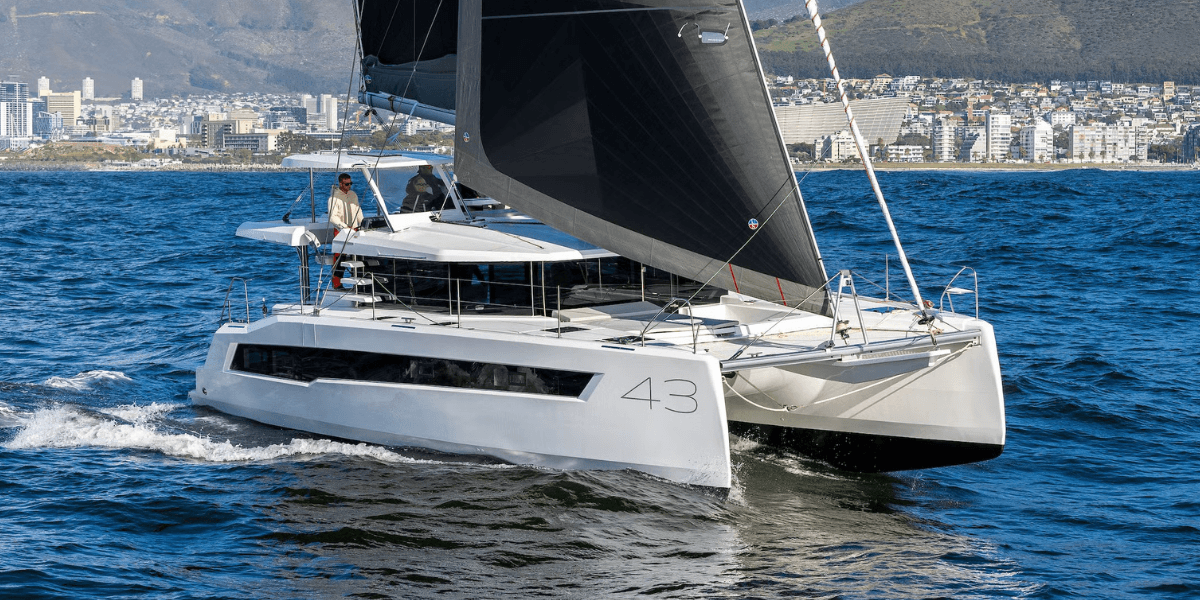
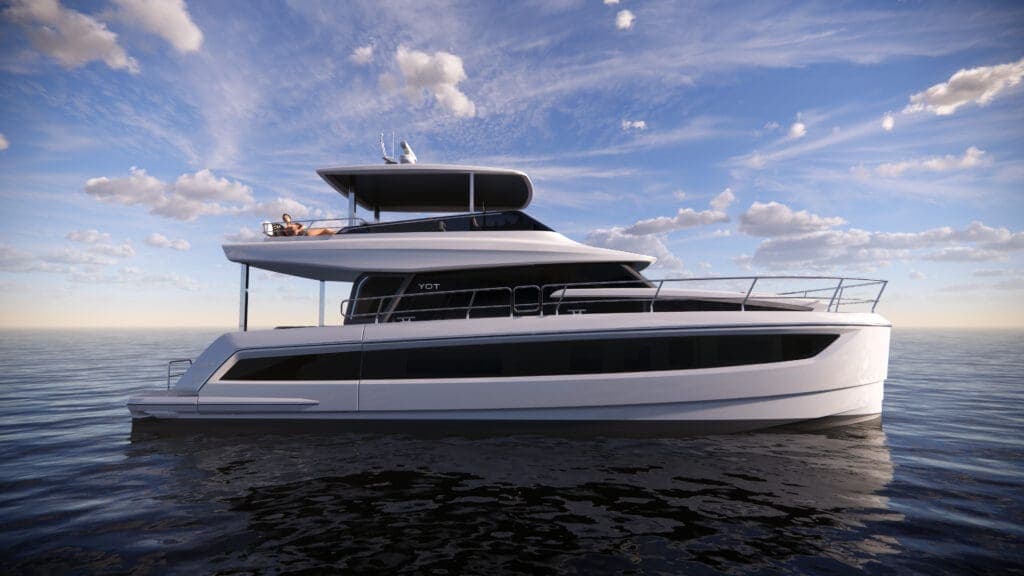
The FP44 is designed as a little island for life on the water, and the layout shows it. There are generous relaxation zones in the cockpit, on the flybridge, and forward of the coachroof, plus the familiar double helm and maneuvering station that keep the boat feeling balanced rather than oversized.
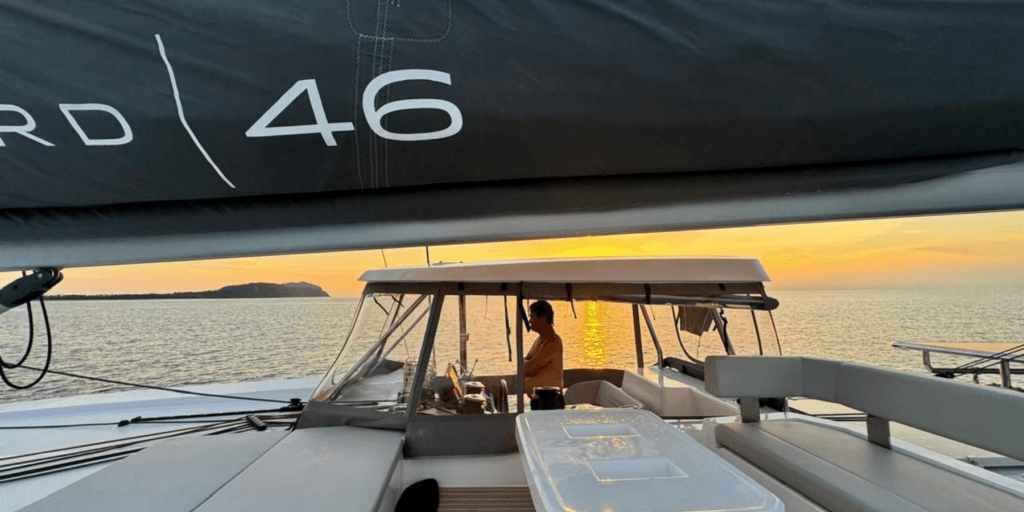
The mid-height helm is a particularly smart detail. Fountaine Pajot says it gives excellent visibility and direct contact with the crew, whether people are in the cockpit or up on the flybridge, which is exactly the sort of feature that matters once the boat is being handled by a cruising couple or family rather than a full-time professional crew.
The interior setup follows the same logic. The galley and saloon are arranged to blur the line between inside and outside, helped by a fully opening window, a central island, and a front serving hatch. That kind of open-plan arrangement is not just fashionable, it makes the boat easier to live on for long stretches, especially when the anchored rhythm shifts from passagemaking to cooking, lounging, and entertaining.
The cabin plan is equally flexible. The FP44 comes in 3-cabin and 4-cabin versions, and the Maestro configuration lets the forward port hull turn into a bunk room, workshop, office, or children’s room. That flexibility gives the same platform a second life as either a private cruising boat or a charter-friendly layout, which is one reason the model has broad market appeal.
It also carries serious occupancy credentials. The layout documentation shows CE certification for A: 10 people, B: 12 people, C: 18 people and D: 20 people, which underlines how far beyond a casual weekender this boat is meant to go.
The offshore numbers are part of the appeal
The FP44 is not being sold as a floating condo that happens to have sails. Fountaine Pajot says it is built for bluewater cruising with family or friends, and that the design balances offshore performance with at-anchor comfort. That balance is the whole game in this segment, because buyers want a boat that feels civilized at anchor but still earns trust when the weather window opens.
The technical figures help explain why the model feels so plausible as a long-range cruiser. BoatTEST lists a draft of 1.58 m, fuel capacity of 2 x 350 L, and water capacity of 2 x 300 L. Those are the kinds of numbers that matter once the excitement of a new boat gives way to provisioning, route planning, and how often you want to run the generator or make a fuel stop.
Power options are just as telling. The standard setup is twin 30 HP engines, with larger 57 HP engines or hybrid propulsion also available. Fountaine Pajot also says the FP44 can be specified with the ODSea+ electric drivetrain and up to 2,000 W of solar panels, which fits neatly into the brand’s broader push toward a hybrid future.
Why it matters inside the Fountaine Pajot range
The FP44 is not arriving in a vacuum. Multihulls World says it is “making a clean sweep of the range,” effectively eclipsing the Astrea 42 and Elba 45. That is strong language, and it tells you this model is not just a replacement, it is a repositioning move inside the lineup.
That competitive context matters because Fountaine Pajot is also in the middle of a broader refresh. The FP41, FP44, FP48, FP51 and FP55 are all part of the new-model push, with the FP48, FP51 and FP55 listed as 2026 models. The company has also said it wants its sailing catamarans and motor yachts equipped with hybrid powertrains by 2030, so the FP44 sits in a strategic transition as much as a product launch.
The public rollout reinforces that sense of momentum. The brand first showed the FP44 and FP41 during its Open Days in La Rochelle, then planned an official public presentation at the Cannes Yachting Festival before a worldwide tour. That sequence says plenty about the confidence behind the model, because it is being treated as a flagship-style talking point for the mid-size segment rather than a quiet update.
Why buyers are likely to respond
Price positioning is part of the story too. Dealer listings put the FP44 in the mid-€500,000s to above €600,000 depending on configuration and options, which places it squarely in premium cruising territory without pushing it into the much more punishing economics of larger cats.
That is exactly where the argument for the FP44 gets strong. Buyers in this bracket are not just comparing square footage, they are comparing usability, resale appeal, complexity, and how much boat they can comfortably live with for years. The FP44 offers enough space to feel like an upgrade from a smaller entry cat, but it avoids the jump in operational burden that often comes with going bigger than necessary.
The market backdrop gives that pitch even more weight. Fountaine Pajot reported FY2024/25 revenue of about €323.2 million and described 2025/26 as a transitional year, which suggests the brand is relying on new-model momentum to carry the next phase. In that environment, a boat like the FP44 makes sense as a volume candidate because it speaks to the broadest part of the premium cruising market.
The nomination for Multihull of the Year 2026 in the under-45-foot category sharpens the picture further. Fountaine Pajot says the nod reflects “exceptional onboard living” and a “new level of balance” in its class, which is exactly the right framing for a catamaran that wants to win on livability first and image second.
That is why the FP44 feels like more than another launch. It reads like the point where Fountaine Pajot is trying to define the modern compact cruising catamaran for the next round of buyers, and if the range response is any guide, the company may have landed on the boat that turns mid-size practicality into a true bestseller.
This article was produced by Prism’s automated news system from verified source data, official records, and press releases, then run through automated quality and moderation checks before publishing. The system is built and supervised by the people who set the standards it runs under. Read our full AI policy.
Did this article answer your question?