Motor catamarans redefine charter travel with floating villas and smart comfort
Motor catamarans are selling more than space. They now deliver privacy, easier handling, and real comfort, while the best charter buys still hinge on access and flexibility.
What the evolved catamaran charter really buys
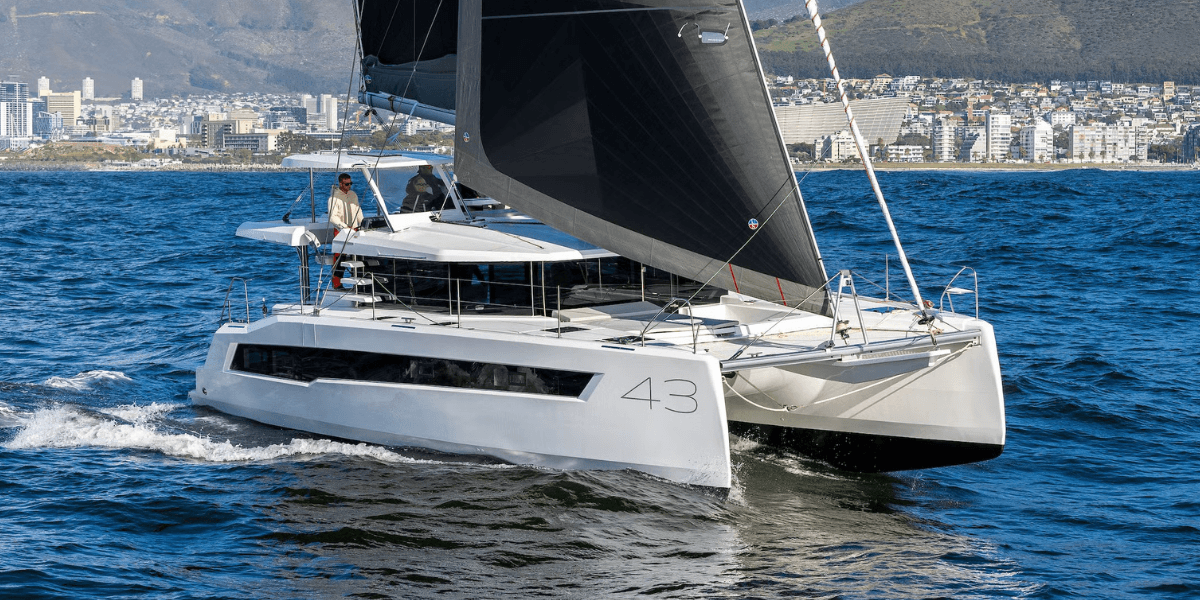
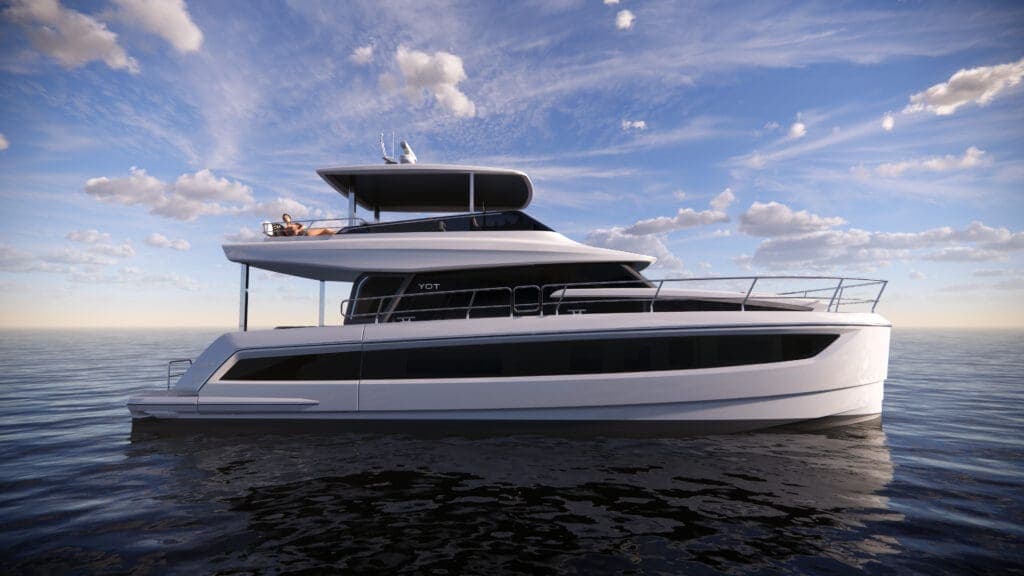
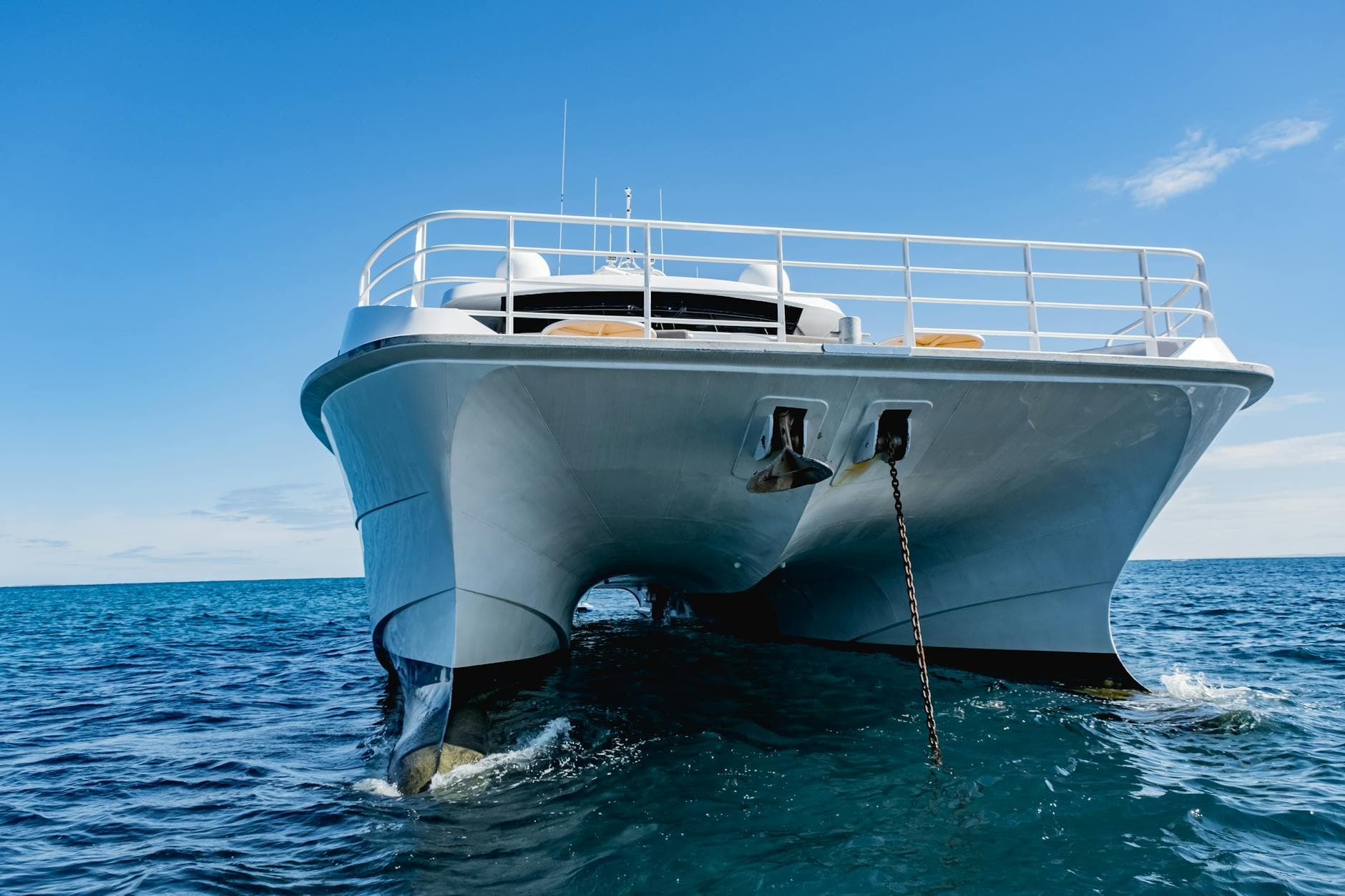
The modern motor catamaran charter is no longer a dressed-up boat rental. It is a week designed around how people actually want to live at sea: with more privacy, more usable space, easier movement between zones, and far less friction when the day changes course. The pitch of the “floating villa” is not just a marketing flourish when the layout gives you separate places to sleep, gather, eat, and retreat without everyone stacking into one salon.
That is the first thing to understand when comparing charter options. The meaningful upgrade is not a shinier finish or a louder promise of luxury. It is whether the boat quietly improves everyday life onboard: whether there is a real separation between social space and sleeping space, whether the deck plan feels open without feeling exposed, and whether a family or group can spend seven days together without getting in each other’s way.
Why catamarans fit the charter mood so well
Catamarans keep showing up in charter conversations for three reasons that matter on the water: shallow draft, stability, and more living space than many monohulls. Those are not abstract selling points. A shallow draft opens up coves and anchorages that deeper boats cannot comfortably reach, while the twin-hull platform tends to feel steadier at rest and at anchor, which can make a week at sea far more relaxing for guests who are not used to yacht motion.
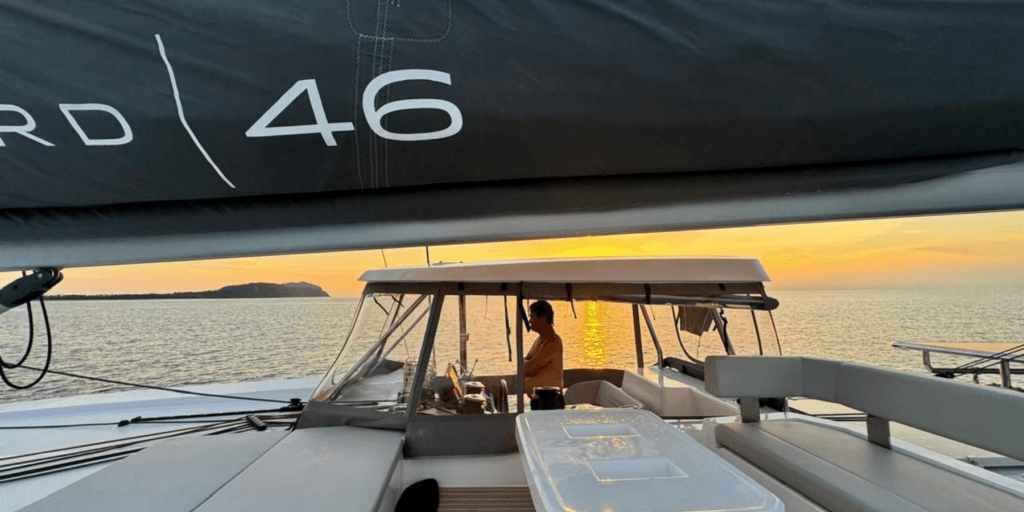
That extra beam also changes the social dynamic onboard. On a motor catamaran, the charter day can spread out naturally. One person reads in the shade, another drops to the swim platform, someone else disappears into a quieter cabin, and the whole group can still come back together for dinner without the boat feeling crowded. In a charter market where expectations keep rising, that kind of livability is the difference between a pleasant trip and a week that feels genuinely restorative.
The upgrades that matter once you are onboard
The best charter catamarans are not just bigger, they are better organized. Layout privacy is one of the biggest wins. Separate cabins, sensible passageways, and well-placed social areas mean that guests are not constantly negotiating over who is in whose space. That matters especially on a motor catamaran, where the experience is sold as a floating villa rather than a simple transfer from one harbor to another.
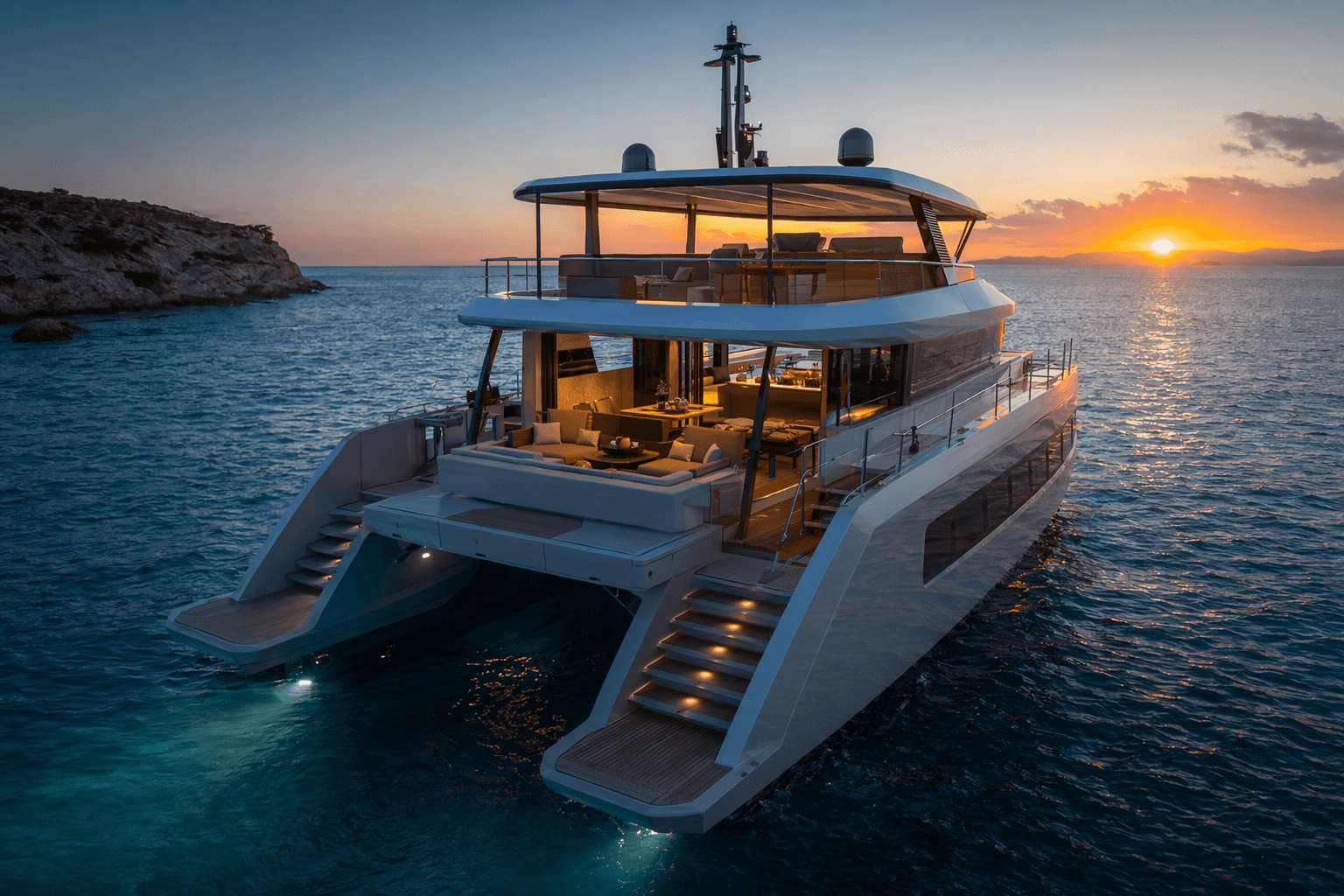
Water access is another meaningful comfort. A good catamaran makes the sea feel like part of the routine, not a special event. Easier boarding, a more generous swim platform, and a layout that makes wet feet and toy handling less of a nuisance all change how often people actually use the water. If a boat makes it easy to launch a paddleboard, hop in after lunch, or collect gear without turning the aft deck into a cluttered storage room, that is real value.
Quiet nights matter too. Smart design is not only about gloss and screens; it is about how the boat feels when the generator hums down and the anchor set is good. A charter that promises “smart comfort” should deliver better sleep, less noise bleed between cabins, and an interior that feels calm rather than busy. That is where design earns its keep.
What technology actually changes at sea
A lot of the new charter language circles around technology, and some of it is genuinely useful. Dynamic positioning, for example, keeps a boat fixed without dropping anchor, and joystick controls make docking less intimidating. Those systems are part of why modern charter feels so much more accessible than older generations of yacht travel. Dynamic positioning traces back to 1961, when the drillship Eureka used an automated positioning system, while joystick steering for boats became commercially available in the 2010s.
That history matters because it explains the emotional shift onboard. Charter is no longer only for guests who are comfortable with traditional seamanship. The technology now helps create a calmer, more controlled experience, whether that means settling into a tight anchorage or sliding into a berth without drama. In practical terms, it is one of the most meaningful upgrades because it reduces stress for everyone on board, not just the crew.
The charter questions that separate a good week from a frustrating one
The most useful charter advice is still the least glamorous: ask the right questions before the booking is fixed. MYBA, founded in 1984 by yacht brokers to promote professionalism and ethics, has long pushed the industry toward clearer standards, and its Charter Agreement remains one of the most respected standard contracts in the business. That tells you something important. Charter is a service product as much as a vessel product, and the paperwork often reveals how serious the operation really is.
- Which fleet and yacht category actually fit the itinerary you want?
- Will you charter with a skipper or without one?
- How will APA, gratuities, fuel, VAT, and berth limitations be handled?
- Are the tender, toys, and water-sports options realistic for the guest list?
- What happens if the best anchorage is full or weather changes the plan?
The questions that matter are the ones tied to how the week will run:
MYBA guidance also reminds brokers to brief guests on diving rules, personal watercraft certification, and the practical limits that can shape a day ashore. For skippers, the safety conversation should happen before departure, with everyone on board briefed on lifejackets, thermal protective aids, lifebuoys, and emergency procedures. These are not side notes. They are the difference between a polished charter and a week spent discovering surprises too late.
Why the Mediterranean is the pressure point
The Mediterranean gives this story its sharpest commercial edge. The 36th MYBA Charter Show, held at Portosole Marina in Sanremo, Italy, is one of the most important fixtures on the yachting calendar and marks the start of the Mediterranean season. BOAT International also treats the Sanremo return as a key early-season marketplace, which is exactly why broker and client expectations get set there before summer availability tightens.
That tightening is real. YATCO says suitable berths and anchorage spaces in peak Mediterranean locations have not increased, and it expects charter pricing across the region to rise by 5% to 12% depending on area and yacht category. At the same time, broader market research places the yacht charter market at USD 9.8 billion in 2026, with another major industry estimate putting it at USD 20.3 billion. However you read the range, the direction is clear: demand is deep enough that good boats, good crews, and good locations are all under pressure.
The sustainability layer is becoming part of the value proposition
A final shift is giving the category even more momentum: hybrid and solar-assisted catamarans. Recent 2026 coverage has highlighted these systems as part of the next phase in the market, and that matters because charter guests are beginning to weigh impact alongside comfort. Lower-impact cruising does not replace luxury, but it can make the luxury feel more current, especially for owners and guests who want the experience to look forward instead of backward.
That is the real story of the evolved motor catamaran charter. The best boats are no longer selling only a bigger platform or a prettier interior. They are buying time, calm, privacy, and control, all wrapped into one week at sea. In a crowded Mediterranean season, that is the difference between a charter that sounds expensive and one that actually feels worth it.
This article was produced by Prism’s automated news system from verified source data, official records, and press releases, then run through automated quality and moderation checks before publishing. The system is built and supervised by the people who set the standards it runs under. Read our full AI policy.
Did this article answer your question?