Tecnomar’s 43.5m This Is It Redefines Catamaran Superyacht Design
This Is It turns a 43.5m catamaran into a moving architectural statement, but the real lesson for owner-operated cats is what actually survives the hype.
Tecnomar’s 43.5m This Is It Redefines Catamaran Superyacht Design
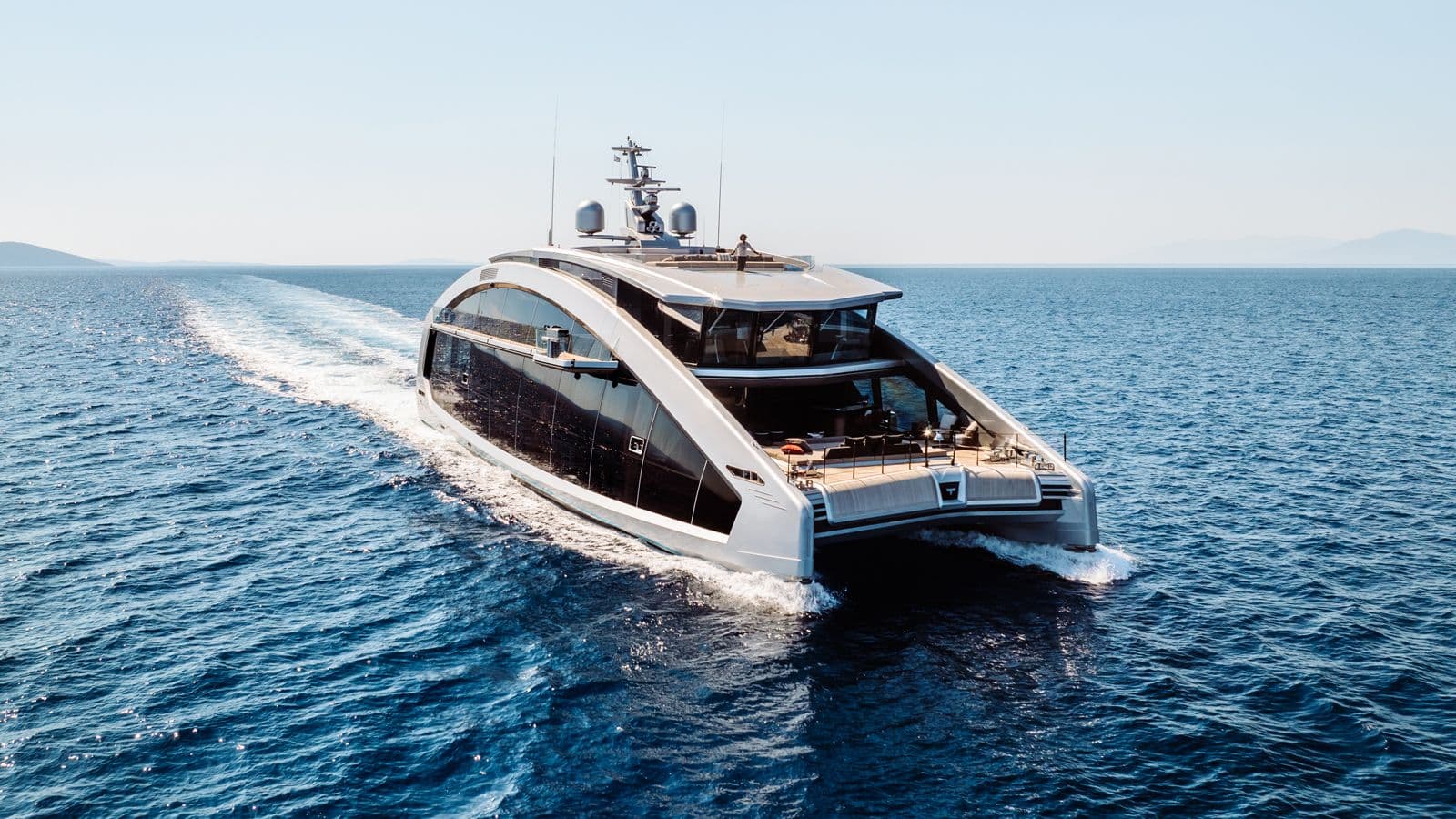
The first thing This Is It does is force you to stop thinking like a conventional yacht owner. At 43.5 metres long and 14.5 metres wide, with Tecnomar calling it a design above 500 GT, this is not a stretched monohull wearing catamaran clothes. It is a deliberate break from the usual language of superyachts, and Tecnomar says that is exactly the point: the boat was conceived closer to contemporary architecture than classical yachting.
A catamaran built as a statement, not a compromise
This Is It arrived as a built yacht, not a fantasy render or a pure concept study, and that matters. Owner Tasos Papanastasiou, founder of XM, pushed a project that Tecnomar and The Italian Sea Group describe as unprecedented in style and content, but still feasible in real steel, glass, and systems. That gives the boat more weight than a showpiece that only exists on a poster.
The yacht was unveiled at the Monaco Yacht Show 2023, where it appeared alongside The Italian Sea Group’s catamaran Art Explorer. In a show filled with loud claims, This Is It still managed to stand out, and that kind of launch usually tells you one thing: the market is ready to pay attention when a catamaran looks like a private architecture commission instead of a floating compromise.
The asymmetry that could influence the next generation
The most transferable idea here is the asymmetric layout. Tecnomar’s styling team and The Italian Sea Group did not use asymmetry as a gimmick; they used it to sculpt the profile and push the yacht toward a more futuristic, architectural presence. That is the piece owner-operated cats might borrow first, because asymmetry can change how a boat lives and moves through space, not just how it photographs.
On a smaller cat, asymmetry can still make sense if it earns its keep. A shifted salon layout, a one-sided stair run, or a deliberately offset social zone can free up sightlines and improve circulation without turning the deck plan into a maintenance headache. What does not transfer easily is asymmetry for its own sake, because once you start chasing visual drama at every corner, you often pay for it in awkward access, harder refits, and a more complicated joinery package.
The real appeal is that This Is It makes the case for catamarans as design-first yachts, not only stability-first yachts. That is an important pivot for owners who want their boat to feel custom and modern rather than just efficient.
600 square metres of glass is the wow factor and the warning label
The headline number everybody remembers is the glass. Tecnomar says the yacht carries more than 600 square metres of glass surfaces, with expansive floor-to-ceiling windows shaping the profile. It is an unforgettable look, and on a calm Mediterranean day it must feel like floating inside a private pavilion.
But that much glass is also where the dream meets the practical bill. Big glazed surfaces mean heat management, glare control, cleaning, seals, and long-term maintenance all become real operational issues, especially on a boat designed to run in bright, warm conditions. If you are operating the yacht yourself or with a lean crew, the visual payoff has to be worth the extra attention to tinting, ventilation, climate control, and spotless upkeep.
This is where the concept-transfer question gets interesting. The average owner-operated cat cannot, and probably should not, copy 600 square metres of glass. What can transfer is the discipline behind it: smarter window placement, better natural light, and a more architectural approach to opening up the interior without creating a greenhouse or a maintenance trap.
E-foil capability: the flashiest feature and the least universal one
Then there is the e-foil capability, the kind of detail that gets attention because it sounds like tomorrow arrived early. On a yacht like This Is It, it strengthens the sense that the boat is not simply a platform for movement but a stage for toys, novelty, and light-touch luxury.
For most owner-operated cats, though, this is the least transferable idea of the lot. It depends on storage, charging, handling procedures, and a use case that justifies the complexity, which is why it sits closer to bespoke indulgence than standard specification. If you run your own boat and actually use it hard, the e-foil concept is fun, but it is also the easiest feature to cut when space, budget, or serviceability start to matter.
What the hull and architecture are really trying to do
Tecnomar and industry coverage say the hull and overall form were engineered for improved hydrodynamic efficiency and reduced fuel consumption. That is the kind of claim catamaran people should pay attention to, because efficiency is the one superyacht virtue that still matters after the champagne is gone. A wide cat like this only works if the shape earns the beam, and in this case the design intent clearly goes beyond spectacle.
The collaboration behind the boat also helps explain why it feels so resolved. The design and exterior styling come from Tecnomar and The Italian Sea Group, while Lateral Naval Architects handled the naval architecture. That split is important, because the yacht’s visual aggression still had to be balanced by the underlying naval logic that makes a 43.5-metre twin-hull actually behave at sea.
From showpiece to brokerage listing
This Is It was delivered in 2024, then listed for brokerage for the first time in January 2026. That timeline tells you this is already a real asset in the market, not a headline that vanished after Monaco. It also adds context to the way the yacht has been received: the buzz did not stop at the show dock.
The recognition followed quickly too. In July 2024, This Is It won Robb Report’s Best of the Best 2024 award in the Best Catamaran category. Awards do not tell you how a boat feels underway, but they do confirm what the industry already knew when the yacht appeared in Monaco: this was not just another large catamaran, it was a reset of expectations.
What actually matters for the rest of the catamaran world
For owner-operated cats, the lesson is not to copy This Is It wholesale. The useful ideas are the ones that improve everyday life: a smarter asymmetric layout, better natural light without turning the cabin into a furnace, and a hull form that earns its fuel burn instead of disguising it. Those are the changes that can move from superyacht spectacle into real-world ownership.
The rest, including vast glass surfaces and toy-driven tech like e-foils, belongs in the higher-cost, higher-crew end of the market. This Is It shows what happens when a catamaran is designed as moving architecture first and boat second. The future of the category will come from borrowing that ambition selectively, not swallowing the whole bill.
This article was produced by Prism’s automated news system from verified source data, official records, and press releases, then run through automated quality and moderation checks before publishing. The system is built and supervised by the people who set the standards it runs under. Read our full AI policy.
Did this article answer your question?