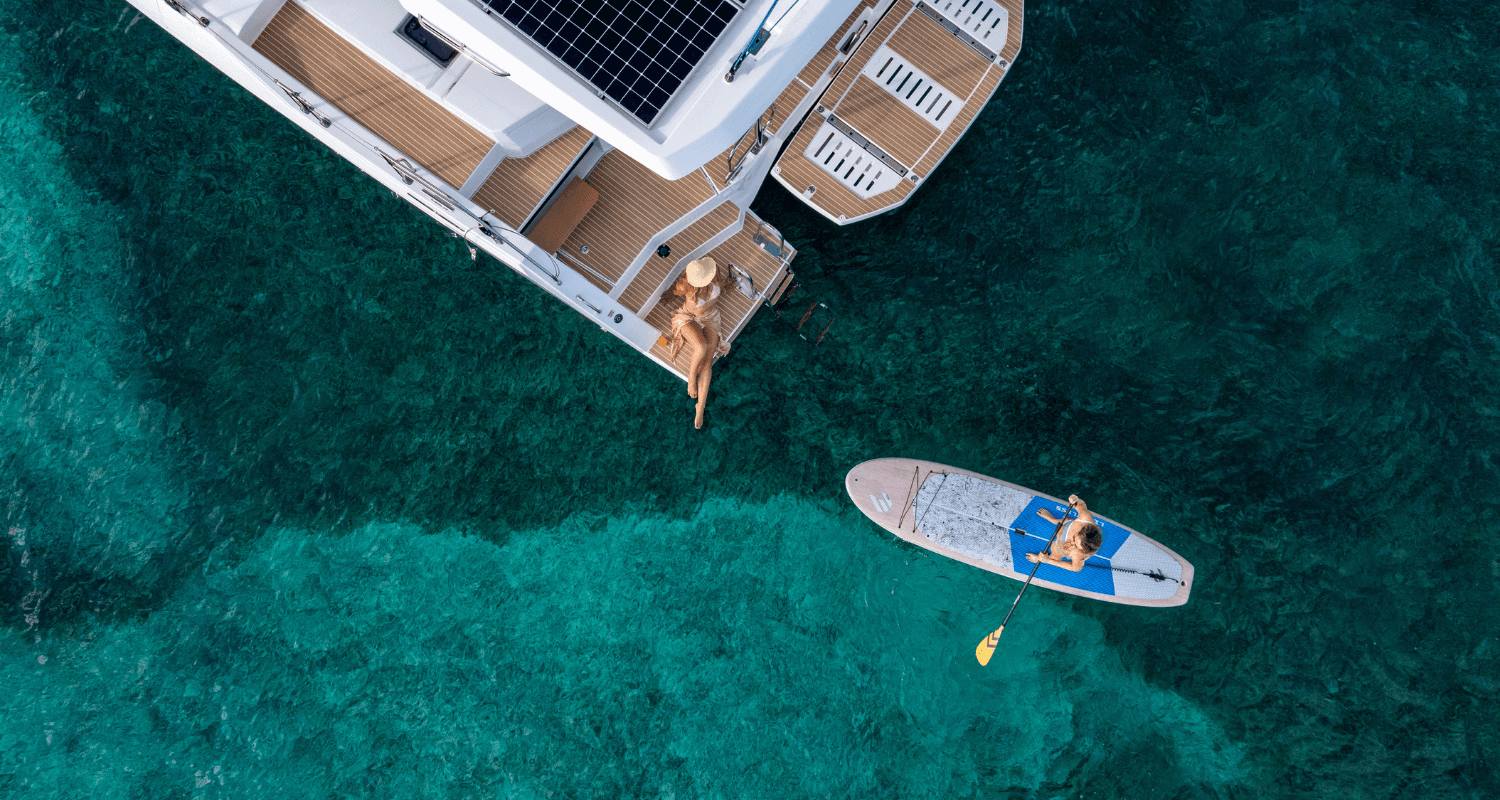
The best cruising catamarans balance comfort, range and performance
The smart catamaran buy is the one that stays comfortable at anchor, keeps moving efficiently, and still feels easy short-handed. The modern clues are in real models like the Lagoon 46, Leopard 46, and Aquila’s expanding range.

What the spec sheet should actually tell you
A cruising catamaran is not worth much if it wins only one battle. The boats that make sense in 2026 are the ones that balance comfort, range, and performance in the way you actually cruise, not the way a brochure photographs. That is why the most useful comparison starts with a simple question: will this boat stay pleasant after the third week aboard, keep going when conditions are not ideal, and move well enough that you are not motoring every time the breeze softens?
That is the real frame here. Comfort is not just a bigger saloon. Range is not just tankage. Performance is not just top-end speed. If you read the market through that lens, the differences between a Lagoon 46, a Leopard 46, and an Aquila power cat start to look like practical choices instead of lifestyle branding.
Comfort is the thing you live with every day
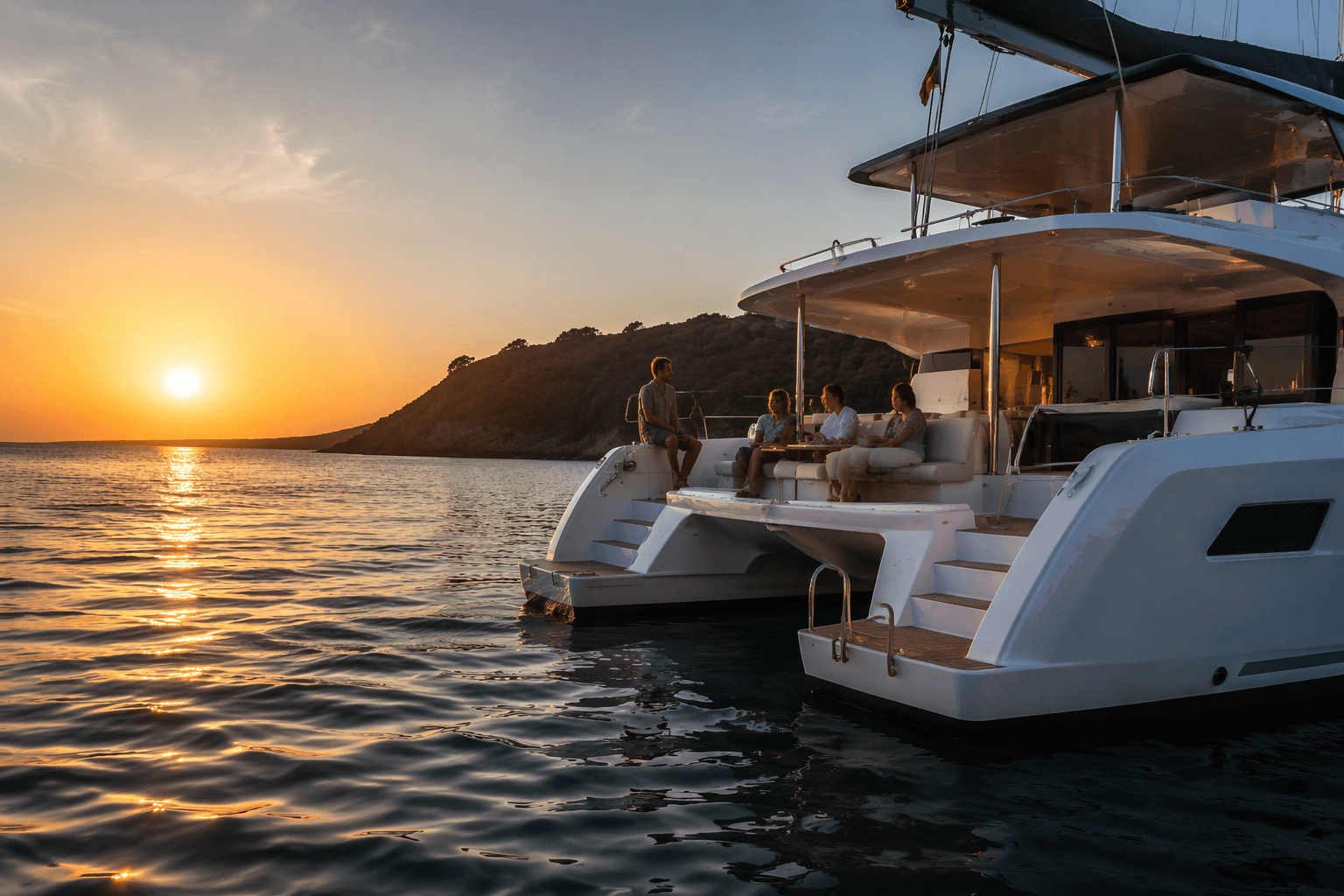
For coastal liveaboards and family cruisers, comfort is mostly about whether life aboard feels easy. That means motion at sea, storage, berths, galley usability, and cockpit flow matter as much as square footage. A catamaran can have a huge interior and still feel awkward if the galley blocks movement, the cockpit does not connect cleanly to the saloon, or the boat slams enough to make everyone tired by midafternoon.
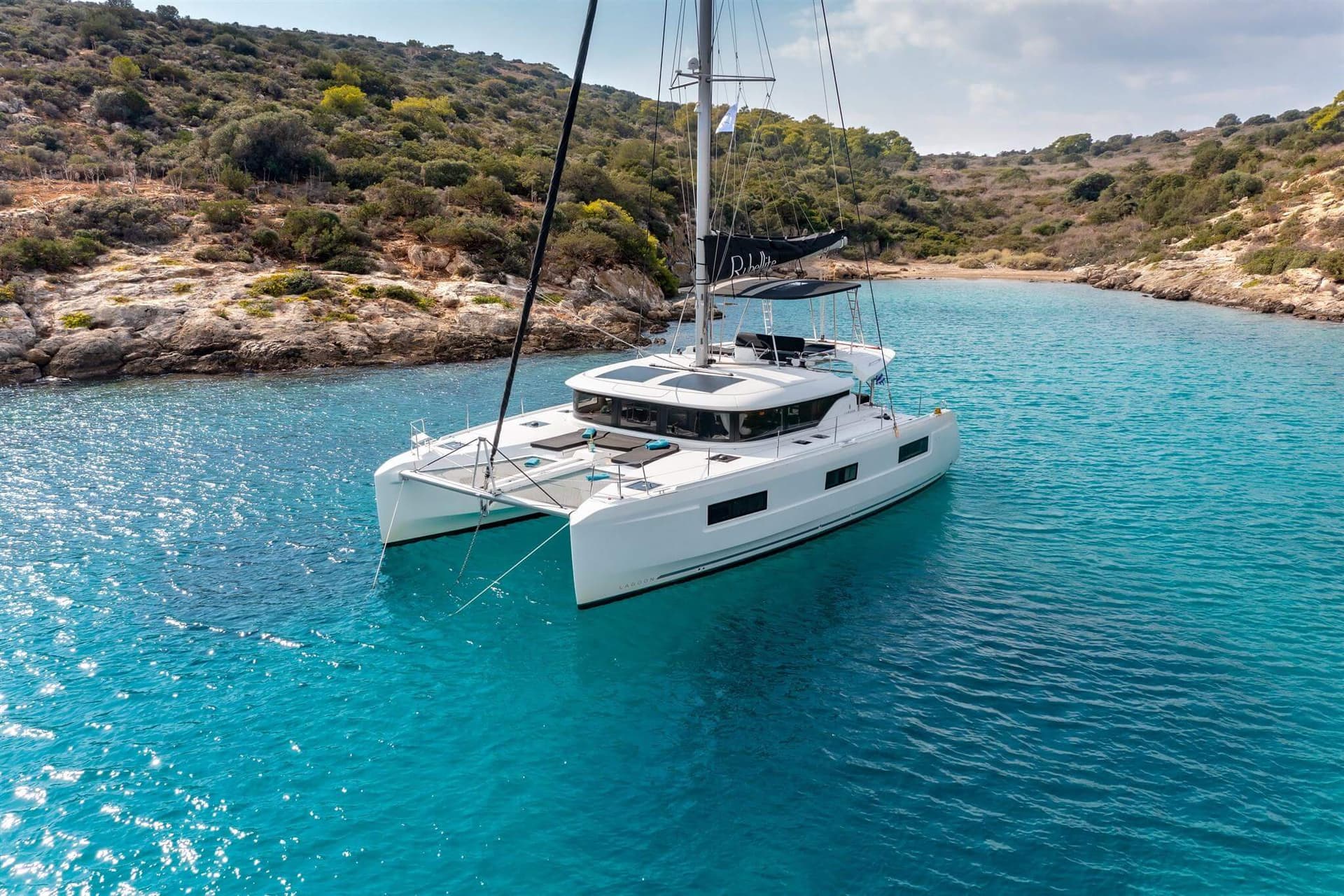
Lagoon’s 46 is a clean example of this thinking. The boat is listed at 14.5 meters, or 47 feet 7 inches, with 127 square meters, 1,367 square feet, of upwind sail area. Lagoon also emphasizes a self-tacking jib, a stepless cockpit, bathing platforms, and a flybridge, and it says the boat is easy to handle for small crews. That combination matters because it tells you the boat is built to reduce friction in daily use, not just to impress on a dock walk.
For families, that kind of layout logic is often worth more than chasing extra knots. A flat, stable stance is one of the biggest reasons catamarans have won over liveaboards and parents who want the boat to feel secure when kids are moving around. You are buying a floating routine, not a performance problem.
Range is the freedom to keep the plan alive
Range on a cruising cat is bigger than fuel tanks and water capacity. The useful version includes redundancy, system design, and the ability to keep moving efficiently when weather, current, or load are working against you. That matters to passagemakers because a boat that can carry on without drama is usually the one that keeps the crew fresh.
This is where the market has gotten more sophisticated. Buyers now look at how a boat manages power, how simple the systems are to run, and how much hassle they create when you are far from a service yard. The Catamaran Company’s 2026 guide is right to push the conversation toward real-world tradeoffs, because that is where ownership either feels liberating or exhausting.
Leopard’s 46 fits this discussion well. Robertson and Caine says it replaces the Leopard 45, and it comes with a taller mast and an optional Aramid Sport sail rig with 15 percent more sail area. Leopard also says the boat is available with an optional hybrid electric propulsion system that can draw power from solar panels, sailing regeneration, shore power, and a range-extending generator. That is not a gimmick. It is a clue that range today is increasingly about how long you can cruise efficiently without turning every leg into a fuel-management exercise.
Performance matters, but only in cruising terms
The best cruising catamarans are not racing cats with cushions. Performance in this segment means enough speed to arrive safely, enough light-air ability to avoid excessive motoring, and motion that keeps the crew from feeling beat up. If the boat is too slow, you lose freedom. If it is too aggressive, you lose comfort. The sweet spot is a boat that moves cleanly and stays composed.
That is why stepped hulls, balanced helm feel, and sail plans matter so much on modern production cats. Robertson and Caine says the Leopard 46’s stepped hulls and 15 percent more sail area contribute to effortless steerage on a well-balanced helm. That is exactly the kind of language cruising buyers should pay attention to. It is not about bragging rights. It is about whether the boat feels light enough in the hand that a long day at the helm does not turn into a grind.
For owners who are planning real passages rather than just day sails, this is where the decision gets serious. A boat that can make good time under sail, handle light air without panic, and stay predictable in chop is the one that expands your cruising window.
Which owner profile should care about what
Coastal liveaboards should lean hardest on comfort and ease of handling. A stepless cockpit, easy access to bathing platforms, a usable flybridge, and small-crew friendliness matter because these are the features that shape daily life. Lagoon’s 46 is a strong example of that brief, because it is clearly aimed at owners who want a boat that can be run without a full-time crew.
Passagemakers should be more demanding about range, helm visibility, and system simplicity. The Leopard 46 speaks directly to that buyer profile with the hybrid propulsion option and the sailing upgrades that target balanced handling. If you are thinking about offshore legs, the question is not whether the boat has luxury touches. It is whether the boat still feels efficient and calm after the first hundred miles.
Family cruisers usually want the broadest compromise of the three. They need stability, easy movement between cockpit and saloon, and enough performance that weekend and holiday cruising does not become a motor-sail routine. That is where the flat platform of a catamaran remains such a strong selling point, especially when shallow draft opens up anchorages that deeper monohulls cannot reach.
Why the brand story matters as much as the hull form
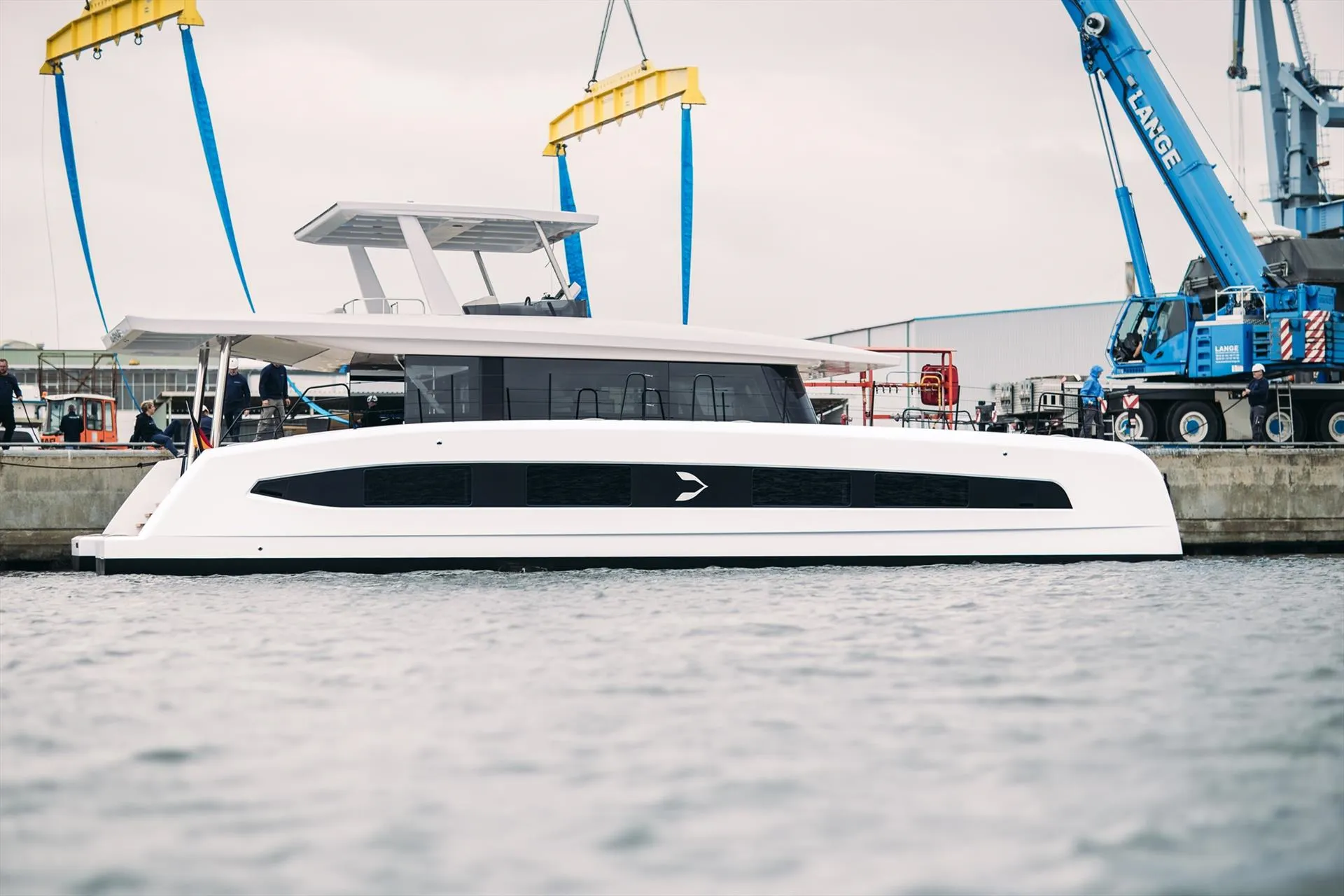
Aquila is useful here because it shows how broad the modern cat market has become. Its official lineup includes power cats such as the 46, 50, 54, and 70 Yacht models, and sail models including the Aquila 45 Sail, 50 Sail, and 65 Sail. The 45 Sail is marked for arrival in 2026, and the 65 Sail is listed for 2027. That spread tells you the brand is not chasing one narrow buyer. It is trying to cover private owners, charter-minded buyers, and people who may move between power and sail expectations.
The company’s 2012 founding through a joint venture between Sino Eagle Yachts and MarineMax also helps explain its market position. In this sector, brand support, resale value, and charter potential are not side notes. They shape what the boat is worth after the first cruising season, how easy it is to service, and whether the layout can work in a charter program if ownership plans change.
The practical takeaway
If you are reading the 2026 catamaran market properly, stop asking which boat is most impressive on paper and start asking which one stays useful after the honeymoon phase. The Lagoon 46 shows how comfort and short-handed handling can be packaged into a family-friendly cruiser. The Leopard 46 shows how performance, hybrid propulsion, and real cruising range are blending into one buying conversation. Aquila shows how wide the category has become, from power cats to new sail models aimed at very different owners.
That is the point the best cruising catamarans make without saying it outright: the right boat is the one that stays comfortable at anchor, keeps the plan alive offshore, and still feels easy when the breeze drops and the miles are not coming as fast as you hoped.
This article was produced by Prism’s automated news system from verified source data, official records, and press releases, then run through automated quality and moderation checks before publishing. The system is built and supervised by the people who set the standards it runs under. Read our full AI policy.
Did this article answer your question?