Weston Sailing Club to Host Catamaran Demo at April Cup Weekend
Weston Sailing Club's April Cup weekend on 18-19 April adds a UKCRA catamaran demo, giving UK sailors a structured first look at fast-cat sailing before committing to ownership.
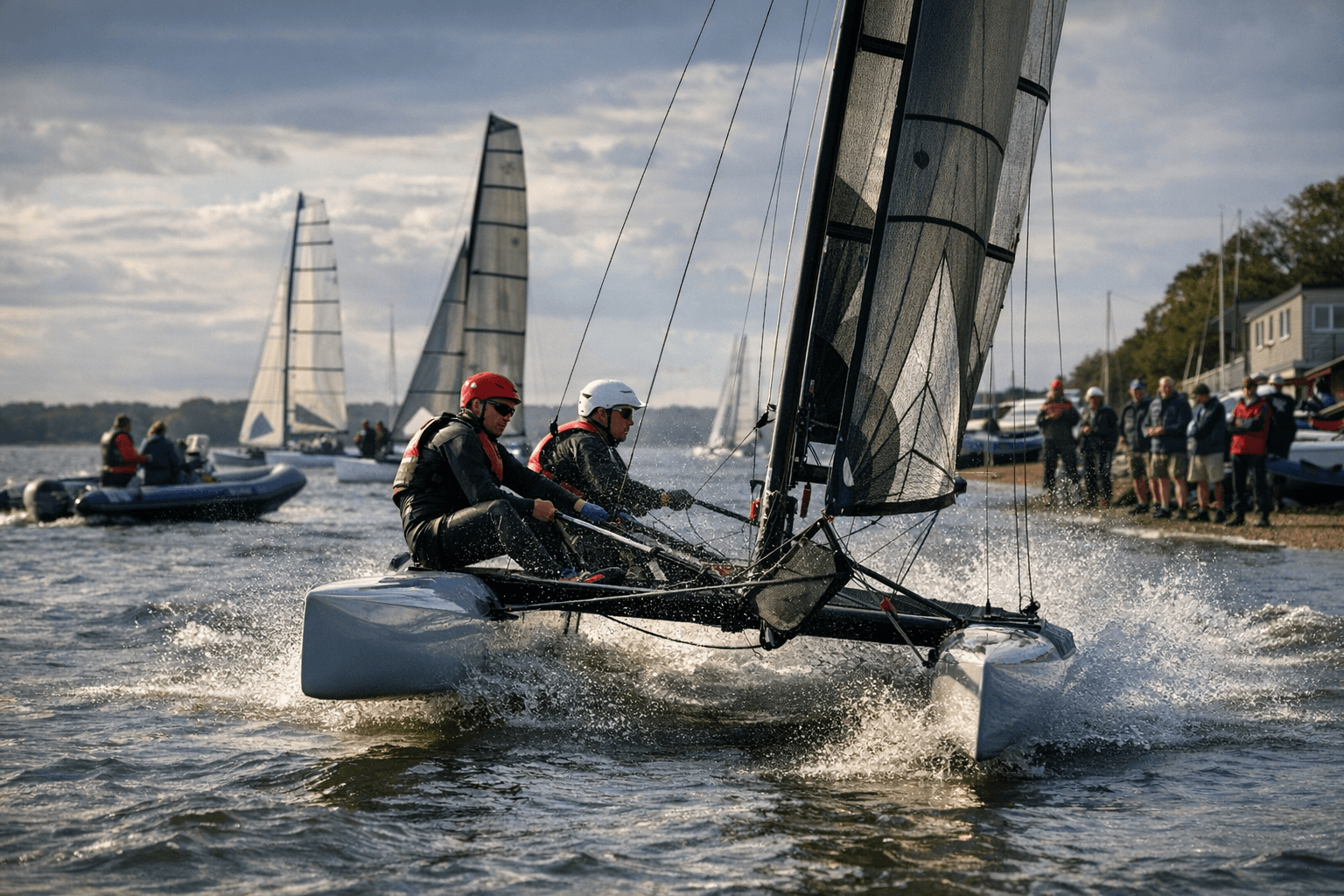
Weston Sailing Club's decision to pair a UK Catamaran Racing Association demo with its April Cup weekend on 18-19 April is the clearest signal yet that multihull momentum is reaching club-level sailing across the UK. The format is simple and the opportunity is concrete: get on a cat, ask the right questions, and decide whether the class is worth the winter refit budget.
Who should be booking a slot now: first-time cat sailors who have watched the class from the bank but never handled the helm, cruising converts who know their monohull geometry but haven't yet navigated the apparent-wind demands and weight-distribution discipline of a fast cat, and club racers already targeting the 18ft Skiff invitational who want a direct performance benchmark from the multihull side of the water.
The UKCRA, set up in 2001 to connect class associations, clubs and sailing authorities across the UK, is coordinating the demo component, which means structured coaching and proper safety oversight rather than a self-guided float. Club boats are available on the water. Given the classes the UKCRA actively promotes, expect Formula 18s and Nacra designs in the rotation. The combined format, cats and 18ft Skiffs sharing the same stretch of Southampton Water, makes for an unusually varied weekend at club level.
Use the demo time deliberately. Before you leave the beach, ask the coach to walk through the beach-launch routine in full: rigging a cat in a tidal environment is categorically different from a dinghy, and how cleanly the process runs tells you whether this class suits your home club's access window. On the first beat, ask about tacking angle, because cats bleed more speed through the tack than most sailors expect and learning where you recover it on the new sheet is the difference between a comfortable and a frustrated owner. Find the upwind pointing ceiling, too, since apparent-wind sailing on a performance cat resets assumptions built on monohull experience. On the reach, test trapping comfort actively: the wire angle and harness load differ significantly from skiff geometry, and your lower back will give you an honest verdict by mid-afternoon. Before you sail away from the coach, ask explicitly about capsize recovery, find out whether the boat turtles quickly once inverted, then actually practice it. Ask the instructor directly about pitch-pole resistance in the conditions you are sailing, because the afternoon thermal builds on Southampton Water will stress the bows differently than flat-water venues do. Round out the session by asking about fleet activity near you, what charter or loan options exist before ownership, and whether the class runs one-design or handicap racing that matches your ambitions.
Weston's April Cup notice carries a tongue-in-cheek nod to record-high temperatures in the forecast, which in practice means lighter air through the morning and thermal fills in the afternoon. Target the mid-afternoon sessions for the best breeze, bring a wetsuit regardless of what Saturday morning looks like, and pack sunscreen alongside your buoyancy aid.
Camping and catering are confirmed for the full weekend. Arriving Friday evening lets you watch the 18ft Skiff teams rig, which is the most useful possible warm-up for calibrating where cat performance sits relative to what you already know.
The UKCRA's involvement here is not incidental. Every club-level demo day feeds the pipeline that keeps class fleets active, regional brokers busy and secondhand cat values stable. Weston adding a cat demo to the April Cup is a small but concrete release into a UK scene that is working hard to grow its own next generation of multihull sailors.
This article was produced by Prism’s automated news system from verified source data, official records, and press releases, then run through automated quality and moderation checks before publishing. The system is built and supervised by the people who set the standards it runs under. Read our full AI policy.
Did this article answer your question?