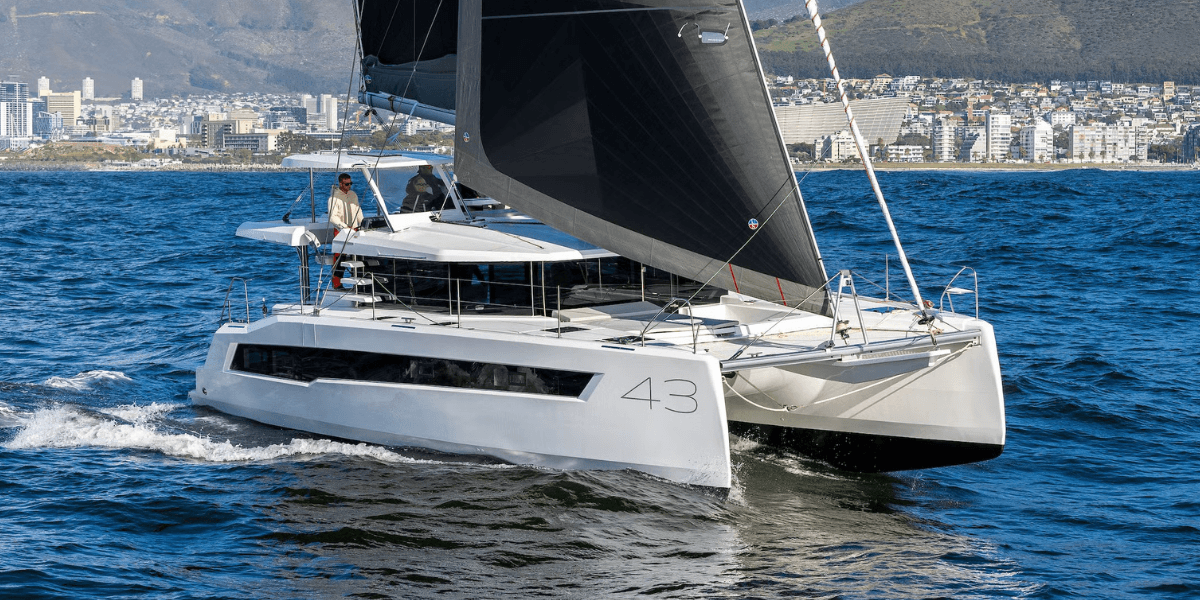
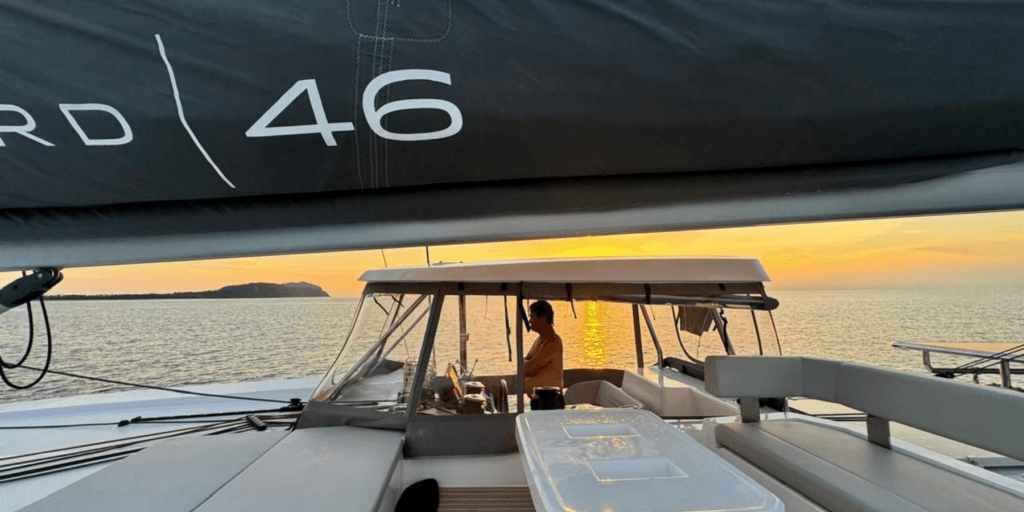
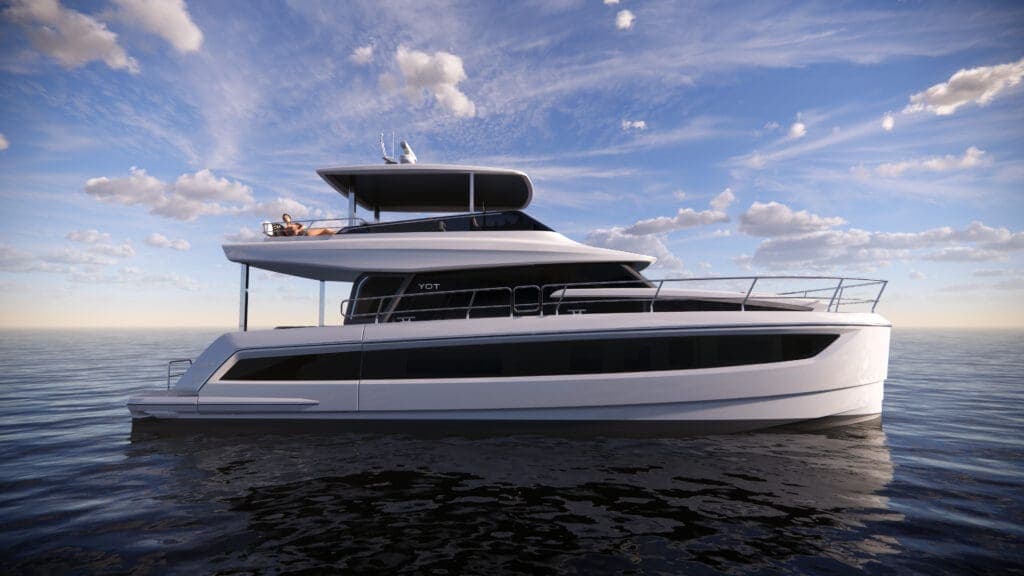
Why daggerboards give performance catamarans a crucial upwind edge
Daggerboards are what let a performance catamaran claw higher, slip less, and carry speed upwind. The price is extra complexity, more windage, and a cockpit routine that rewards an engaged owner.
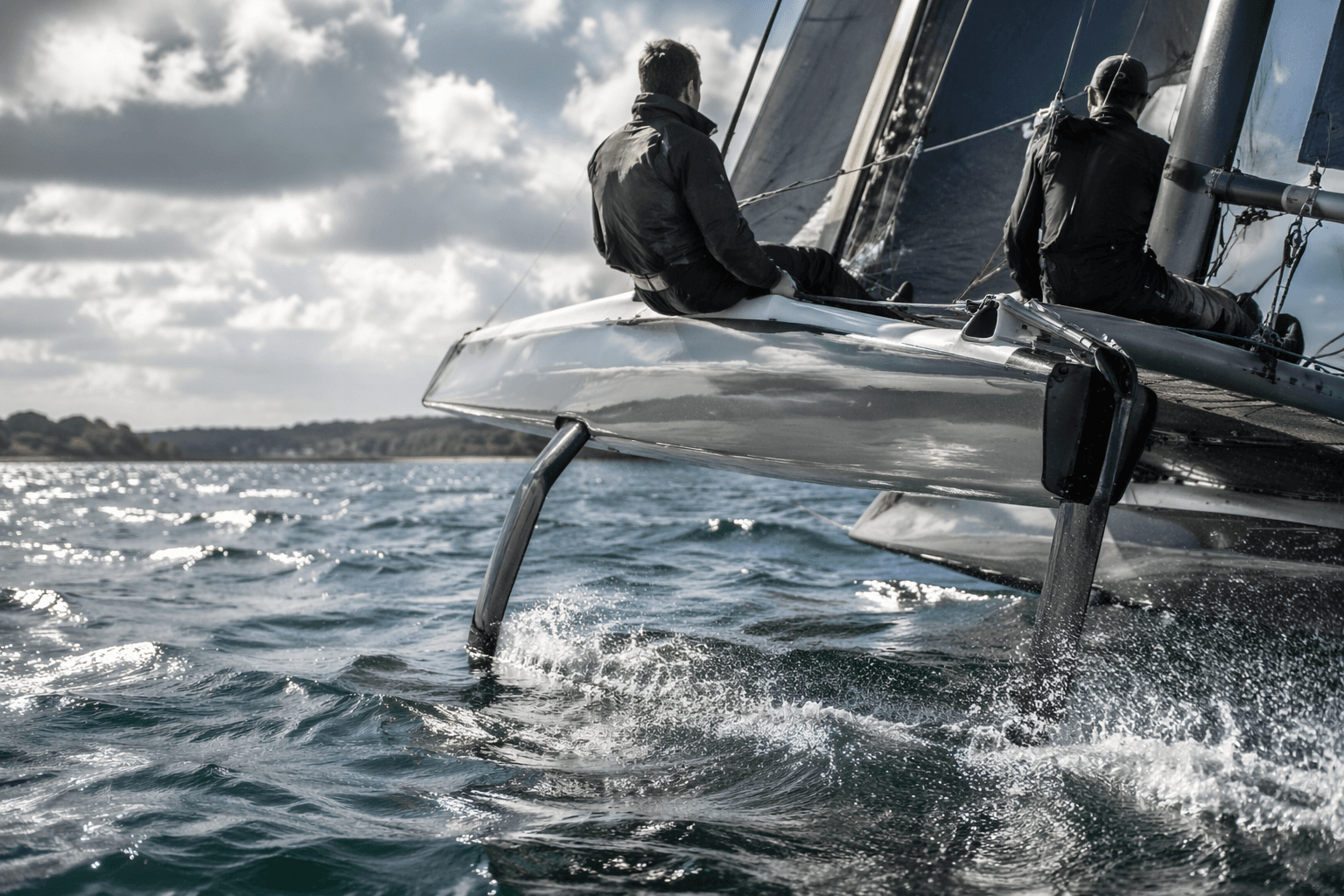
Daggerboards are the line in the sand between a catamaran built to cruise and one built to hunt windward miles. If you have ever watched two cats leave the same tack and one slowly fall off while the other keeps driving up the rhumb line, you have already seen the difference in the water. The boards do the work a fixed keel cannot: they generate lift, cut leeway, and turn a fast hull shape into a boat that actually climbs to weather instead of just sliding through it.
What the boards are really doing
The simplest way to think about daggerboards is as adjustable underwater foils. Outremer calls them an underwater sail or foil, and that is the right mental picture because they are not just there to add depth. They are there to create lift and keep the hulls tracking to windward rather than drifting sideways. The Multihull Company’s performance study makes the blunt version of the case: in the vast majority of conditions, daggerboards beat keels for both boat speed and leeway.
That matters because the whole performance-cruising argument is about making the boat more useful, not just faster on paper. Balance Catamarans says the boards matter most in light to moderate air, up to about 15 knots of true wind, when they are actively working hardest and the reduction in leeway is most obvious. In that zone, a good board setup does not feel like a garnish. It changes the whole way the boat carries itself.
Why the upwind angle matters in real life
The number that owners remember is not foil theory, it is angle. Balance Catamarans puts a typical production keeled cat around 55 to 60 degrees to the true wind, while a daggerboard cat can get closer to 45 degrees. That is a big enough difference to change how you plan a passage, how many tacks you are willing to make, and whether a weather window still makes sense by the time you are done clawing off a lee shore.
This is where the performance cat earns its keep. A narrower channel becomes passable without a stressful slalom. A weather mark gets reached with fewer losses. Offshore, the boat has a better chance of making good on a forecast instead of drifting into the margins of it. The best daggerboard cats are not just quicker, they are more precise, and precision is what turns speed into usable mileage.
The trade-off sheet you should actually care about
The first trade-off is draft. A fixed keel is always there, for better or worse. A daggerboard can be lifted, which gives you more flexibility in skinny water and at anchor, and that is exactly why some owners accept the extra complication. If your cruising life includes shallow anchorages, reef passes, or the kind of approach where you want the option to shorten your underwater footprint, retractable boards are a real advantage.
The second trade-off is handling. Multihulls World notes that the boards are usually fully down when sailing to windward in light air, then partly lifted as speed builds to reduce drag. In stronger conditions, the windward board is often raised for safety so the boat is less likely to trip. Downwind, they matter less, and in heavy weather they may come all the way up, although leaving a little board down can help keep the boat from yawing in following seas. That means you are buying a more active boat, one that expects the crew to think about mode and trim.
The third trade-off is complexity. Boards need trunks, lifting gear, sealing, inspection, and a little more attention than a molded keel that is just part of the hull. Multihulls World also points out another cost of raising them: windage. The upside is better performance, the downside is that you have more moving parts and more structure to fit around.
What the speed numbers say
The most convincing numbers are not abstract. Multihulls World says the latest Catana models use curved daggerboards, and on the Catana 59 the foil effect is worth about 500 kg at 15 knots. Yachting World reported that the 59-foot cruising cat carried curved boards the builders said produced about half a tonne of lift at 10 knots. That is a serious amount of help for a boat in the cruising lane, and it explains why some performance cats feel almost unnervingly crisp when they are trimmed up properly.
HH Catamarans adds another useful wrinkle: curved boards can create not only windward lift but upward lift, which reduces displacement at speed. In plain English, the boat is not just resisting sideways slip, it can feel a little freer as the foil starts doing part of the carrying. That is one reason daggerboard cats often feel like they are on the cusp of planing efficiency long before a conventional cruising cat does.
Why the Catana story keeps coming up
Catana is the classic example because the brand built its technical identity around exactly this idea. Jean-Pierre Prades and Thierry Goyard founded the company in 1984 with Lock Crowther, and the brand says its DNA was defined around performance, safety, and comfort from 1994 to 1996. From 1997 to 2005, it pushed further into advanced composite materials, asymmetrical hulls, and daggerboards.
That history matters because it shows daggerboards are not a gimmick bolted onto a mainstream hull. They are part of a design philosophy that chooses windward ability and lower drag over the easier packaging of fixed keels. When Multihulls World describes the Catana 59’s curved boards as real foils worthy of a 60-foot racing trimaran, it is pointing to a very specific kind of cruising ambition: fast, offshore-capable, and willing to pay for it in complexity.
What has changed, and what has not
Modern builders are still refining the idea instead of abandoning it. Multihulls World notes that later Outremer models shortened structural cases to reduce board size, weight, and windage, even though that makes the build more complex. Catana now uses electric daggerboards with push-button control and visual markers for height adjustment, which is exactly the kind of owner-friendly detail that makes the system easier to live with day to day.
That evolution tells you where daggerboards belong. They are not for the buyer who wants the simplest possible floating condo. They are for the owner-cruiser who values tighter pointing, lower drag, and the ability to keep making ground when the route is awkward and the wind is not perfect. If you want easy cruising above all else, fixed keels are the simpler answer. If you want a catamaran that trims the excess and gives you a real edge to weather, daggerboards are still the hardware that makes the difference.
This article was produced by Prism’s automated news system from verified source data, official records, and press releases, then run through automated quality and moderation checks before publishing. The system is built and supervised by the people who set the standards it runs under. Read our full AI policy.
Did this article answer your question?