Yamaha backs Belisama’s CyberCat electric catamaran with five-year deal
Yamaha’s five-year exclusive deal makes Belisama’s CyberCat feel less like a startup pitch and more like a real workboat program with propulsion muscle behind it.
Yamaha Motor Europe locked in a five-year exclusive partnership with Belisama Yacht on June 3, giving the CyberCat electric catamaran workboat the kind of propulsion backing that separates a promising concept from a platform that can actually scale. Under the deal, Yamaha became the preferred and sole outboard-engine supplier for CyberCat, a move that adds not just hardware, but commercial credibility for a boat aimed at daily professional use.
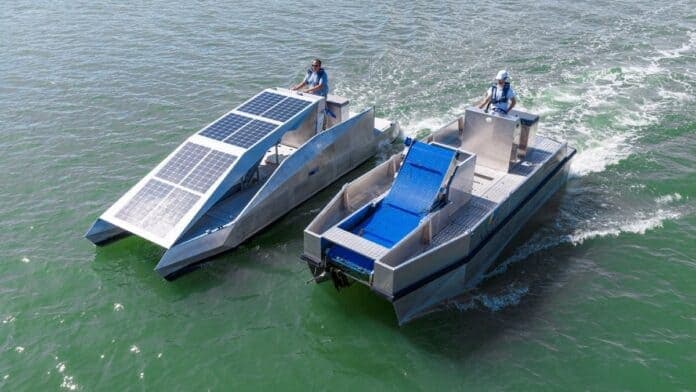
Belisama pitches CyberCat as a fully electric workboat for cleaning and maintaining inland and coastal waters. The company says the vessel is meant for public authorities, environmental service companies, marinas and local administrations, and that its boats are built from marine-grade aluminum modules. Belisama also frames CyberCat around low operating costs and zero emissions, with a modular layout that suggests upgrades and reconfiguration instead of replacement when an operator’s needs change.

That modular angle matters because CyberCat is not being sold as a one-off clean-tech prototype. Pressmare described the range as modular, aluminum-built and tied to decarbonization and carbon-neutrality goals in professional marine applications, which puts this deal squarely in the part of the catamaran market that has to prove electric propulsion can survive real working hours, not just dockside attention. For operators, the question is whether a boat can keep pace with maintenance schedules, waste collection jobs and daily patrol duties without turning battery management into a headache. Yamaha’s role gives Belisama a larger propulsion partner to lean on while that answer is tested in service.
The project already had a public face before the Yamaha announcement. At the 2026 Venice Boat Show, which ran from May 27 to May 31 at the Arsenale, founder Leonardo Narduzzi presented CyberCat 70 with a conveyor-belt-style system for floating waste, plus skimmers and microplastic filters. RaiNews had previously described Belisama as a Veneto startup built by seven young graduates, and that origin story fits the way CyberCat has been positioned from the start: as a practical environmental-service catamaran, not a glossy concept sketch.

For catamaran watchers, that is the real signal here. A startup can claim clean propulsion, modularity and lower running costs on its own. A five-year exclusive with Yamaha says someone with serious marine weight is willing to stand behind the idea while Belisama turns CyberCat into a repeatable platform.
This article was produced by Prism’s automated news system from verified source data, official records, and press releases, then run through automated quality and moderation checks before publishing. The system is built and supervised by the people who set the standards it runs under. Read our full AI policy.
Did this article answer your question?