Analysts Forecast Arabica Coffee Prices to Drop a Third by Late 2026
Eleven analysts surveyed by Reuters put Arabica futures at 225 cents/pound by year-end, a potential one-third drop driven by a looming record Brazilian harvest.
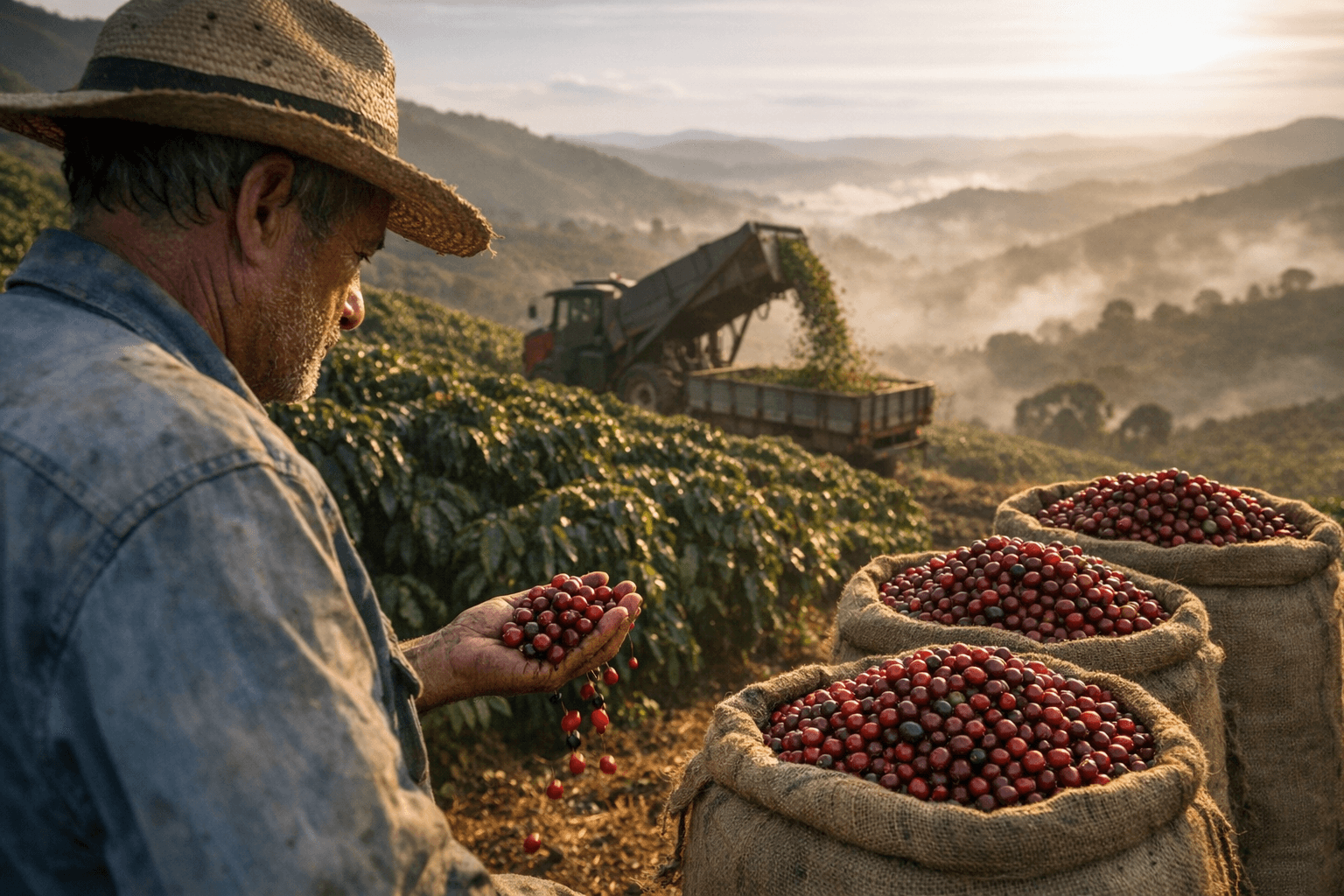
The green-bean prices that squeezed roaster margins through the past pricing cycle may be heading for a sharp correction. The central argument for that call came down to one number: up to 76 million bags out of Brazil.
A Reuters survey of 11 coffee-market analysts placed the median Arabica futures forecast at 225 cents per pound by end of 2026, a decline of roughly one-quarter to one-third from late-March levels. Robusta was projected to fall materially as well.
The bearish case rested on expectations for a record 2026/27 Brazilian harvest. Analyst medians and brokerage estimates from Marex, StoneX, and Sucafina converged in a range of 74 million to 76 million 60-kilogram bags, which would mark the highest output the world's largest coffee producer has ever recorded. Improved weather across Brazilian arabica-growing regions reinforced those estimates, while rising output projections from Vietnam added further downward pressure on the robusta complex.
The demand picture compounded the supply story. Consumption growth has not kept pace with those production gains, and logistical and input-cost dynamics have been returning to more normal ranges after prior disruptions, removing two structural props that had helped sustain elevated prices.
For roasters and branded coffee companies, a move toward 225 cents per pound would ease green-bean procurement costs considerably, though much of that relief will arrive on a delay. Hedging positions and multi-month contracted volumes mean most roasters will absorb the benefit gradually.
Origin producers face the opposite dynamic. Lower world prices compress farm-gate revenues, and smallholder growers across Brazil and other exporting nations have the least buffer against a sustained price decline. Specialty-lot premiums may offer some insulation for cooperatives and exporters selling differentiated coffee, but the directional pressure is clearly downward across most supply tiers.
Analysts flagged the standard risks to any long-range crop estimate: alternate-bearing cycles can surprise, and weather remains the biggest variable. Geopolitical disruptions affecting fuel, fertilizer, or shipping routes, particularly scenarios tied to ongoing Middle East conflict, were cited as the likeliest source of an unexpected reversal. The Brazilian crop has a way of keeping everyone honest until it is in the warehouse.
This article was produced by Prism’s automated news system from verified source data, official records, and press releases, then run through automated quality and moderation checks before publishing. The system is built and supervised by the people who set the standards it runs under. Read our full AI policy.
Did this article answer your question?