Electrical test maps coffee flavor, separating roast color from strength
A repurposed battery tester can now separate roast color from strength, giving coffee pros a new way to pin down what is actually in the cup.
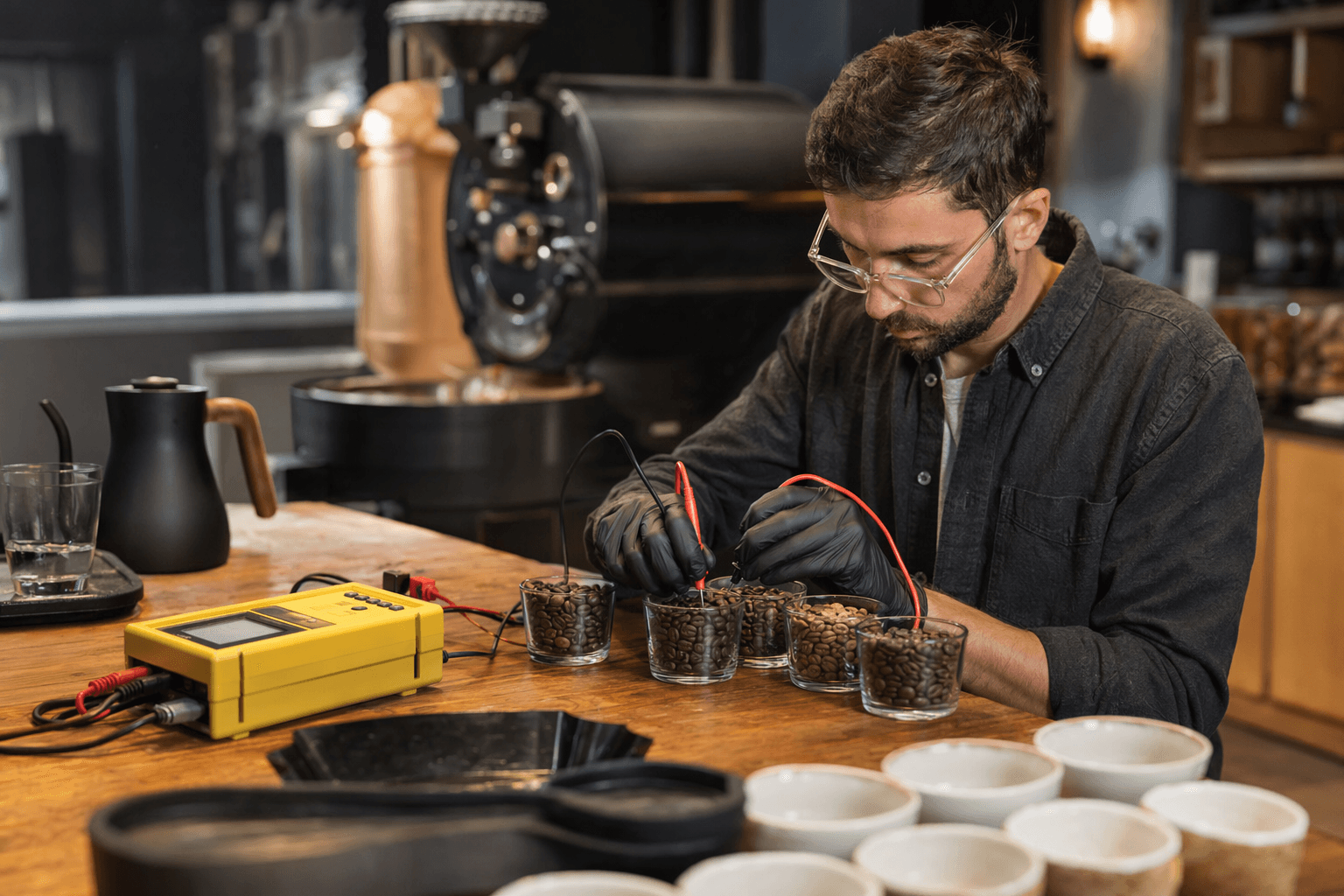
A battery tool now reads coffee like a fingerprint
A lab instrument built for batteries and fuel cells has been turned loose on brewed coffee, and the result could change how cafés and roasters check what they are serving. In a study published April 28, 2026 in Nature Communications, University of Oregon chemist Christopher Hendon and colleagues used electrical current to map the chemical fingerprint behind flavor, separating roast color from brew strength for the first time.
That matters because coffee has long been judged with a blunt instrument. If you want to know how strong a cup is, the standard move is to measure refractive index or total dissolved solids. That tells you how much material ended up in the drink, but it does not tell you whether the profile is coming from a lighter roast, a darker roast, or some mix of roast and extraction choices that changed the way the cup tastes.
Why the usual strength reading misses part of the story
Coffee people know strength and flavor are related, but they are not the same thing. A refractometer can tell you concentration, yet two cups with similar total dissolved solids can still taste very different if one was roasted darker or extracted differently. Hendon’s point is that this has left the industry with a blind spot in quality control, because roast color strongly shapes flavor even when the measured strength looks the same.
The new method addresses that gap by using cyclic voltammetry, a technique more familiar in battery labs than in cafés. In the first electrical scan, the stronger the coffee, the more current passed through the cup. On later scans, darker roasts suppressed the current more strongly because they carry more organic molecules that stick to the electrode surface.
That gives the cup an electrical signature that is not just about how much coffee material is dissolved. It is a way to split apart two variables that baristas and scientists have not been able to separate cleanly before: roast color and extraction strength.
How the electrical scan works in the cup
The researchers tested brewed black coffee, not a latte, not a flavored drink, and not a lab-made substitute. They sent current through the coffee with a potentiostat, the same sort of tool commonly used to test batteries and fuel cells, then watched how the signal changed across scans. The result was a reading that linked current to strength on the first pass and to roast-driven suppression on later passes.
That detail is important for anyone who spends time dialing in espresso or batch brew. If the signal can be standardized, it could become a fast in-situ check on whether a brew really matches the target recipe. It also points toward a future where electrical fingerprinting could help verify whether a cup lines up with the intended roast profile, whether the extraction landed where the roaster wanted, and whether a coffee lot is behaving the way its paperwork claims.
The practical upside is not abstract. A café could use this kind of readout to compare day-to-day prep against a known standard. A roaster could use it to confirm that the same beans are expressing the same cup character from one batch to the next. Over time, that kind of fingerprinting could also support fraud detection, because a coffee that claims one profile but behaves like another would be easier to spot once reference patterns are built.
What this could mean for consistency, freshness, and origin claims
The Nature Communications paper describes the method as a strategy for rapidly assessing flavor-correlated chemical properties of coffee. That opens the door to a bigger role than simple lab curiosity. If the electrical pattern proves stable across a wide enough range of coffees, it could help detect when a lot is stale, when extraction drift has pushed a brew out of spec, or when a roast target was missed even if the color looks close enough by eye.
That is where the story gets especially useful for serious coffee drinkers. A readout that separates roast from strength could help explain why one cup tastes lively and another tastes flat even when both hit the same measured concentration. It could also become part of a broader verification system, one that compares a brew against the profile expected from a certain origin, process, roast level, or freshness window.
For now, the study stops at brewed black coffee, but the logic is clear. Coffee already has tools for measuring how much is dissolved. This method adds a way to measure what that dissolved material is doing electrically, and that is a much closer proxy for the flavor people actually perceive in the cup.
The Oregon lab behind the breakthrough
Hendon has been a visible coffee-science figure at the University of Oregon since 2020, and the school’s Oregon Coffee Laboratory in Willamette Hall gives that work a permanent home in Eugene, Oregon. The university describes the lab as a public space where Hendon studies the electrical properties of coffee extracts, which fits neatly with this new direction in coffee analysis.
Robin Bumbaugh at the University of Oregon in Eugene and her colleagues also helped establish the key link by placing electrodes in cups of coffee and finding a linear relationship between the electrical current that passed through and coffee strength and roast. That line of evidence matters because it suggests the method is not just novel, but readable in a way the coffee world can eventually use.
Hendon says the approach offers an objective way to make a statement about what people like in a cup, and that until now scientists and baristas could not separate roast color from extraction strength. That is the real leap here: coffee is moving from a world of rough proxies into one where the cup itself can be read as an electrical map of flavor.
The old readout told you how much coffee was in the water. This one starts to tell you what kind of cup it is.
This article was produced by Prism’s automated news system from verified source data, official records, and press releases, then run through automated quality and moderation checks before publishing. The system is built and supervised by the people who set the standards it runs under. Read our full AI policy.
Did this article answer your question?