Arabica Coffee Futures Jump as Conflict and Weather Risks Mount
Arabica jumped as much as 3.1%, with New York stocks under 500,000 bags and the Strait of Hormuz still clouding freight costs. That mix is pushing risk straight into green contracts and retail pricing.
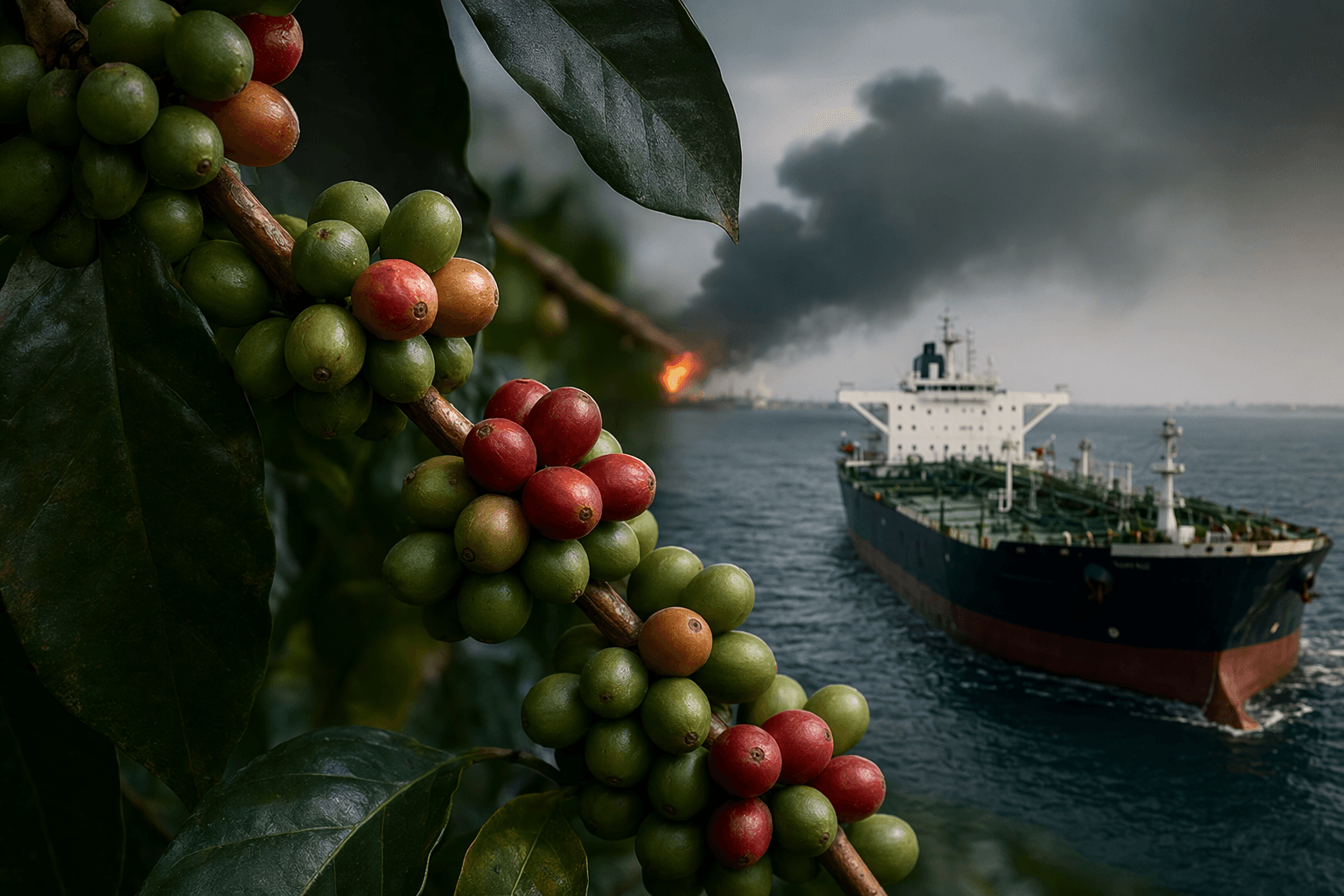
Arabica coffee futures surged as much as 3.1% and posted their biggest two-week move in New York, a reminder that the market is not just trading weather, it is pricing in the cost of moving coffee across a nervous global supply chain. Traders were looking at Middle East conflict risk, tight exchange stockpiles and a Brazilian crop that still carries real weather damage, all at the same time.
The immediate concern is logistics. Bloomberg said the Middle East conflict was expected to keep freight and fuel costs elevated, while there was still no sign the Strait of Hormuz would reopen soon, even after an extended ceasefire in Iran reduced the immediate risk of renewed combat. That matters far beyond crude oil. When shipping lanes stay uncertain, coffee buyers pay up for coverage, roasters see their landed costs stretch, and the premium for nearby supply rises before a single sack changes hands.
The inventory picture has only sharpened that move. Coffee stocks in New York fell below 500,000 bags and hit a two-month low on April 28, while robusta certified stocks were around their lowest in 16 months. Sucafina said more than 300,000 bags had come out of the largest chunk of ICE-certified inventory over the prior two months. Those drawdowns matter because certified stocks are the market’s cushion; when they shrink, the trade loses its buffer just as physical supply gets tighter.
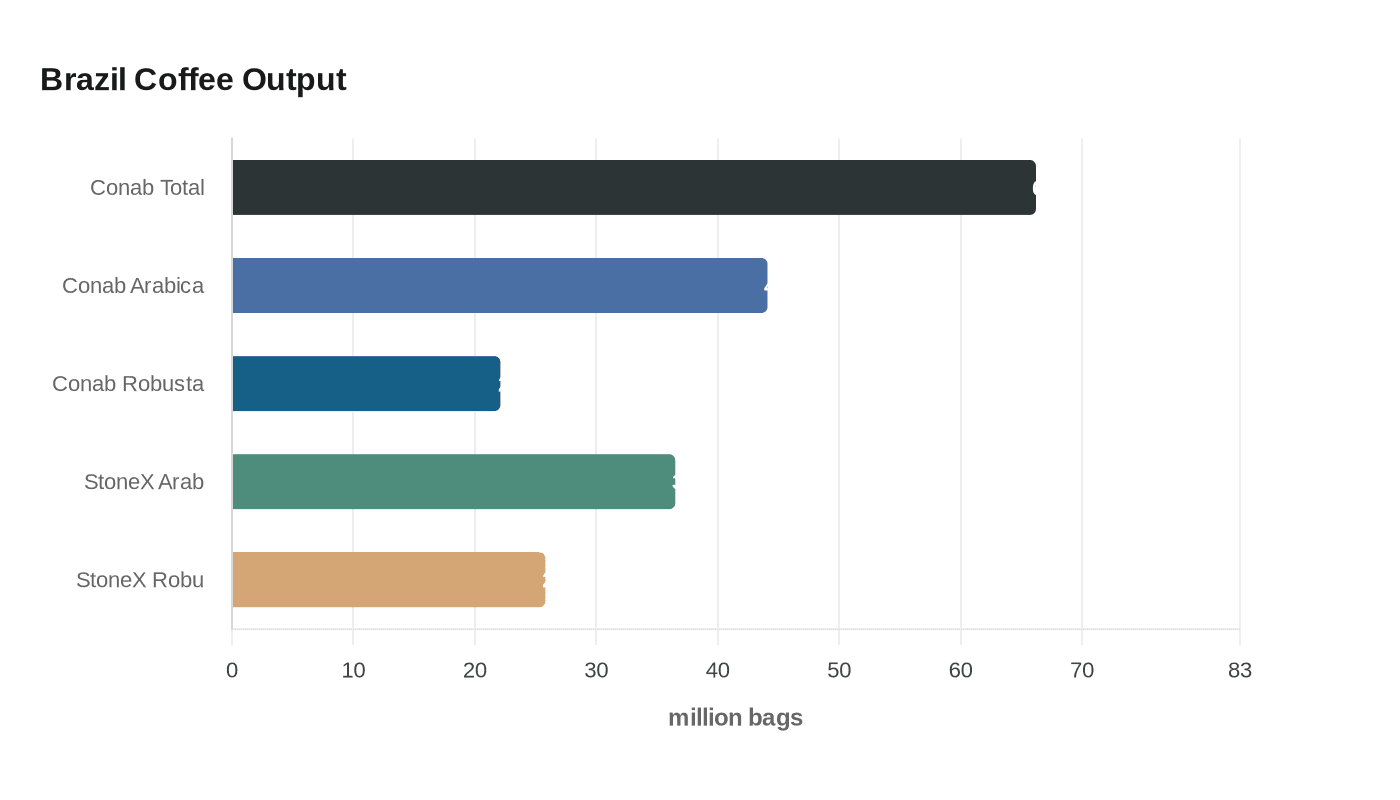
Brazil is the other half of the story. Conab said on February 5 that 2026 coffee production would rise 17.2% year over year to a record 66.2 million bags, including 44.1 million bags of arabica and 22.1 million bags of robusta. But StoneX later estimated that Brazil’s 2025/26 arabica output fell 18.4% to 36.5 million bags, while robusta reached a record 25.8 million bags. That gap between the official headline crop and the private-sector read on arabica availability has kept the market jumpy.
A stronger Brazilian real has added another layer of pressure by discouraging export sales, and that slows the flow of coffee into the trade when buyers are already wary. For roasters, the practical result is familiar: a futures spike in New York can show up later in green offers, hedge costs and, eventually, shelf prices. Pratik Parija and Dayanne Sousa have been among the names tracking that tension, and the market still looks built on a fragile stack of weather fear, currency strength, thin stocks and shipping risk.
This article was produced by Prism’s automated news system from verified source data, official records, and press releases, then run through automated quality and moderation checks before publishing. The system is built and supervised by the people who set the standards it runs under. Read our full AI policy.
Did this article answer your question?