Arabica Coffee Futures Slide to 5½‑Month Low on Bigger Brazilian Crop
Arabica futures plunged to a multi‑month low as forecasts for a bigger Brazilian 2026 crop and ample supplies pushed prices down, a move that matters for roasters, traders and growers.
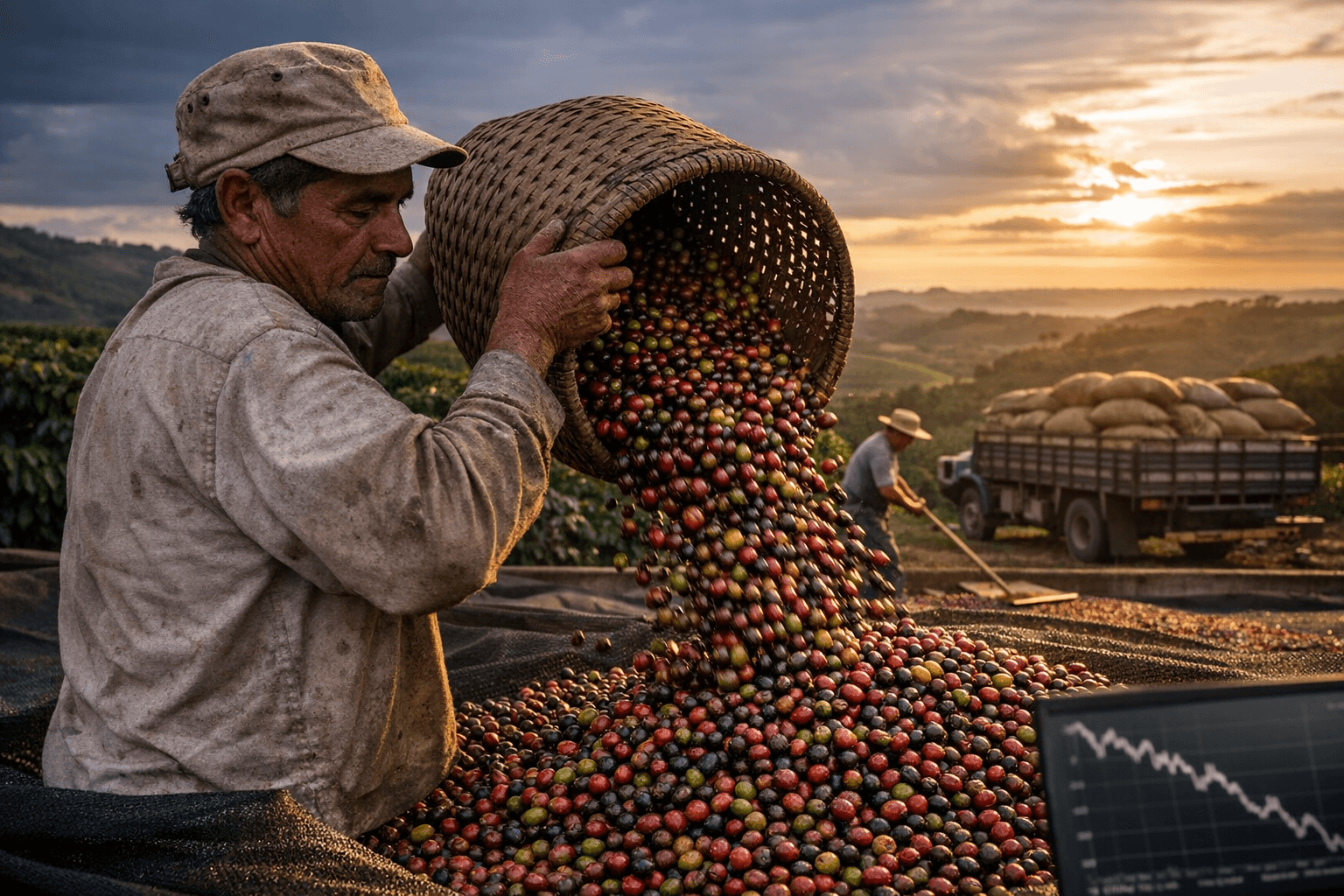
Arabica coffee futures fell to the lowest levels in roughly half a year as forecasts for a larger Brazilian 2026 crop, heavier rains and recovering exchange inventories weighed on the market. Nearby contract snapshots ranged roughly from $3.14 to $3.20 per pound, and traders logged sharp daily percent declines in March contracts as selling accelerated.
Market feeds showed March arabica (KCH26) moving lower through early trading sessions, with intraday slips of -1.77 percent and later daily closes down around -2.66 percent. One weekend recap recorded a steeper Friday close, with March down -11.85 cents or -3.84 percent. Sources variously labeled the drop a 5½‑month low, a 5.75‑month low or a six month low, reflecting different look‑back windows and contract bases.
A confluence of supply signals underpinned the slide. Weather services and research bodies pointed to heavier rains in Brazil that have favored bean development. Somar Meteorologia reported that Minas Gerais received 69.8 mm of rain in the week ended January 30, equal to 117 percent of the historical average. CEPEA summed up the effect: "the heavier rains in recent days in practically all coffee‑growing regions of Brazil have brought relief to Arabica producers, favoring the filling of the beans of this variety, during the decisive phase for the good development of the crop."
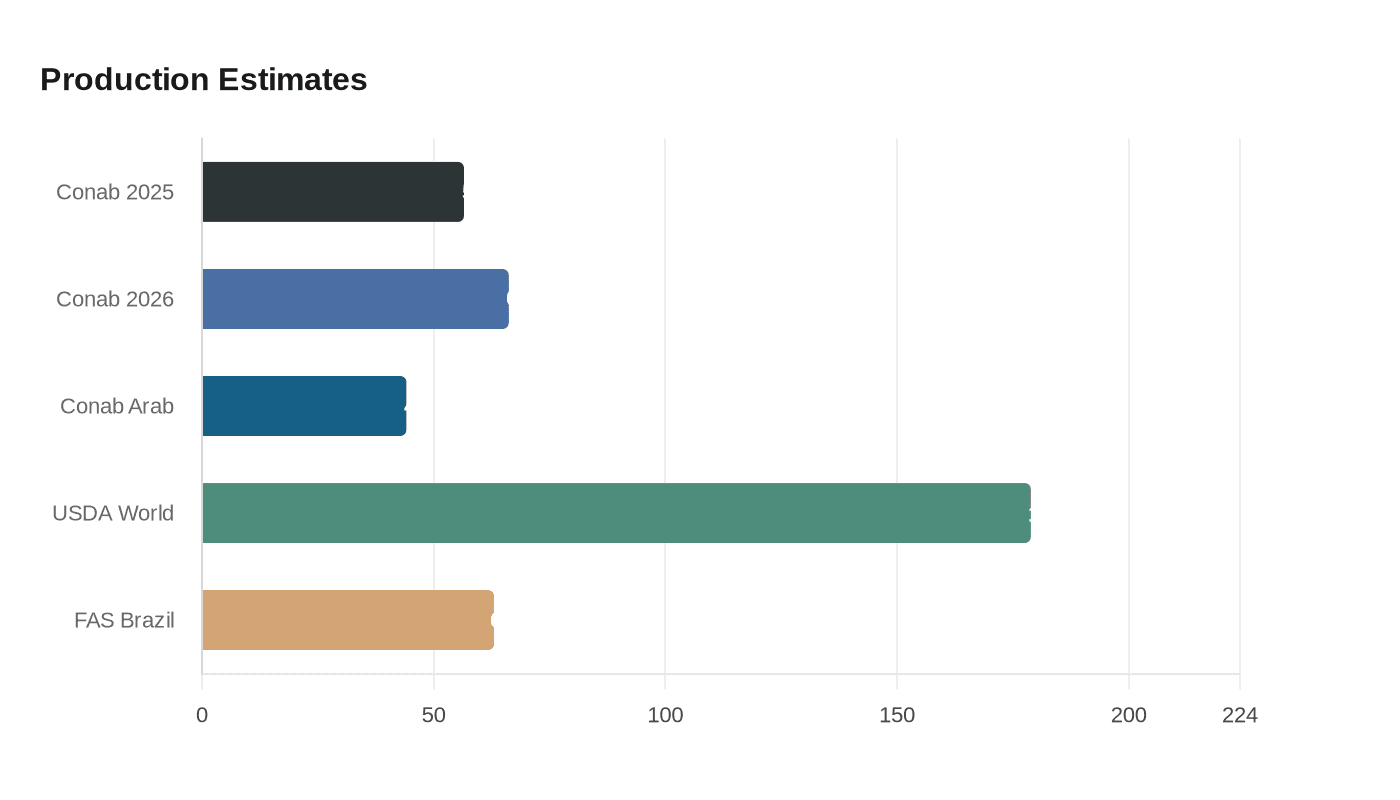
Officials and analysts also flagged production revisions and harvest expectations. Conab raised its Brazil 2025 production estimate to 56.54 million bags in a December revision, and a separate Conab projection for 2026 cited a much larger figure of 66.2 million bags with arabica up 23.2 percent to 44.1 million bags. Those domestic forecasts sit alongside USDA Foreign Agricultural Service projections that show world production rising to 178.848 million bags in 2025/26, while FAS expects Brazil's 2025/26 output to fall to 63.0 million bags by its accounting.
Market structure compounded the pressure. ICE‑monitored arabica inventories recovered from a 1.75‑year low of 396,513 bags on November 18 to 461,829 bags on January 7. Sales of Brazil's 2026/27 crop have been slow, about 8 percent of production potential versus a 17 percent historical average, and "futures prices remain below spot prices, discouraging forward sales." The recent devaluation of the Brazilian real has also added downward pressure.
Export flows showed contrast. Cecafe reported December green exports at 2.86 million bags, down 18.4 percent year on year, with arabica exports at 2.6 million bags and robusta at 222,147 bags.
For roasters, traders and growers the practical result is mixed. Lower futures can ease buying costs for roasters and commercial buyers, while farmers face a market that may delay forward sales even as crop conditions improve. Watch Conab bulletins, ICE inventory updates, Cecafe export releases and currency moves for the next directional clues; these data points will shape whether the price slump deepens or stabilizes as Brazil’s harvest progresses.
This article was produced by Prism’s automated news system from verified source data, official records, and press releases, then run through automated quality and moderation checks before publishing. The system is built and supervised by the people who set the standards it runs under. Read our full AI policy.
Did this article answer your question?