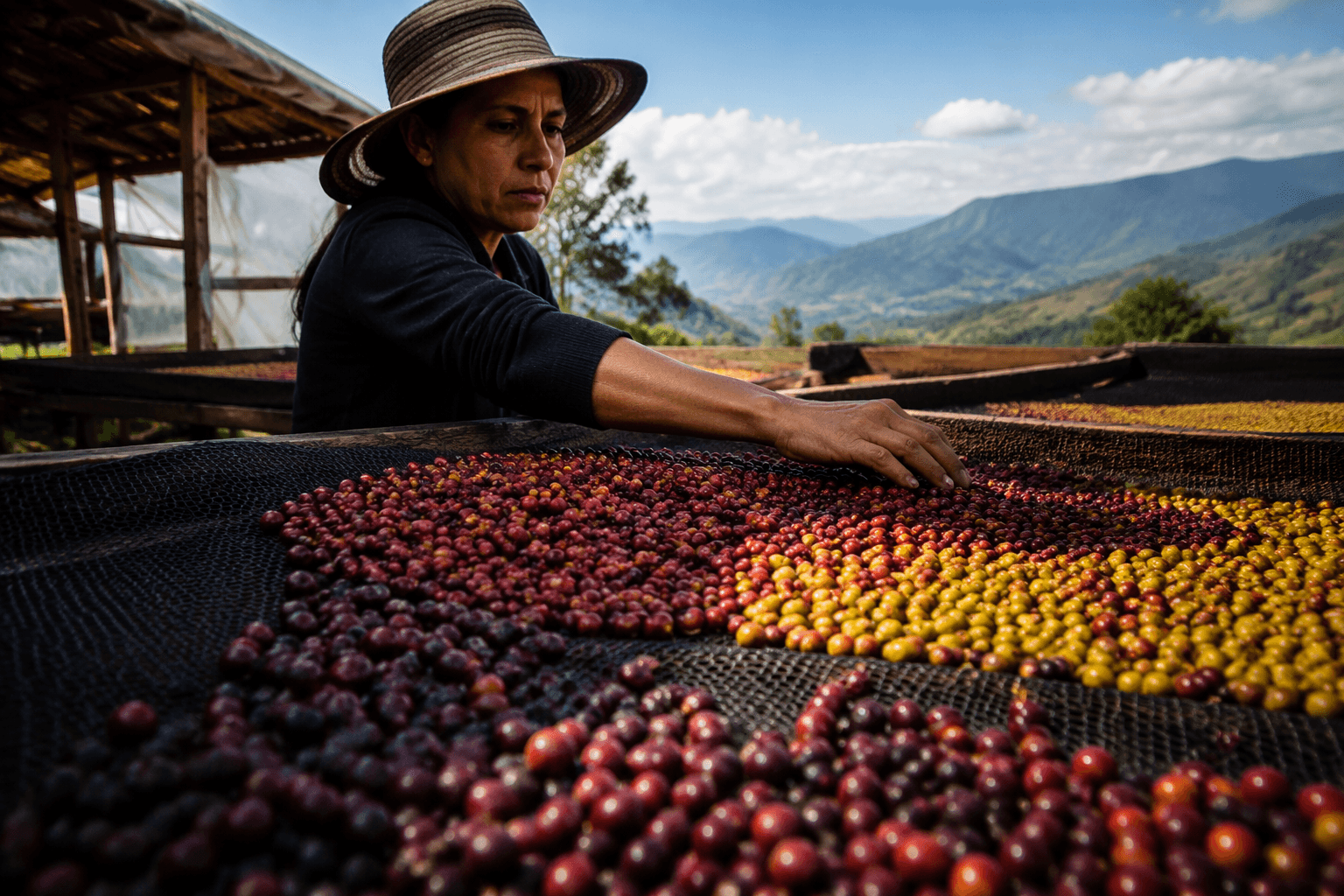
Brazilian coffee farmer faces rising heat, drought and climate stress
A Minas Gerais grower is watching drought and heat rewrite the harvest, while Brazil’s coffee market strains under falling exports and shifting buyers.
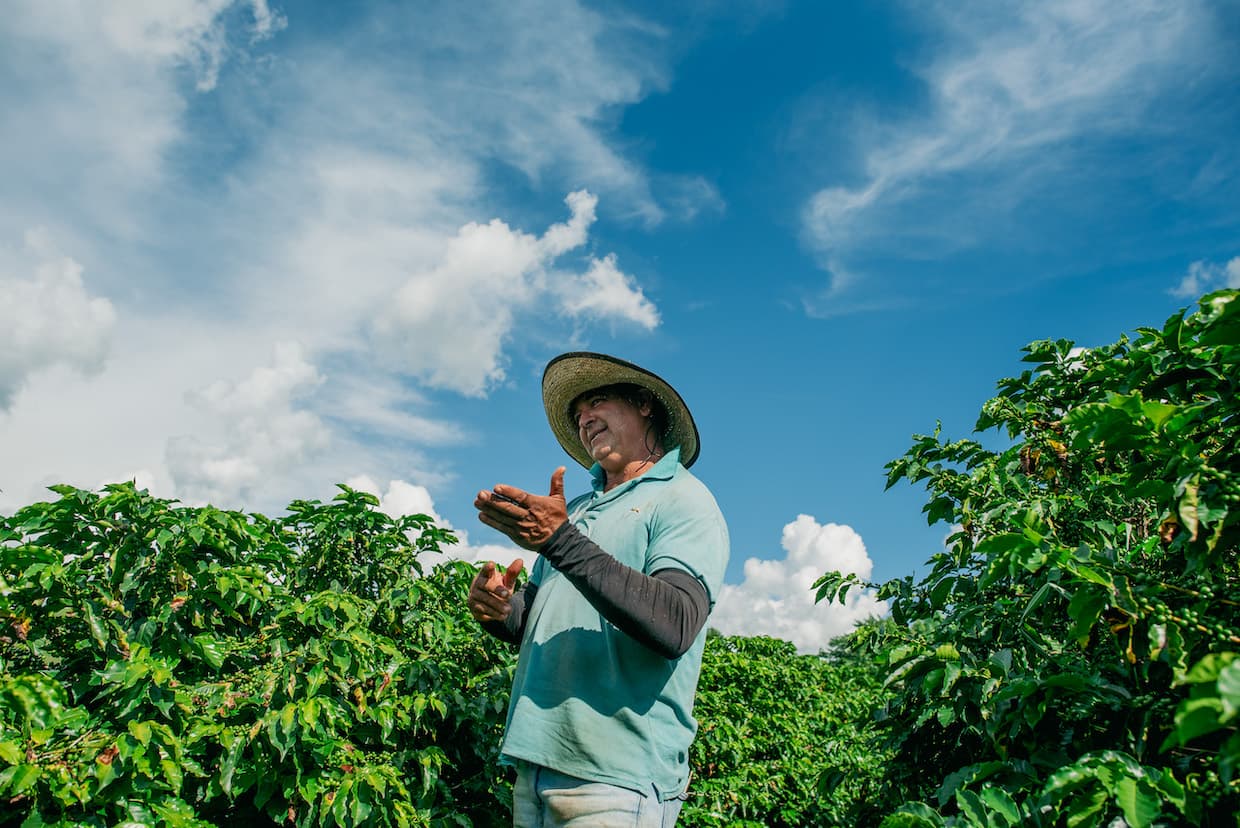
Edson Paes tends an organic Arabica farm on three hectares in Poço Fundo, southern Minas Gerais, and the signs of climate stress are already on the leaves. One drought last year brought 45 rainless days, left visible damage on the plants, and turned part of the farm into a living record of how quickly weather is tightening the margins for Brazilian coffee. For small growers, this is the survival math now: every hotter spell, every dry stretch, every lost blossom changes what can be planted, how it is managed, and whether the next crop will pay.
Heat on the trees
Paes’s farm sits inside a much larger pattern that Brazilian coffee cannot ignore. The country has now gone through five consecutive Arabica harvests hit by heatwaves, droughts and frosts, a run of climate shocks that makes recent high output feel less stable than it once looked. On Paes’s plants, the stress shows up as brownish sun-scall marks on the leaves, a visible warning that the crop is taking more heat than it can comfortably carry.
A 2024 study from Brazil’s Federal University of Itajubá puts hard numbers behind that fear. As warming and water stress intensify, the study says between 35% and 75% of the areas in Brazil currently planted with Arabica coffee could become economically unviable by the end of the century. That does not mean all of those hectares disappear at once, but it does mean the map of profitable coffee is likely to shrink, shift, and become more uneven long before the century is out.
For farmers, the adaptation conversation is no longer theoretical. A climate-risk study on Brazilian Arabica, cited by World Coffee Research, says shade-tree density in agroforestry is being examined as one of the ways to reduce future losses. In practice, that kind of shift can change everything from spacing and pruning to water use and how much sun a farm is willing to let through the canopy.
How a cooperative survives a changing origin
Poço Fundo’s Coopfam was built for hard times long before climate change became the defining phrase in coffee. It began in the 1980s out of a producer movement backed by the Catholic Church’s Pastoral da Terra, with a mission to fight rural exodus through fair commercialization and better rural livelihoods. That history matters now because climate stress is not only a field problem, it is a social one, shaping whether families stay on the land, leave for cities, or keep farming by changing what they grow and where they sell it.
The cooperative has spent years relying mostly on Europe, Japan and the United States, but it is also looking toward China as a new export opportunity. Recent reporting on Brazilian coffee sales to China says Chinese buyers are showing growing interest in specialty and certified coffees, including organic and agroecological lots, which fits the kind of production Coopfam has been trying to defend. More than 90% of Coopfam’s production historically went to the United Kingdom, Germany and Switzerland, so any new channel matters as a hedge against weather and market shocks at home.
That shift tells you something important about the next chapter of origin diversity. If a cooperative that grew out of rural resistance is now building ties in China, it is not just chasing a new customer base. It is trying to keep a farm economy intact while the climate makes the old assumptions about reliable harvests, predictable quality and steady buyers far less secure.
Brazil’s numbers still look huge, but the pressure is real
Brazil remains the center of gravity in coffee, even when the market is under strain. The country’s coffee output in coffee year 2022/23 reached a record 65.49 million bags, according to the International Coffee Organization, which shows how extraordinary the current squeeze is compared with the recent production peak. Yet shipments fell 20% between 2024 and 2025, even as export revenue still hit a record US$15.5 billion last year, a reminder that high prices can hide the damage beneath them.
The broader export picture has also weakened. The International Coffee Organization said South America’s coffee exports fell 18.1% in June 2025 and 25.7% in May 2025, while Brazilian natural coffee exports dropped 11.2% in May 2025. Global coffee exports in May 2026 totaled 12.38 million bags, down from 12.78 million in May 2025, a sign that supply pressure is not confined to one origin or one season.
Brazil’s own foreign-trade statistics portal is updating data through June 2026, so the market is being watched in real time as the strain continues. That matters because the scale of Brazil’s role means even small disruptions can ripple outward fast, from exporters and roasters to the specialty buyers who depend on reliable lots of naturals, organics and certified coffees.
What coffee drinkers are likely to notice next
The first changes for coffee drinkers are usually not dramatic. They show up as price shifts, narrower availability, and more variability in origin options, especially when the world’s biggest Arabica producer is absorbing heat, drought and frost at the same time. Brazil’s stress is especially important for anyone who buys by origin, because a tighter harvest can mean fewer choices in Brazilian naturals and a harder scramble for organic and agroecological lots.
The next layer is flavor. When water stress and heat hit trees that are already working through a long season, the cup can become less predictable, and the market gets pushed toward the farms and cooperatives that can still preserve quality under pressure. At the same time, Asia is emerging as the next growth center for coffee demand, with rising interest in China, India, Indonesia and Vietnam reshaping how beans move and where competition for good lots will intensify.
That is why a farm like Paes’s matters far beyond Poço Fundo. The drought that left 45 rainless days and sun-scall marks on his leaves is part of the same system that is shifting export flows, testing cooperatives like Coopfam, and pushing buyers toward new origins and new standards. On the ground, the climate crisis is already deciding which trees can keep producing; in the cup, its effects are only beginning to show.
This article was produced by Prism’s automated news system from verified source data, official records, and press releases, then run through automated quality and moderation checks before publishing. The system is built and supervised by the people who set the standards it runs under. Read our full AI policy.
Did this article answer your question?