Brazilian Researchers Engineer Climate-Resilient Arabica Hybrids Using Rare Species Genetics
Brazil's Campinas Agronomy Institute is crossing arabica with 15 rare species including racemosa and liberica. The classic Brazil cup profile may never look the same.
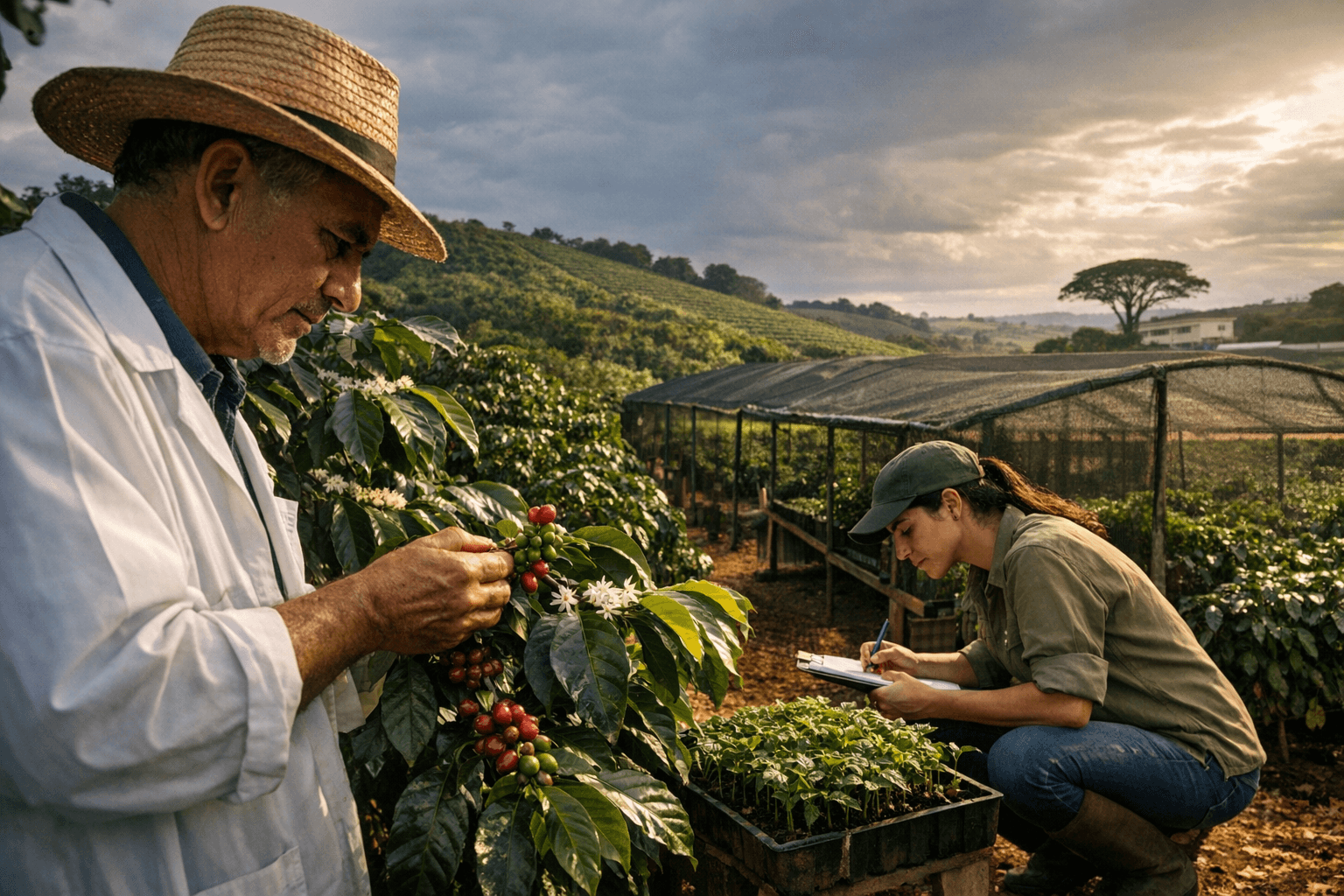
The classic Brazil arabica cup is one of the most reliable benchmarks in specialty coffee: chocolate, caramel, low acidity, medium body, the kind of profile that reads as "baseline" on cupping sheets from São Paulo to Seoul. At the Campinas Agronomy Institute (IAC) in São Paulo state, that baseline is being quietly renegotiated.
Agronomist Oliveiro Guerreiro Filho has been working for years to transfer drought-tolerance genes from Coffea racemosa into arabica, walking the institute's germplasm plots where each plant cluster looks a little different from the last. "We are trying to create drought-tolerant arabica varieties," Guerreiro Filho said. The IAC's collection holds 15 non-commercial and uncommon breeds, and researchers are crossing those genetics directly into arabica to build plants that can survive Brazil's increasingly brutal dry seasons.
The stakes behind this work extend well beyond agronomy. Arabica's genetic base is notoriously narrow. Rodolfo Oliveira, head of Embrapa's coffee unit, put it plainly: "Working with alternative species of coffee ... is vital because arabica has an extremely narrow genetic base, making it highly vulnerable to pests, diseases, and climate change." That vulnerability, combined with the droughts and heat events hammering Brazil's two largest producing states, is what makes the IAC's germplasm plots feel less like an academic curiosity and more like a hedge against a supply crisis.
The two species getting the most attention are racemosa and liberica. Arabica crossed with liberica has shown improved resistance to coffee rust, the fungal disease that periodically shreds Brazil's yields. Arabica bred with racemosa has produced plants that better resist the larvae of the coffee leaf miner moth, Leucoptera coffeella. The flavor implications are where the story gets genuinely interesting for anyone paying attention to what ends up in the bag.
Racemosa sits about as far from the classic Brazil profile as you can get. Where Brazil arabica delivers nutty, chocolatey sweetness, racemosa cups with light to medium body, light acidity, and a flavor inventory that includes blackcurrant, spiced wine, star anise, violet florals, and cereal. One of the named IAC cultivars already showing specialty-stage promise is Aramosa, a hybrid of arabica and racemosa that has drawn competition feedback for its bubblegum-adjacent flavor, floral lift, and almost negligible bitterness, largely because racemosa carries naturally lower caffeine than arabica. Another IAC cross, Siriema AS1, was developed by hybridizing racemosa with the Blue Mountain arabica cultivar, then backcrossed with Mundo Novo to reach commercial viability.
None of this reaches your local roaster on a short timeline. Developing new arabica hybrids takes decades, not harvest cycles, and that is a deliberate reality check researchers have built into public expectations. But the pipeline matters now for buyers and roasters trying to read where Brazil origin is heading. When hybrid varietals do reach commercial scale, bag labels may list names like Aramosa or Siriema instead of the generic "Cerrado" or "Yellow Catuai" markers buyers know today. Cupping those lots will require recalibrating expectations: more acidity, more aromatic complexity, and a distinctly different body than what Brazil has historically put in the cup.
The economic argument runs alongside the sensory one. Pricing stability for arabica is already under pressure from climate-driven supply disruptions, and the work at IAC represents one of the most serious long-term answers to that volatility. Specialty coffee's obsession with varietal transparency makes the IAC's work a story roasters will eventually have to explain to their customers.
This article was produced by Prism’s automated news system from verified source data, official records, and press releases, then run through automated quality and moderation checks before publishing. The system is built and supervised by the people who set the standards it runs under. Read our full AI policy.
Did this article answer your question?