Small-Batch Roasters Feel the Squeeze as Coffee Prices Keep Climbing
Arabica futures hit $4.41/lb in early 2025, their highest since 1977; small-batch roasters are still repricing their shelves as expensive forward contracts work through the chain.

The bag of single-origin Ethiopian you bought at your local roaster last spring and the one you'll buy this week are technically the same product. The price on the label is not.
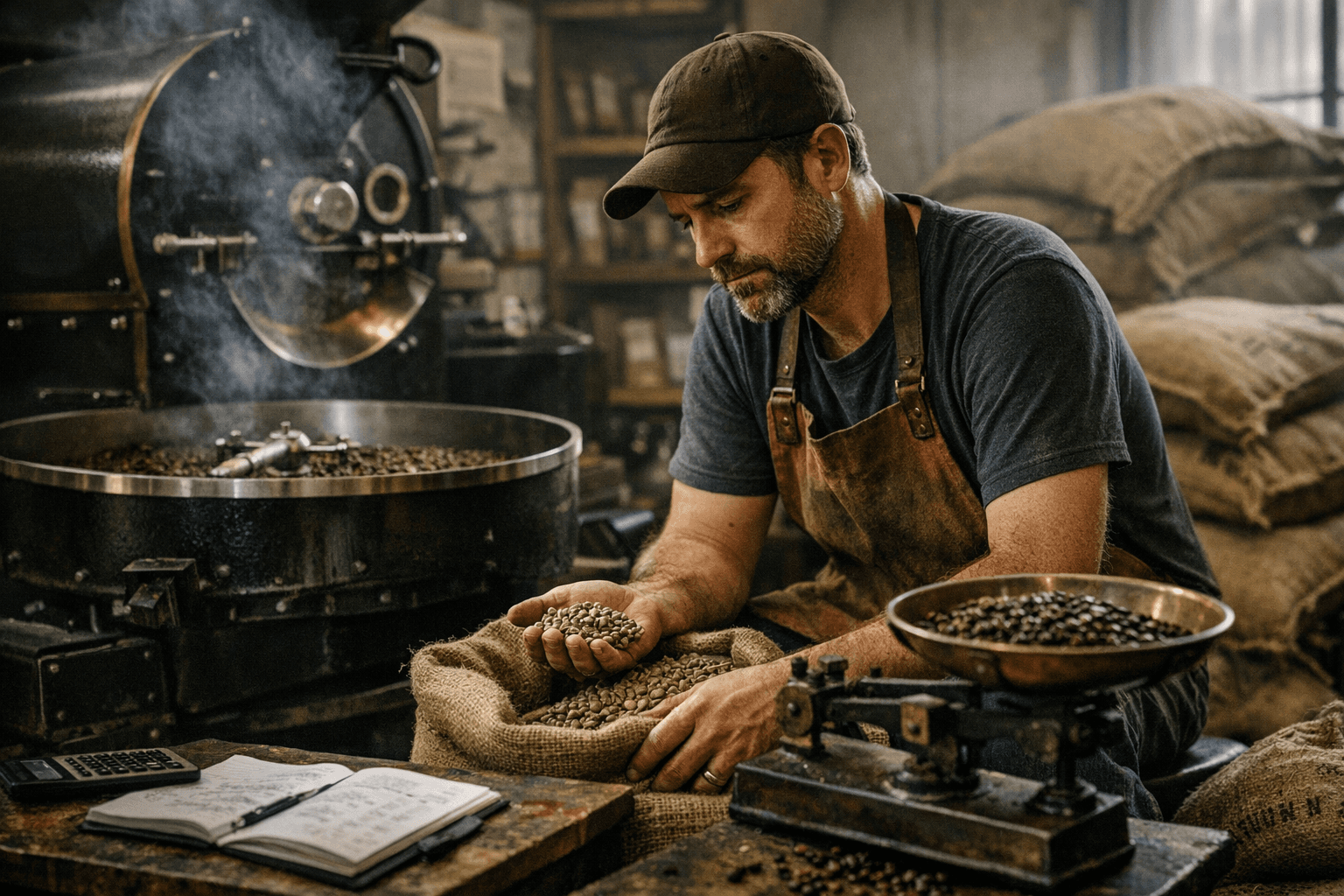
Jeff Conner, Danny Ozsvath, and Matthew Halpert have been roasting small-batch specialty coffee in Neenah, Wisconsin under the Bedrock Coffee Roasters name since 2018. Earlier this year, they did something most small roasters dread: they raised prices across their entire retail lineup and published a public explanation for why. The reason was blunt. The cost of green coffee, the raw beans they buy before roasting, had more than doubled in under a year.
To understand how that happened, start at the ICE exchange, where arabica futures set the global benchmark known as the C price. In early February 2025, that number crossed $4.41 per pound, the highest it had been since 1977, and more than twice what it was twelve months earlier. The spike came from a collision of climate stress and policy chaos: drought and heat across Brazil, supply disruption in Vietnam, and a 46% U.S. tariff on Vietnamese imports that sent buyers scrambling to every other available origin at once. Exchange-certified arabica stockpiles fell to 456,477 bags by late December 2024, down from 991,080 just a year prior. Warehouses emptied almost overnight.
Importers, who typically serve as the buffer between volatile futures markets and the smaller roasters who cannot afford to hedge on the C market themselves, were repricing contracts as fast as they could close them. The lag between a futures spike and a retail sticker increase typically runs several months, which is why the full pain arrived for consumers well into 2025. The U.S. Bureau of Labor Statistics recorded the average retail price of ground coffee at $9.14 per pound in September 2025, a 41% jump from the same month the year before. Cafe menu prices followed; the average cup climbed from $3.46 to $3.57 in the same period. Those numbers sound modest until you factor in how thin roaster margins already were. A USDA analysis found that a ten-cent increase in green coffee costs produces only a two-cent retail pass-through. When the C price moves by dollars, not dimes, the math collapses entirely.
Arabica futures have since pulled back, trading around $3.20 per pound by February 2026, down sharply from the peak but still roughly double the pre-2024 baseline. The relief is real; the timing is uneven. Any roaster who locked into forward contracts at higher prices is still working through expensive inventory, and that cost is sitting on the shelf next to your bag of Kenyan single-origin right now.
So here is what to do with that information. Buy in larger quantities during any dip, because another contract cycle at elevated prices could push retail further before the Brazilian harvest improvement expected by mid-2026 fully reaches importers. Roasted beans freeze better than most people realize: an airtight bag with as much air removed as possible, portioned into whatever you would use within two weeks of thawing, holds up remarkably well. Subscriptions from roasters who locked in green coffee early in the cycle can provide pricing predictability, but read the terms, because most reserve the right to adjust mid-cycle anyway.
If the current market is pushing you toward less expensive coffees, reach for a French press or a batch brewer first. Both methods are significantly more forgiving of coffees that lack the brightness needed to shine in a pour-over, rounding out the rougher edges that tend to show up in commodity-adjacent lots.
The International Coffee Organization expects the market to find equilibrium as production in Brazil stabilizes, but the Bedrock situation is every small roaster's situation right now: the numbers behind the morning cup changed, and the roasters who absorbed the difference for as long as they could are out of runway.
This article was produced by Prism’s automated news system from verified source data, official records, and press releases, then run through automated quality and moderation checks before publishing. The system is built and supervised by the people who set the standards it runs under. Read our full AI policy.
Did this article answer your question?