Climate Change Added Weeks of Coffee-harming Heat Across Major Growing Regions
Climate Central’s analysis finds human-caused warming added an average of 57 extra days above 30°C in the top five origins, with Brazil at ~70 and Indonesia ~73 added hot days per year.
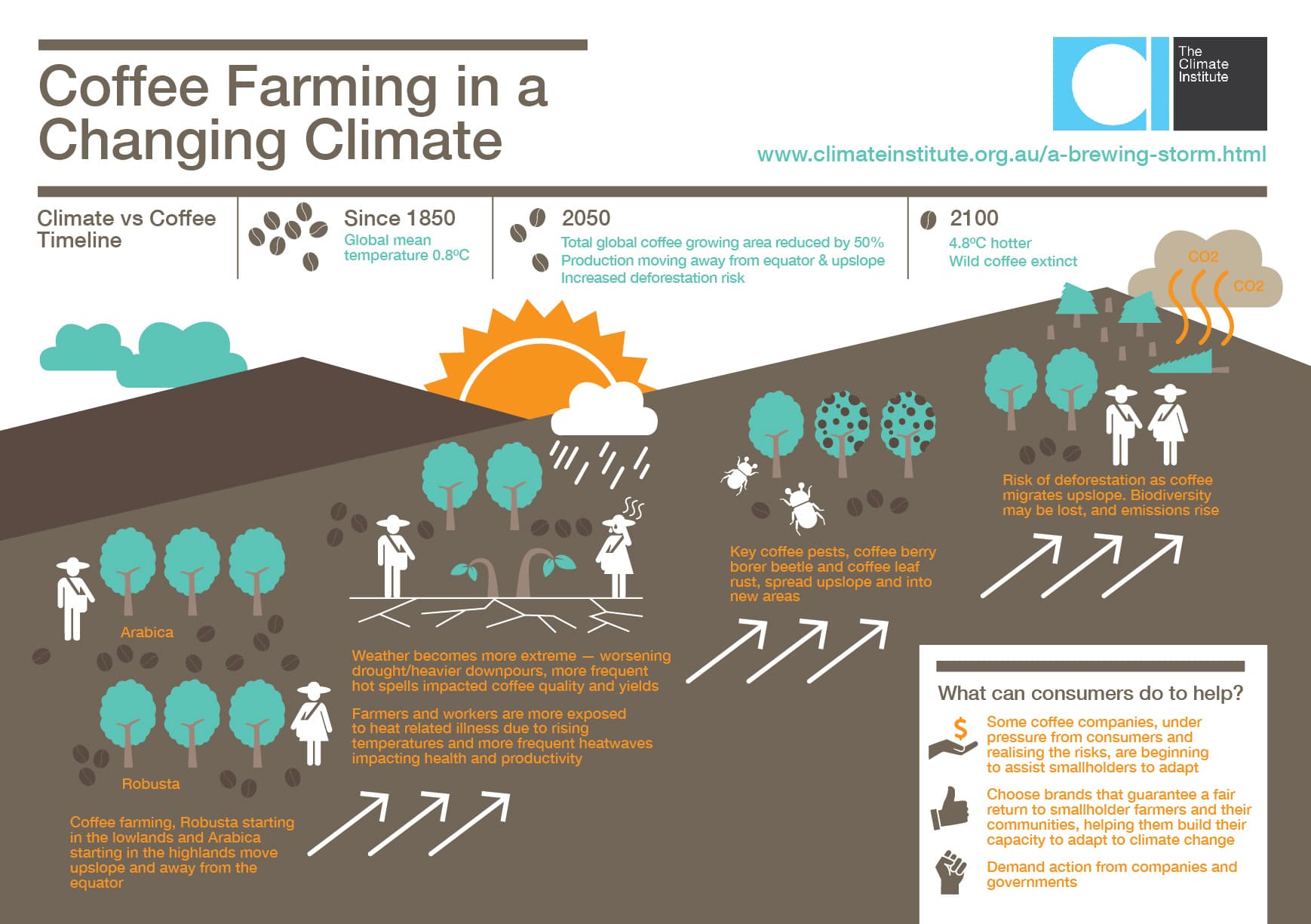
Policy‑neutral nonprofit Climate Central released an observational analysis on Feb. 18, 2026 showing climate change added weeks of what coverage called “coffee‑harming heat” across 25 coffee‑producing countries that represent 97% of global coffee production. For the top five producers, Brazil, Vietnam, Colombia, Ethiopia and Indonesia, the study calculated an average of 57 additional days per year above a 30°C threshold that “would not have occurred without climate change.”
The country‑level totals are stark: Brazil averaged about 70 extra hot days per year, with Minas Gerais recording about 67 additional days; Indonesia averaged about 73 additional days; Vietnam averaged 59; Colombia averaged 48; and Ethiopia averaged 34. Climate Central notes the five origins “together supply roughly three‑quarters of the world’s coffee,” making those added hot days a direct threat to large shares of global supply.
Climate Central applied its Climate Shift Index (CSI) to quantify the influence of human‑caused climate change on daily average temperatures across a broad observational window. The CSI coverage spanned 240 countries and 940 cities, including 247 U.S. cities, for the period June 1 through August 31, 2025. The analysis’ headline finding reads in part “People Exposed to Climate Change: June to August 2025,” and the group wrote that “Every day during the last three months, at least one in five people on the planet felt a strong climate change influence.”
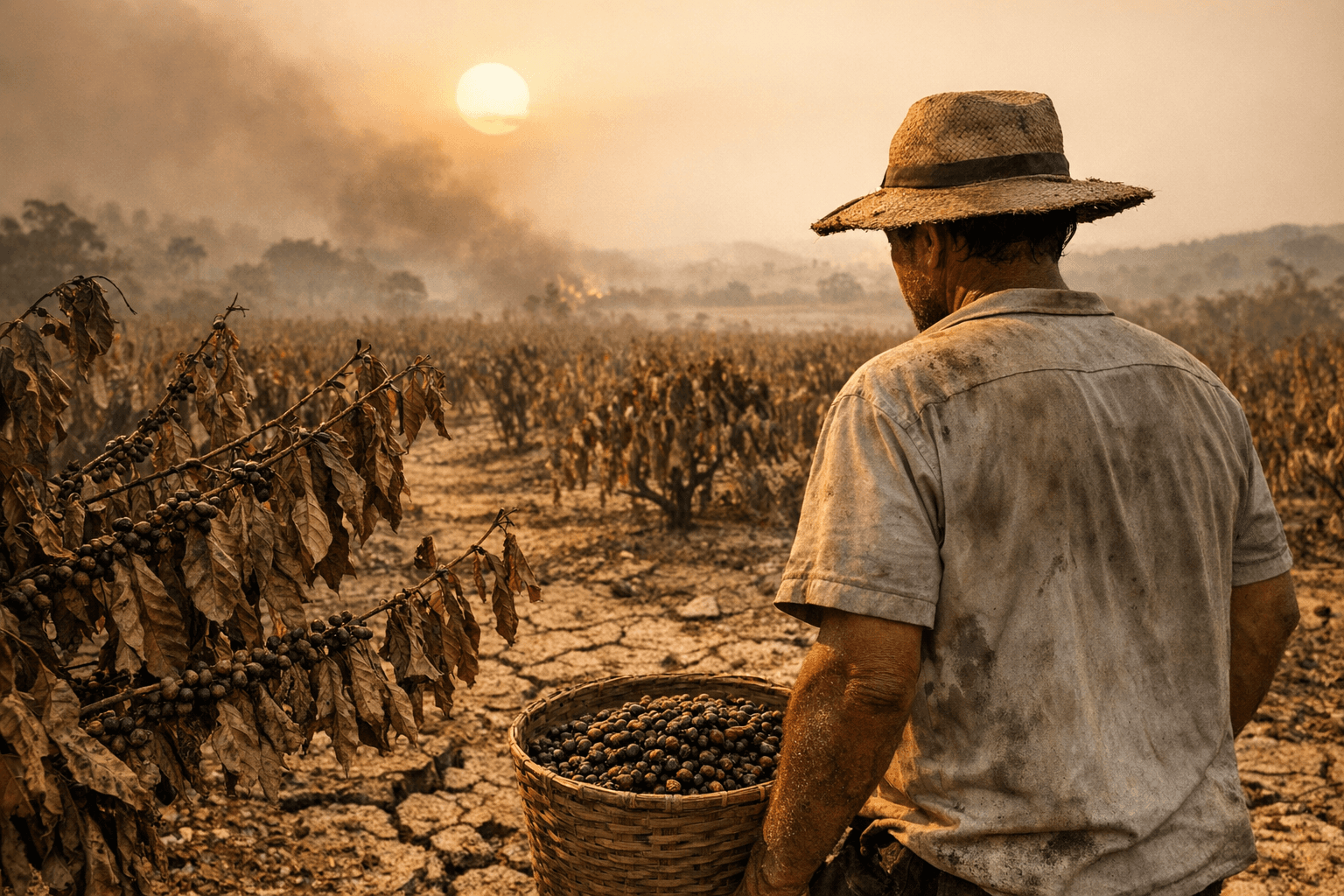
The Climate Shift Index outputs also highlight U.S. extremes tied to the same June–August 2025 window: in 193 of 247 U.S. cities people experienced at least one week’s worth of days with temperatures strongly influenced by climate change; in 112 U.S. cities climate change accounted for at least half of the risky heat days people experienced; and more than 21 million people in the U.S. experienced at least 30 days of risky heat driven by carbon pollution. Climate Central defines those risky heat days precisely: “Risky heat days are hotter than 90% of those recorded in a local area from 1991-2020.”
Beyond headline counts of extra 30°C days, Climate Central’s materials connect rising heat to shifting rainfall patterns and more pest pressure, and warn that past research shows large swaths of existing coffee lands are becoming unsuitable for production because of increased heat, drought and inconsistent rains. The analysis and its supporting materials list practical adaptation strategies for coffee landscapes: expanding shade tree canopies, improving soil health, protecting water resources and reducing deforestation.

Climate Central offers interactive maps, downloadable local data and a social media toolkit tied to the analysis; the report’s methodology centers on CSI attribution for June–August 2025 but leaves open follow‑ups on subnational breakdowns and the technical link between CSI outputs and the choice of a 30°C crop threshold. The numbers provided for Brazil, Indonesia, Vietnam, Colombia and Ethiopia make clear that growers and supply chains face quantifiable new thermal stress, and that rapid scaling of shade, soil and water measures will be essential if those added weeks of heat are to be managed without further upheaval to supply and smallholder livelihoods.
This article was produced by Prism’s automated news system from verified source data, official records, and press releases, then run through automated quality and moderation checks before publishing. The system is built and supervised by the people who set the standards it runs under. Read our full AI policy.
Did this article answer your question?