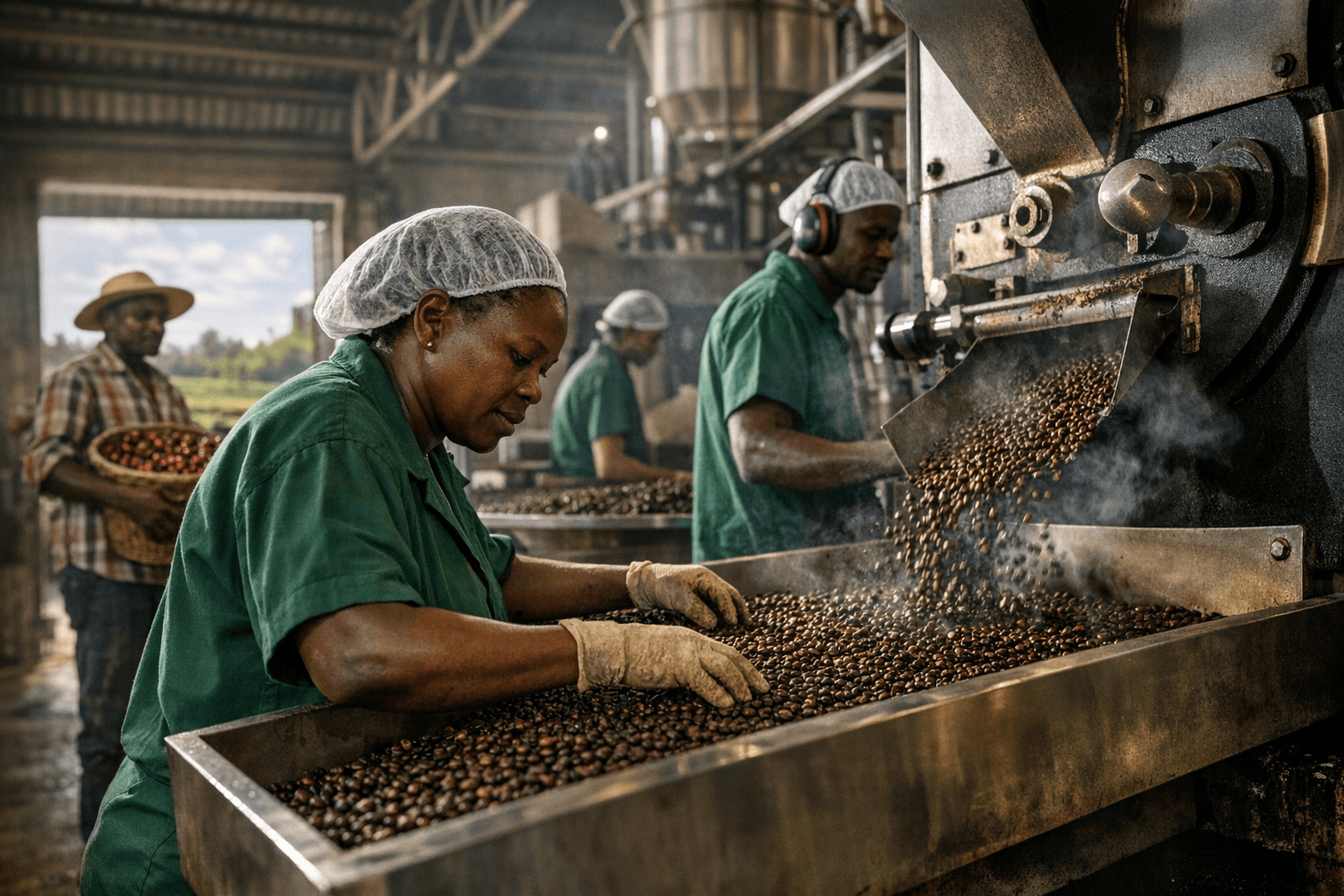
Climate shocks and regulations drive coffee prices to multi-year highs
Coffee’s latest price spike is already hitting bags, menus, and sourcing plans. Weather damage in Brazil, Vietnam, and Indonesia, plus Europe’s new traceability rules, are squeezing what you can buy next.

Prices are already rewriting the shelf
Coffee is no longer just getting pricier in the abstract. The latest jump is changing what roasters can source, what cafés can pour, and how much room shoppers have between a familiar blend and a far more expensive bag. The most immediate pressure points are weather-hit origins, freight costs, and a new layer of trade compliance that is forcing buyers to prove exactly where beans came from.
The U.N. Food and Agriculture Organization said world coffee prices rose 38.8 percent in 2024 versus the previous year’s average. In December 2024 alone, Arabica was up 58 percent and Robusta was up 70 percent, and the gap between the two narrowed to its tightest level since the mid-1990s. That matters because the two varieties sit at the center of different parts of the market, from espresso blends to higher-end filter offerings, and when both move sharply at once, there is far less cushioning for buyers.
The causes are not vague. FAO tied the surge to drought and heat in Brazil, drought in Vietnam that cut 2023/24 output by 20 percent and exports by 10 percent for a second straight year, and excessive rain in Indonesia that pushed 2023/24 production down 16.5 percent and exports down 23 percent. Brazil’s own forecast swung hard too, shifting from a projected 5.5 percent increase to a 1.6 percent decline because of dry, hot weather. Add higher transport costs, and the market has been squeezed from the farm gate all the way to the roaster’s receiving dock.
For coffee buyers, the near-term consequence is simple: less predictable availability and less room for bargain pricing. The beans you are used to seeing on shelves may not disappear, but the mix is likely to churn, especially in blends that depend on steady flow from Brazil, Vietnam, and Indonesia. When the cheapest or most reliable lots are disrupted, cafés and retail brands tend to protect supply first and price second.
The climate story is deeper than one bad harvest
This price spike is only the most visible layer of a longer climate shift. A 2023 systematic review concluded that climate change is expected to reduce average coffee yields worldwide and shrink the land suitable for coffee by 2050. That is the part the market feels slowly, then all at once, when weather stress stacks up across producing regions.
Coffee leaf rust has been one of the crop’s most damaging diseases for years, and climate stress keeps giving it an opening. Research has found that reduced rainfall is correlated with critical transitions in coffee systems, and another analysis linked production losses and aggressive rust outbreaks to slower recovery in producing regions. In other words, weaker rainfall is not just a weather story, it is a plant-health story and a farm-income story.
The industry is responding by pushing harder on genetics. World Coffee Research said a 2025 study brought together collaborators from 15 countries at 23 sites and tested 29 Arabica varieties against coffee leaf rust. That kind of work points to the real medium-term battle in coffee: not just surviving one season’s shock, but breeding trees that can keep producing under hotter, drier, and more disease-prone conditions.
Europe’s deforestation rule adds a new bottleneck
Weather is not the only force reshaping the trade. Regulation is now a market force too, and the European Union’s Deforestation Regulation, formally Regulation (EU) 2023/1115, is one of the biggest changes coffee exporters have had to absorb. The law requires coffee placed on the EU market to be deforestation-free after the cutoff date of December 31, 2020, and operators have to show that with due diligence, traceability, and geolocation data.
That sounds administrative, but in coffee it reaches deep into farm structure. The burden is expected to fall unevenly because millions of small farms dominate producing regions, while compliance costs and data collection are easier for larger farms and better-capitalized exporters to absorb. The European Commission has published guidance and FAQs for authorities, operators, and stakeholders, which shows how complicated the rollout has become in practice.
For exporters, this is not just a European paperwork issue. Industry reporting has treated the rule as a major test for producers in Brazil, Vietnam, Colombia, Indonesia, and Ethiopia. If a shipment cannot prove its origin cleanly, or if the traceability system breaks somewhere between farm and export house, that coffee may struggle to reach one of the world’s most important markets. The result could be a split market, where the most compliant supply chains move fastest and the least documented lots get stuck.
The market is global, and the stress travels fast
One reason these shocks move so quickly is that the coffee market is enormous and tightly connected. The International Coffee Organization says its Coffee Market Report tracks price movements, trade, and supply-demand balances, and its World Coffee Statistics Database covers 192 consuming countries and 54 producing countries. That scale matters because a drought in one country or a new regulation in one region can ripple across contracts, blends, and retail prices far beyond the place where the problem started.
The biggest vulnerability sits with smallholders, who produce about 80 percent of global coffee output. That means the farmers least able to absorb compliance costs or climatic shocks are responsible for most of the world’s beans. When small farms lose yield, miss a compliance step, or face bad weather two seasons in a row, the effect is not local. It hits export volumes, roaster inventories, café menu planning, and the price on the bag.
What to watch next
The clearest chokepoints over the next year are weather-hit origin supply, freight costs, and the paperwork needed to clear major markets. If Brazil, Vietnam, or Indonesia stay under pressure, and if European traceability demands keep tightening around coffee that must prove a deforestation-free path, the market will keep favoring sellers who can document, move, and replace beans quickly.
That does not mean coffee becomes unavailable. It means the selection becomes more uneven, the cheap end of the shelf gets tighter, and familiar labels may change more often as roasters chase resilient supply. The next phase of coffee pricing is not just about scarcity, it is about which farms, exporters, and regions can still do business in a hotter world with stricter rules.
Know something we missed? Have a correction or additional information?
Submit a Tip