Sagana EPZ to Process Coffee Locally, Boost Kirinyaga Farmer Earnings
Sagana’s 25 billion-shilling EPZ is set to process coffee at origin, with 10,000 direct jobs and a bid to keep more value in Kirinyaga farmers’ hands.
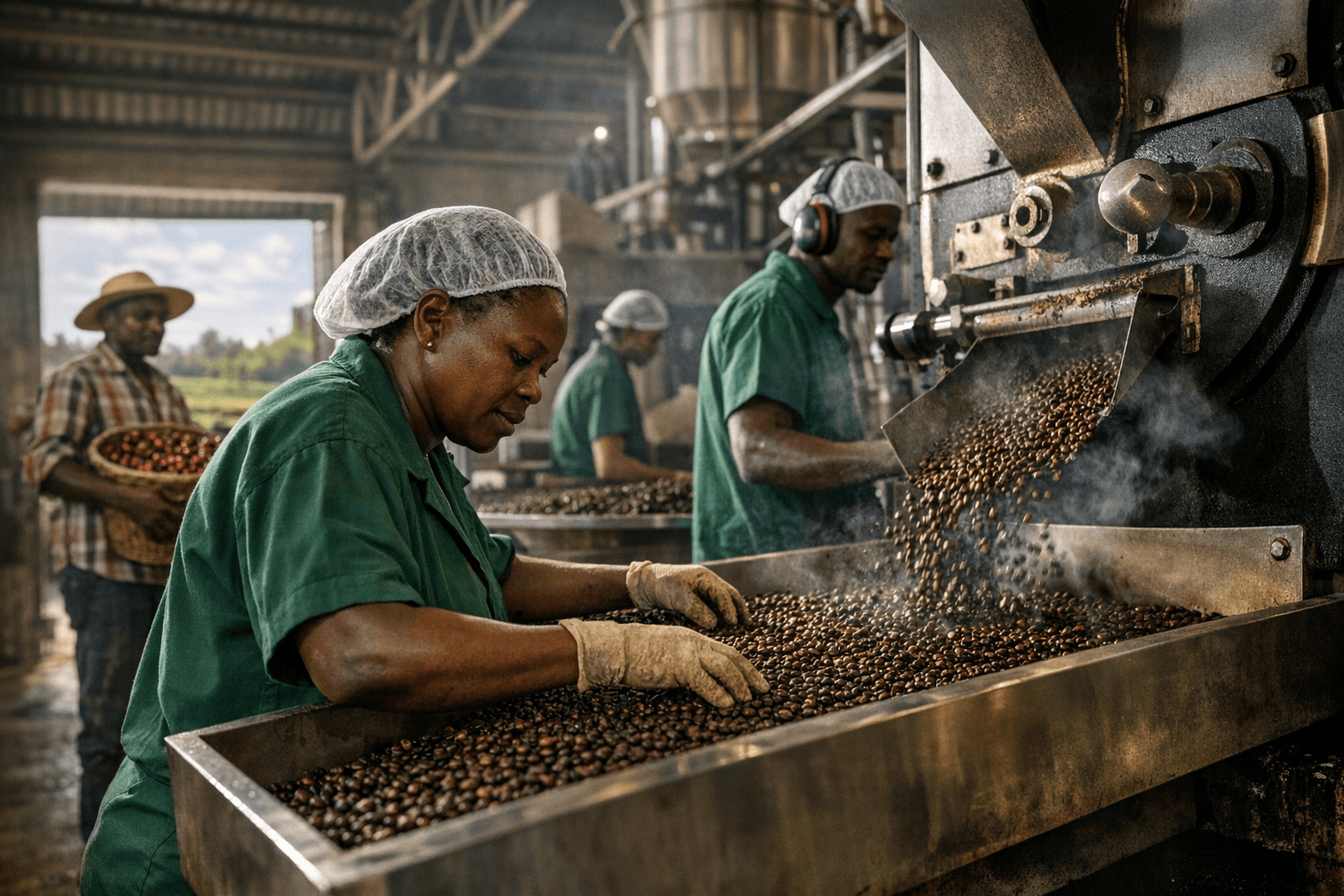
A 25 billion-shilling industrial push in Sagana is betting that coffee can earn more when it is processed in Kirinyaga instead of moving through layers of middlemen first. The new Export Processing Zone is projected to create more than 10,000 direct jobs and about 100,000 indirect ones, while county officials say it will help raise farmer earnings by handling coffee, tea, fruits, macadamia and avocados locally.
The Export Processing Zones Authority has described Sagana as one of Kenya’s flagship EPZ projects, and a Kirinyaga County concept note says the site is meant to give investors administrative and fiscal incentives. The county says the park sits on about 250 acres of repossessed land, while another concept note describes the EPZ manufacturing hub as covering about 75 acres. Construction had reached about 85 percent in 2025 and was reported at 86 percent in March 2026, putting the project close to the point where the county’s agro-processing pitch has to move from plan to practice.
Governor Anne Waiguru has been the project’s most visible champion, arguing that Sagana can anchor a climate-smart agro-industrial city. The county has said the broader industrial park could directly employ 4,000 youth, with a ripple effect of up to 10,000 jobs, and it has also pointed to 18 investors shortlisted from 54 applicants for factories at the site. Before Sagana is fully operationalized, the county says only one EPZ enterprise in Kirinyaga provides 105 direct jobs, which shows how much room there is for the industrial park to expand the local payroll.
For coffee, the deeper question is whether local processing can keep more of the export value in the county. Kenya’s coffee chain has long been squeezed by multiple intermediaries and limited value addition, a structure that researchers and policy analysts say weakens farmer returns and competitiveness. That is why the county is selling Sagana as more than a factory cluster. It is trying to build a place where milling, grading, packaging and export-ready processing happen closer to the farm gate.
Recent cherry payouts suggest why that argument matters. Kirinyaga County said 27 coffee factories out of 75 wet mills announced payments of Ksh100 to Ksh145 per kilogram for the 2024/2025 season, a strong signal that growers are watching every extra shilling that can be kept in origin. If Sagana delivers on its promise, the real measure will not just be jobs or acreage. It will be whether more of the coffee value chain stays in Kirinyaga before the beans ever leave for export.
This article was produced by Prism’s automated news system from verified source data, official records, and press releases, then run through automated quality and moderation checks before publishing. The system is built and supervised by the people who set the standards it runs under. Read our full AI policy.
Did this article answer your question?