Coffee borer beetles may be feeding the ants that hunt them
Coffee berry borer damage may be creating shelter for ants that hunt the pest, a twist that could affect yield, quality, and how much spraying farms need.
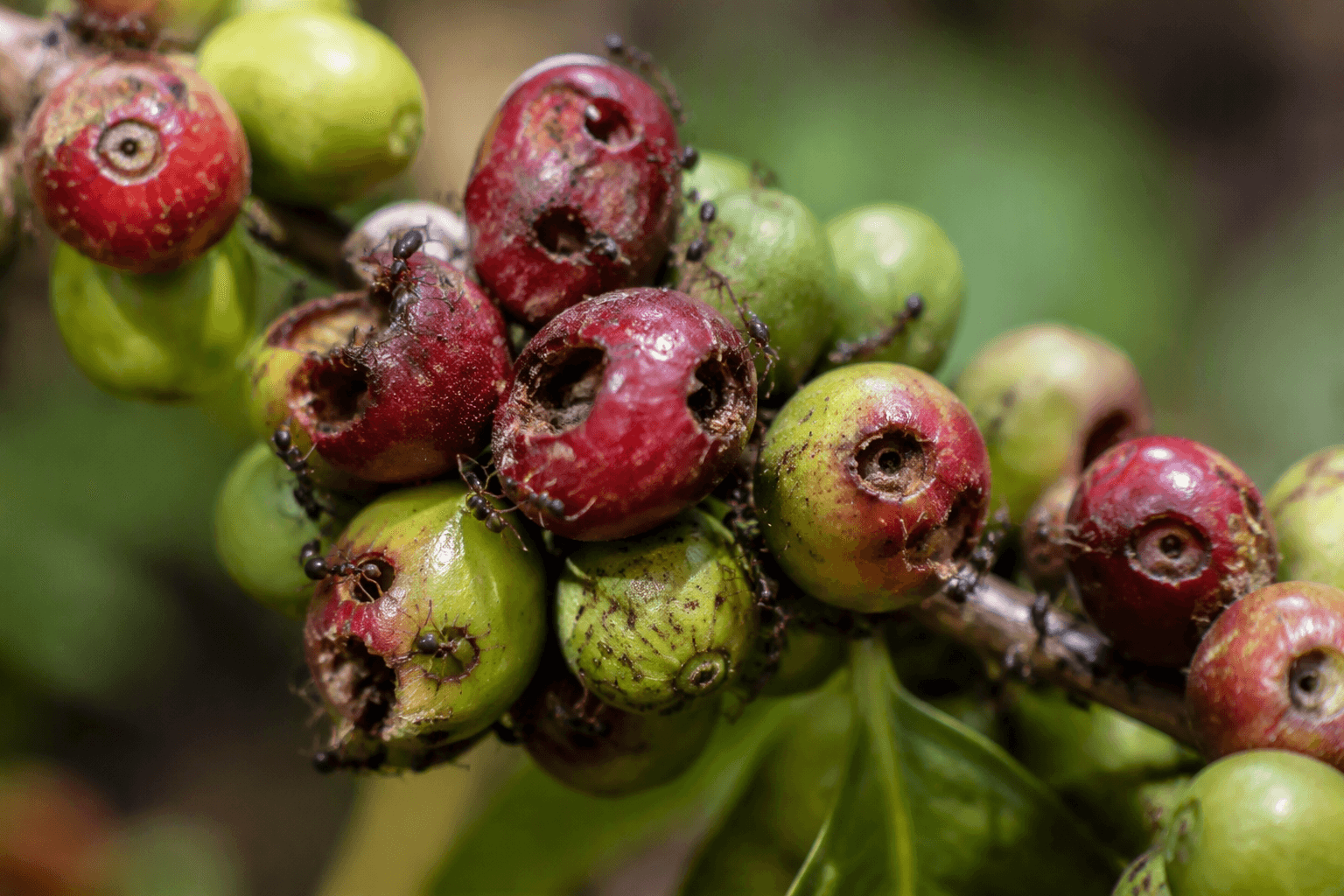
The holes coffee berry borers drill into coffee cherries may also shelter ants that hunt them, turning one of coffee’s worst pests into part of a biological control loop that can shape yield, quality, and how much spraying a farm needs.
A pest that may be building its own enemies
The coffee berry borer, Hypothenemus hampei, is the most destructive pest of coffee worldwide. It bores into coffee cherries, damages the seed inside, and can cut both yield and quality, which is why growers spend so much time and money trying to keep it out of the crop.
Jonathan “Jonno” Morris observed small ant species using habitats in infested coffee fruits, building on the older idea that large ants eat coffee berry borers and smaller ants can evict them from the homes they make in the fruit.
What the ant studies have already shown
This is not a new hunch; the coffee-ant connection has been building in the literature for years. A 2007 study in Colombia, Testing ant predation on the coffee berry borer in shaded and sun coffee plantations in Colombia, found that ants killed 74 to 99% of Hypothenemus hampei adults over five days in laboratory observations. A 2013 field experiment, Ants defend coffee from berry borer colonization, concluded that a diverse group of ant species can limit berry borer colonization of coffee berries.

Later work sharpened the picture. A 2018 paper, Twig-Nesting Ants: The Hidden Predators of the Coffee Berry Borer in Chiapas, Mexico, identified twig-nesting ants as part of the crop’s natural biocontrol system. A 2021 study then showed that different ant species can affect different stages of the coffee berry borer.
Why shade, landscape, and habitat shape the result
The strength of that natural control depends on what surrounds the coffee tree. A 2007 report on shade versus sun coffee in Colombia found ant predation is stronger in shaded plantations, which makes sense in farms where trees, canopy cover, and leaf litter can support more insect life. A 2019 study found that landscape structure regulates pest control provided by ants in sun coffee plantations.
A 2023 MDPI study found that naturally occurring vegetation connectivity facilitates ant-mediated coffee berry borer removal. In plain terms, the more connected the surrounding vegetation, the easier it is for ants to move, nest, and work as predators.
How this fits into integrated pest management
Coffee farms do not rely on ants alone, and the research makes that clear. A July 3, 2023 MDPI review on establishing an integrated pest management program for coffee berry borer in Hawaii and Puerto Rico laid out both the achievements and the challenges of IPM in coffee agroecosystems. A March 27, 2020 paper in Frontiers in Sustainable Food Systems also looked at incorporating Beauveria bassiana into an integrated pest management plan for coffee berry borer in Hawaii.
Coffee berry borer pressure is persistent, and researchers have spent years trying to reduce reliance on broad pesticide use. A 2024 review in Springer Nature Link on the ecology and management of Hypothenemus hampei centered the potential of biological control, while the IR-4 Project has framed coffee berry borer work as a collaboration among growers, researchers, and extension agents to build integrated programs that limit damage.
What this means for bean quality, price, and the cup
For coffee buyers, the most tangible part of this story starts with the cherry. When borers damage fruit, they reduce yield and quality, which can mean fewer clean beans making it through export and roasting channels. If ants help suppress the pest, especially in shaded or well-connected habitats, that can protect the lots that end up as specialty coffee rather than discounted or heavily sorted coffee.
The price effect is just as practical. Better pest control can lower the pressure to spray, support healthier harvests, and keep more uniform coffee moving through the supply chain, all of which matter when farms are trying to hold onto quality without driving up production costs.
This article was produced by Prism’s automated news system from verified source data, official records, and press releases, then run through automated quality and moderation checks before publishing. The system is built and supervised by the people who set the standards it runs under. Read our full AI policy.
Did this article answer your question?