Coffee Cherry Pulp Powder Replaces Beef Fat in Burgers, Boosting Fiber and Cutting Calories
Cascara powder scored 8.25 in burger taste tests after replacing beef fat, per a new npj Science of Food study.
Cascara, the dried skin and pulp of the coffee cherry that specialty roasters have long treated as a byproduct worth rescuing, just got a serious second look from food scientists. A peer-reviewed study published in npj Science of Food found that hydrated coffee cherry pulp powder can replace a substantial portion of the beef fat in a burger patty while improving fiber, protein, and overall nutritional profile, and still earning high marks from tasters.
The research, led by R.F.M. Ali and A.M. El-Anany, researchers in Saudi Arabia and Egypt, sourced its cascara powder from a private coffee producer in Jizan, Saudi Arabia. Before it ever touched a patty, the powder was hydrated at a 3:1 water-to-powder ratio for a full 24 hours, a step that prepared it to function as a structural and moisture-holding fat substitute.
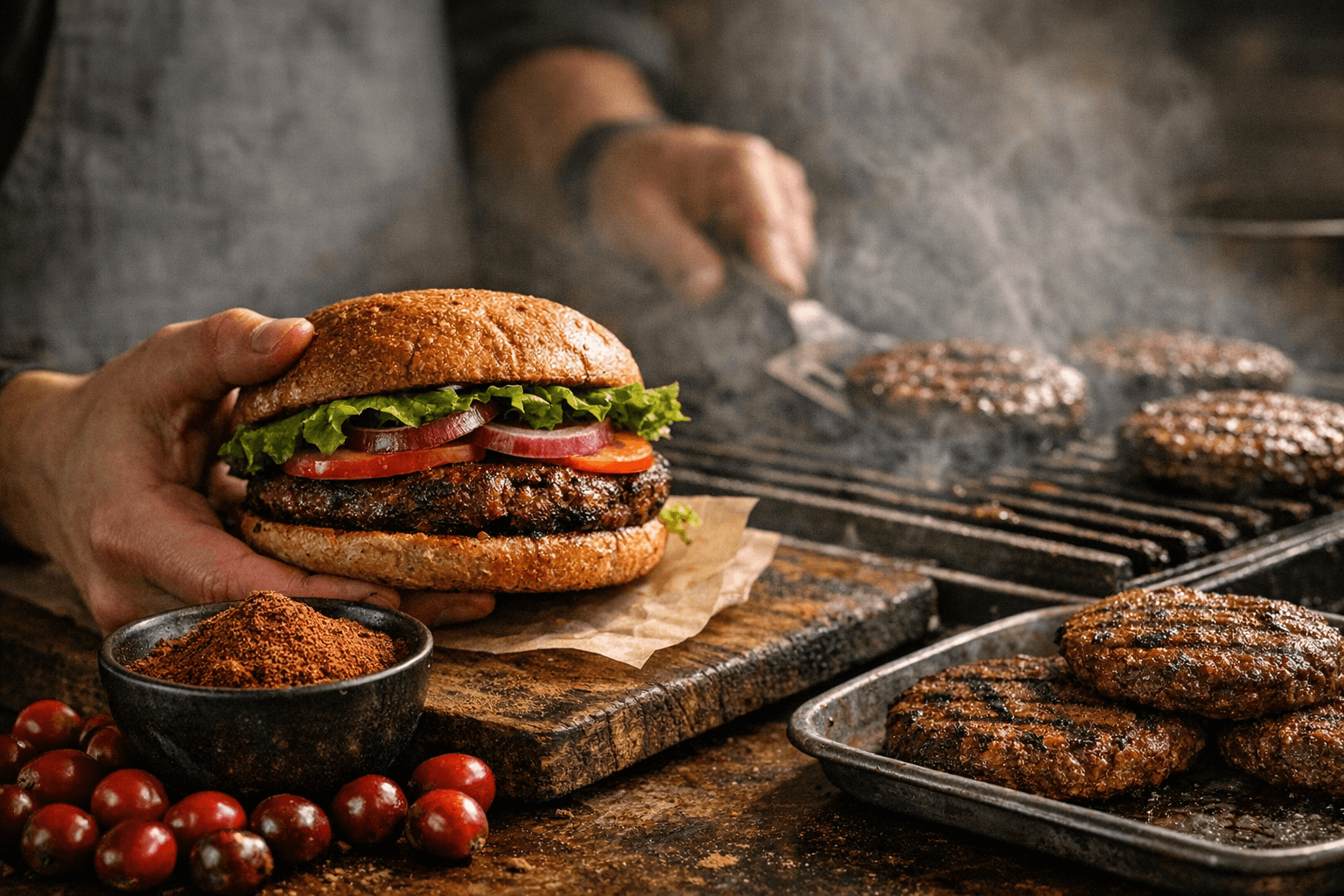
The experimental design was straightforward. Each test patty weighed 100 grams and used a base of 65% lean beef. The control formula contained 20% beef fat. Four treatment groups then replaced 25%, 50%, 75%, and 100% of that beef fat with the hydrated coffee cherry pulp powder. All patties were grilled on a Philips Contact Grill 5000 Series-2200W at 180°C for five minutes, reaching a core temperature of 73°C before being cooled and stored at -18°C for analysis.
The nutritional shift was measurable. Reformulated patties showed lower fat, fewer calories, reduced cholesterol, and higher fiber compared to the control, consistent with what you'd expect when swapping animal fat for a plant-based ingredient. The abstract states directly: "Incorporating CCPP into burger enhanced nutritional profiles by increasing fiber, protein, and ash content while significantly reducing fat levels." The coffee cherry pulp powder also brought its own functional attributes to the formulation, including a water absorption capacity of 3.25 mL per gram, an oil absorption capacity of 2.80 mL per gram, and a total phenolic content of 24.70 mg gallic acid equivalents per gram, a figure that reflects meaningful antioxidant activity.
Where the study gets particularly interesting for anyone weighing the real-world viability of this swap is the sensory data. The 50% substitution formula scored 8.25 in overall acceptability, and the 75% substitution scored 8.22. Those scores, the study notes, "suggest strong consumer preference for these formulations." The 100% replacement was tested but those two middle formulations were the clear standouts.
One important caveat: this was a product and lab-analysis study, not a human clinical trial. The nutritional improvements are compositional findings, not proven health outcomes in people. No long-term shelf-stability or commercial scaling data was included.
For the specialty coffee world, the broader implication lands somewhere between validation and opportunity. Coffee cherry pulp, the fruit that surrounds the bean and is discarded in enormous quantities during wet processing, has been inching toward mainstream recognition through cascara tea and coffee-cherry flour. A beef industry application, of all things, adds a new lane to that conversation about waste reduction and full-fruit utilization. The study was received April 1, 2025, accepted September 7, 2025, and published October 6, 2025 in npj Science of Food, volume 9, article 203.
This article was produced by Prism’s automated news system from verified source data, official records, and press releases, then run through automated quality and moderation checks before publishing. The system is built and supervised by the people who set the standards it runs under. Read our full AI policy.
Did this article answer your question?