Coffee Import Costs Surge 41% in South Korea to 2.65 Trillion Won
South Korea's coffee import bill jumped 41% to 2.65 trillion won in 2025, driven by record arabica prices and a weaker won, pressuring roaster margins and retail prices.
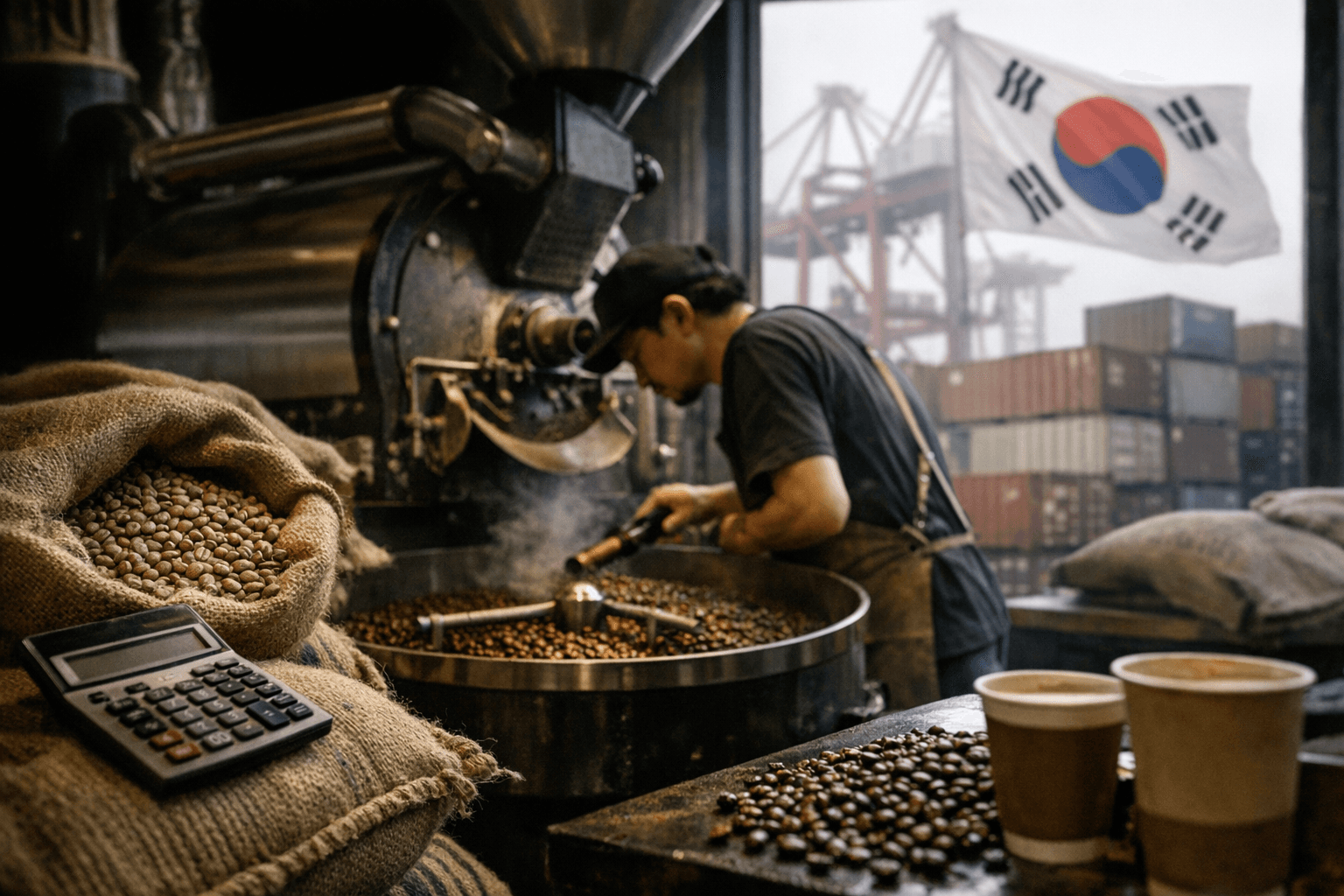
South Korea imported coffee valued at 2.65 trillion won in 2025, a 41% increase from the previous year and the first time the country's coffee import bill topped 2 trillion won. In dollar terms the total rose to approximately $1.86 billion, up 35% year on year. That sharp rise in cost matters for everyone who pays for a cup, runs a roastery, or sources green-bean lots for blends.
Data reported Jan. 25, 2026 attribute the jump mainly to higher global green-bean prices and a weaker Korean won. Volumes were broadly steady; imports fell slightly in tonnes, so the spike was driven by price and currency rather than a surge in shipments. Global arabica prices reached record highs in early 2025, lifting the commodity component of the import bill. At the same time, a softer won magnified the won-denominated value of the same dollar-priced shipments.
For roasters and café owners the immediate effect is pressure on margins. Higher landed costs for green beans push up per-kilo costs for light and specialty lots, and slight declines in volume imports suggest supply patterns did not expand to absorb price rises. Smaller roasteries that buy spot lots may feel the squeeze sooner than larger operations with forward contracts. Retail coffee prices at cafés and convenience stores often lag commodity moves, but sustained higher import bills make price adjustments more likely this year.
For green-bean buyers, the market signals are clear. Record arabica prices in early 2025 indicate origin-side tightness and weather or crop issues that affected supply. Currency moves can amplify global price swings when converted into won, so hedging or dollar-linked contracting can blunt short-term volatility. For home roasters and consumers, expect a continued focus on blend creativity and promotional strategies as shops manage cost pass-through. Seasonal single-origin runs may be trimmed or repriced if high-graded lots remain costly.
Community members who track the C-market and origin reports will want to watch both global arabica trends and Korean won strength in 2026. If the won rebounds or arabica softens, won-denominated import costs could retreat even if dollar values remain elevated. Conversely, further currency weakness or another supply shock at origin would keep pressure on roaster margins and cup prices.
This development means you should monitor green-bean contracts, review pricing strategies, and consider hedging or shifting profile mixes to protect margins. Keep an eye on arabica benchmarks and the won-dollar rate - those two levers will largely determine whether 2026 stabilizes or brings more grind-time pain at the till.
This article was produced by Prism’s automated news system from verified source data, official records, and press releases, then run through automated quality and moderation checks before publishing. The system is built and supervised by the people who set the standards it runs under. Read our full AI policy.
Did this article answer your question?