Coffee producers need institutions, not just traceability, to meet EU rules
Traceability is only the first gate. The harder test is whether producers have the institutions to keep maps, records, and shipments moving at EU scale.
The European Union Deforestation Regulation, adopted in May 2023 as Regulation (EU) 2023/1115, asks exporters to prove their beans are not linked to deforestation. That has turned compliance into a market-access test for producers, cooperatives, and traders alike. The real pressure point is not just whether a farm can be located on a map, but whether the local institutions around it can keep the paperwork, data, and coordination alive long enough to satisfy buyers.
Why the rule is already reshaping trade
The law’s timeline has already changed commercial behavior. In December 2023, coffee importers into the European Union were starting to scale back purchases from small farmers in Africa and beyond as the rule loomed. By May 22, 2024, the International Coffee Organization said coffee traders were speeding up shipments before the EU deforestation law.
The official timetable has shifted too. The European Commission delayed application of the regulation to December 30, 2025 for most companies and June 30, 2026 for small and medium-sized enterprises. On October 21, 2025, EU lawmakers eased some requirements for smallholders but kept the 2025 start date.
What traceability tools can do, and where they stop
A June 2024 EU Space analysis on coffee and the EUDR showed how Copernicus and other EU Earth-observation data can support compliance. Geolocation and satellite monitoring can help establish where coffee is grown and whether land overlaps with deforestation risk. But the same analysis underlines the limit of the toolset: satellite data can support a file, yet it cannot build the producer organization that keeps the file current.
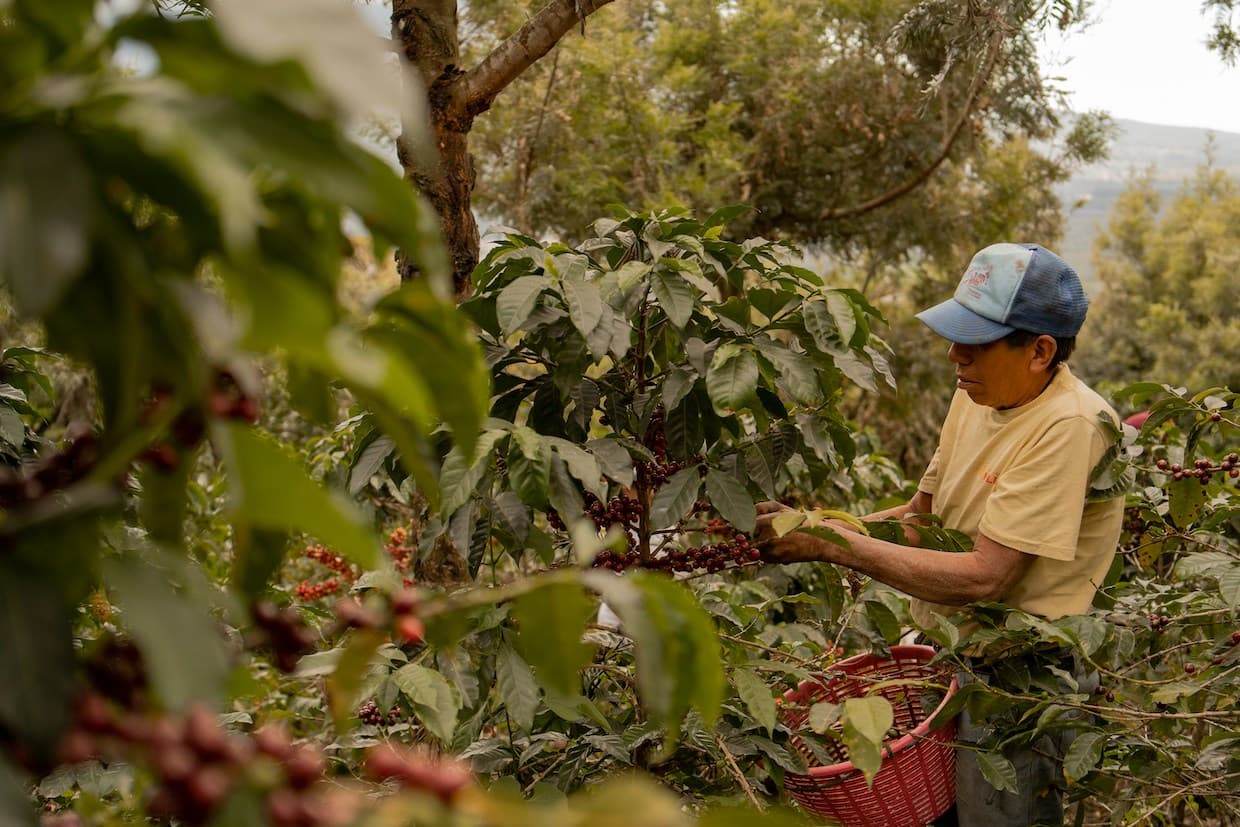
That distinction matters across origins with fragmented farm structures. A 2025 academic paper found that smallholders and cooperatives often struggle to meet traceability demands because they need technical equipment such as GPS or blockchain-enabled tools. In practice, those tools only work when someone has the staff, training, and routines to collect coordinates, update plots, and reconcile farm records season after season.
What producers actually need is broader than a digital map:
- Land documentation that can stand up to buyer and regulator scrutiny
- Cooperative staff who can collect, clean, and submit farm data
- Legal and technical support to resolve land and boundary questions
- Financing to pay for mapping, audits, and ongoing data upkeep
- Shared systems that let exporters, mills, and producer groups work from the same records
The institutional load sits at origin
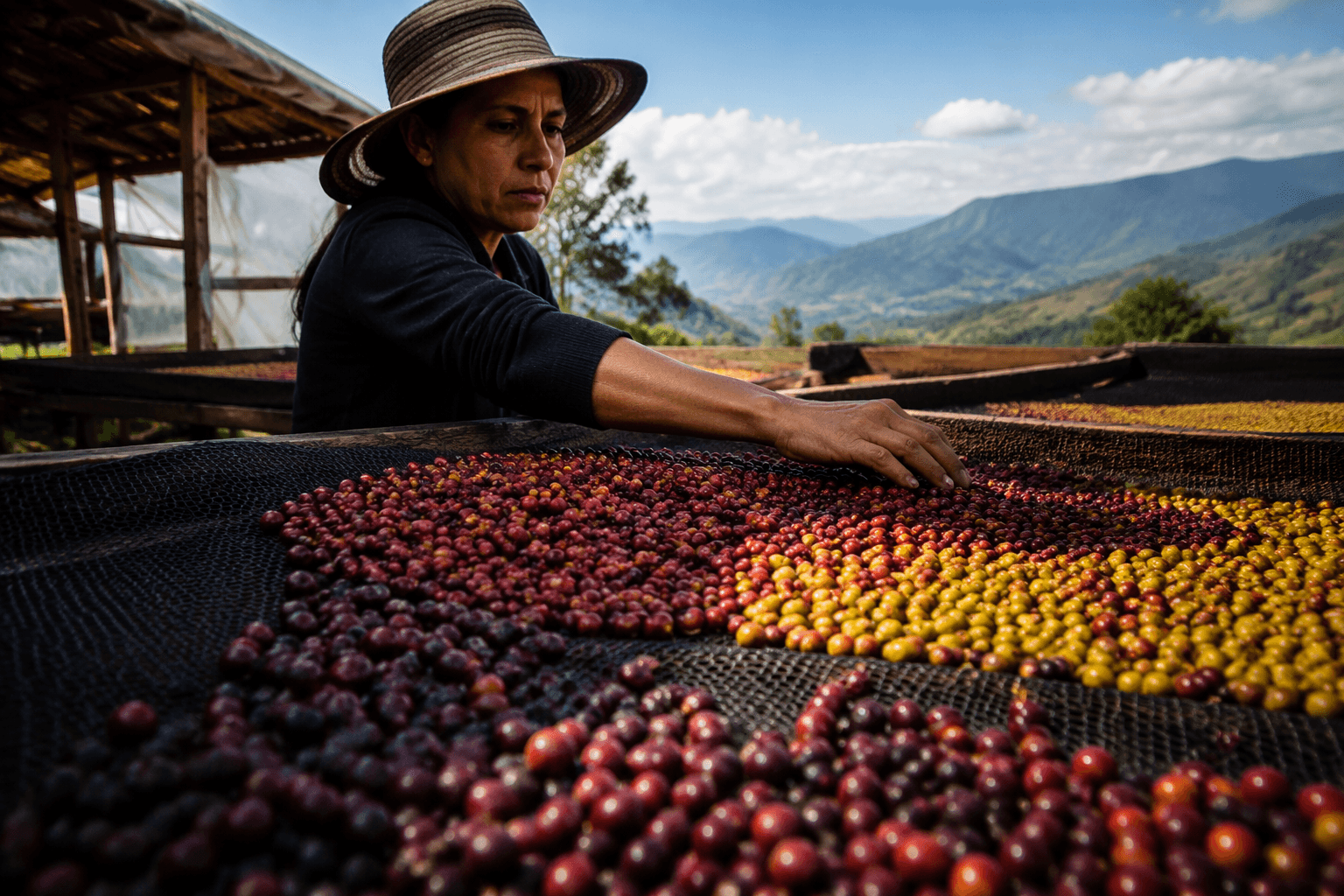
That load becomes obvious in countries with large smallholder bases. A 2026 ResearchGate paper on Colombian coffee said Colombia has 540,000 coffee producers, and 96 percent of them are smallholders cultivating less than a certain threshold. In a setting like that, EUDR compliance is not a single farm-level task. It is a coordination problem across thousands of plots, many of them managed by families with limited access to digital tools, legal advice, or reliable land paperwork.
The same logic helps explain why producer-facing institutions are taking center stage. Fairtrade reported that 57 percent of the Fairtrade coffee and cocoa producers supported under its “Deforestation Regulations & Compliance” project had completed geolocation mapping. Fairtrade also extended the timeline for cooperatives to complete geolocation data collection.
International Coffee Partners put the point bluntly on November 22, 2024, welcoming the delay to the regulation while stressing the continued need for support for smallholder coffee farmers.
Where readiness is being built
Readiness is already being discussed as a systems issue, not a one-off project. A May 2025 conference report titled “EUDR Readiness in the African coffee sector” was held in Kampala, Uganda, with the Ugandan Ministry of Agriculture, Animal Industry and Fisheries involved in the coordination.
In parallel, producer-facing programs are leaning on data collection as the new backbone of compliance. In Colombia, Solidaridad has emphasized that farmer-generated data is becoming increasingly important for traceability, certification, impact measurement, and regulatory compliance. Fairtrade’s own materials stress hands-on support for producer organizations and validated geolocation data.
What roasters and importers need to understand
For specialty roasters and importers, the lesson is straightforward: a supplier can be traceable and still be structurally unprepared. If the cooperative does not have trained staff, if land records are inconsistent, if data systems are fragile, or if financing is too thin to keep mapping current, then compliance becomes a bottleneck rather than a safeguard. That is where smaller origins can get squeezed first, because the cost of institutional weakness shows up as lost access, delayed shipments, or a narrower set of coffees that buyers feel comfortable booking.
This article was produced by Prism’s automated news system from verified source data, official records, and press releases, then run through automated quality and moderation checks before publishing. The system is built and supervised by the people who set the standards it runs under. Read our full AI policy.
Did this article answer your question?