Coffee Waste Emerges as a Test Case for Circular Economy
Spent grounds are moving from landfill liability to ingredients, fuel, and biogas, turning the coffee bin into a live circular-economy test case.
The puck is no longer the end of the story
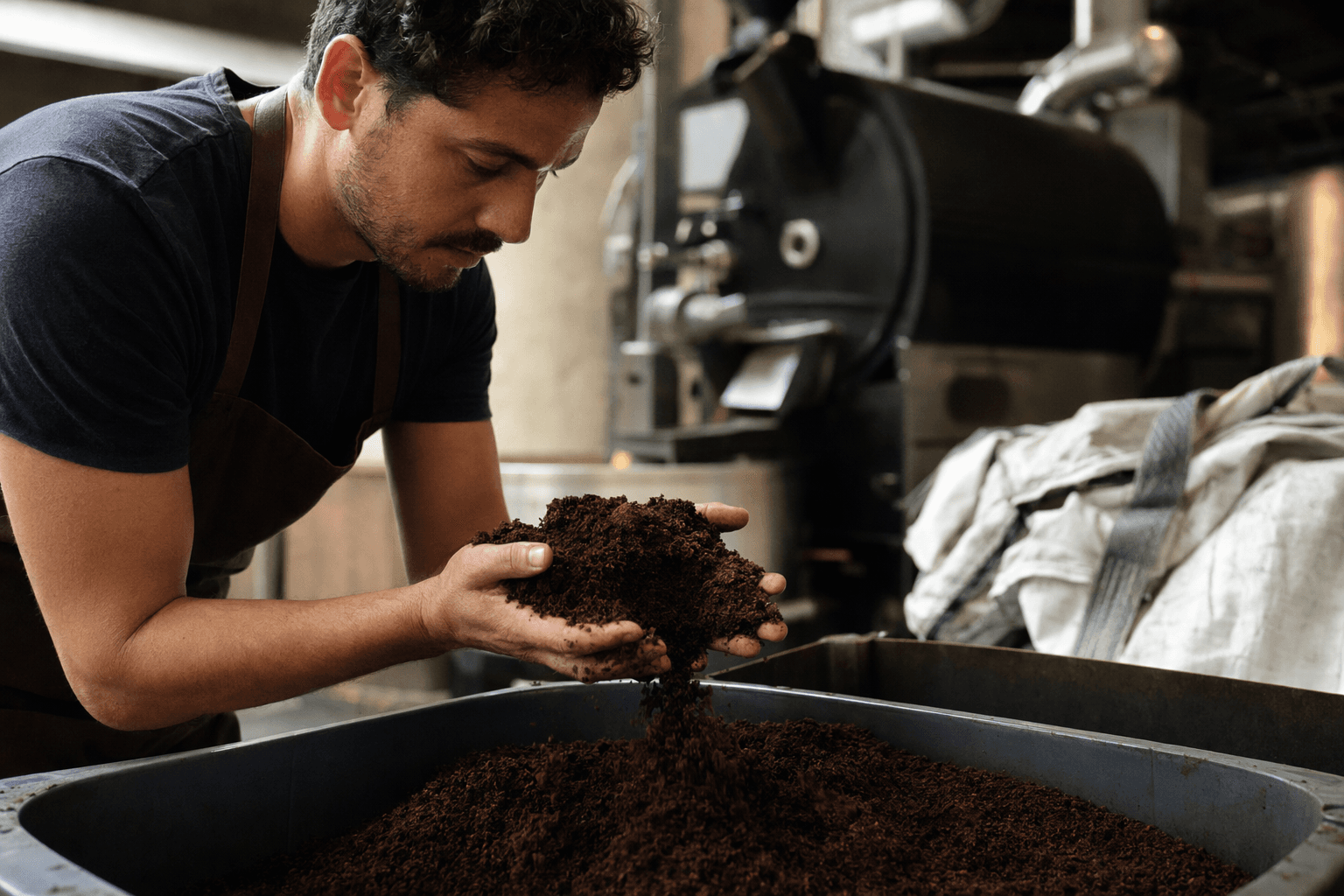
The coffee habit most people barely notice now has a second life. Spent grounds and espresso pucks are being treated as feedstock for new products, not as trash, and that shift is starting to show up in the bins, back rooms, and pickup systems around cafés and roasters. Daniel Woods makes the case plainly: coffee’s end-of-life stage has become a real test of whether circular-economy thinking can work at scale.
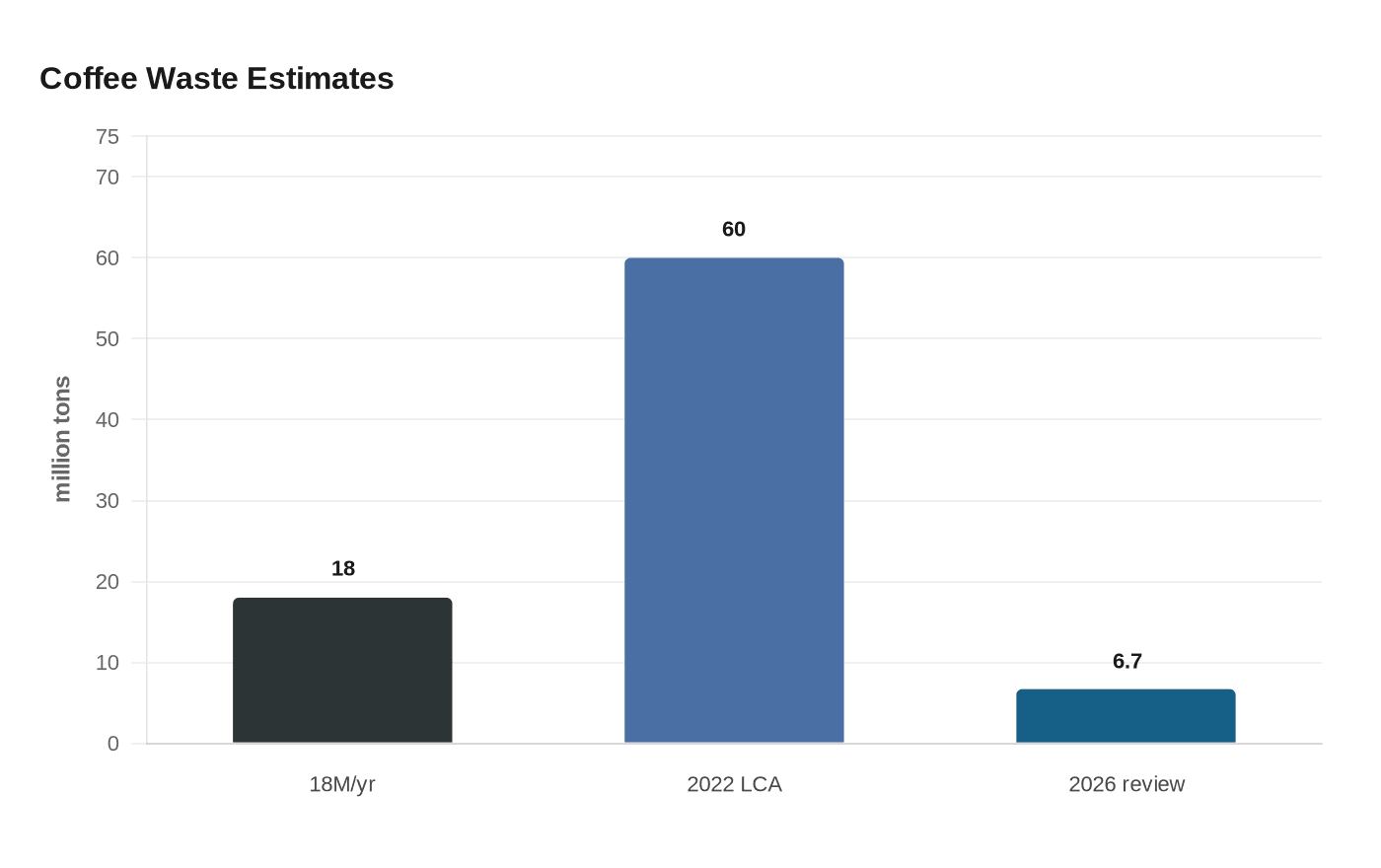
The numbers explain why this matters. People drink more than two billion cups of coffee each day, which generates an estimated 18 million tonnes of wet spent grounds every year. Other calculations push the total far higher, with one 2022 life-cycle assessment putting global spent coffee grounds at about 60 million tons and a 2026 review estimating 6.7 million tons in 2022/2023, depending on what gets counted. That spread tells you something important: once you include brewed grounds, industrial residues, and other coffee-chain by-products, the waste stream is bigger and messier than it first appears.
Why coffee waste is more than a disposal nuisance
Spent coffee grounds are the most abundant waste generated in coffee beverage preparation and instant coffee production, and most of it still ends up in landfills. That creates a problem that is environmental, operational, and economic all at once. When organic material breaks down in anaerobic landfill conditions, it produces methane and carbon dioxide, and methane is a far more powerful greenhouse gas than carbon dioxide over a 100-year period.
The U.S. Environmental Protection Agency says municipal solid waste landfills are the third-largest source of human-related methane emissions in the United States. Its composting guidance also notes that diverting organic waste from landfills can cut methane emissions. The point is hard to miss: coffee waste is not just something to haul away, it is a climate issue, a groundwater risk, and a lost-value problem.
That last piece matters more than it sounds. Coffee waste contains oils and compounds such as caffeine, tannins, and chlorogenic acid, which can contribute to leachate if the material is not handled properly. The life-cycle literature also notes that piled spent grounds can carry a high risk of spontaneous combustion, another reminder that this material needs a real management system, not just a bigger dumpster.
Where the value is being pulled out
One of the clearest examples of the shift is EcoBean in Poland. Described by EIT materials as a Polish circular-bioeconomy startup and certified B Corp, the company says it uses patented technology to turn spent coffee grounds into high-value, bio-based ingredients for beauty, food, and packaging. That is the kind of move that changes the meaning of waste: what once required disposal becomes a raw material with a market.
The company’s momentum is not theoretical. In 2023, EcoBean announced 7 million euros in funding for a technology center in Poland, and the facility was described as capable of processing up to 1,000 tons of spent coffee grounds per year. For cafés and roasters, that scale matters because it shows there can be an industrial pathway between the espresso machine and a product line, not just a compost pile at the end of the day.
This is the part of the story that can change how you look at everyday coffee service. A grounds bin is no longer just a waste bin if it can feed a beauty ingredient stream, a food application, or a packaging material pipeline. Once those downstream markets exist, the economics of sorting and collection start to look very different.
Not every solution depends on extraction
There is also a less glamorous but equally important route: energy recovery. A 2024 Scientific Reports study found that co-feeding small amounts of spent coffee grounds with food waste increased methane production without compromising process stability. In plain English, coffee waste can help anaerobic digestion systems work better, which means it can support biogas production instead of simply being composted or buried.
That matters for waste operators and municipalities because it gives organics processors another useful input stream. The EPA’s Landfill Methane Outreach Program works with industry stakeholders and waste officials to reduce or avoid methane emissions from landfills, and one of its tools is the recovery and beneficial use of biogas generated from organic municipal solid waste. Coffee grounds fit neatly into that agenda, which is why the waste stream is attracting attention far beyond coffee itself.
There is also some encouraging broader context. The EPA says U.S. methane emissions fell by 19% between 1990 and 2022. Landfills are still a major source, though, which is exactly why diverting coffee waste can have outsized value: it takes a huge, steady organic stream and moves it away from a methane-heavy endpoint.
What changes on the ground
For cafés, the most visible shift is operational. Spent grounds and pucks stop being the invisible end of service and become a separated material with a destination. That can mean dedicated collection bins, cleaner sorting, and different pickup arrangements for organics processors, digesters, or specialty waste handlers.
For consumers, the change will show up in more indirect but still noticeable ways. You may start seeing products that carry a coffee-waste story in beauty, food, and packaging, or municipal organics systems that explicitly treat brew waste as recoverable material. Once the collection infrastructure is in place, coffee waste becomes something that travels through a supply chain, not just out of a back door.
That is why this story has become such a useful circular-economy test case. Coffee waste is abundant, chemically interesting, and already drawing serious attention from startups, researchers, and processors. If the industry can keep building the systems to sort, recover, and reuse it, the most familiar waste in coffee will also become one of its clearest examples of value made from leftovers.
This article was produced by Prism’s automated news system from verified source data, official records, and press releases, then run through automated quality and moderation checks before publishing. The system is built and supervised by the people who set the standards it runs under. Read our full AI policy.
Did this article answer your question?