Starbucks launches Thailand coffee program to boost climate resilience
Starbucks launched a three-year Northern Thailand program with ITDF, pairing farm training and post-harvest help with Sumatra agronomists as arabica climate pressure intensifies.
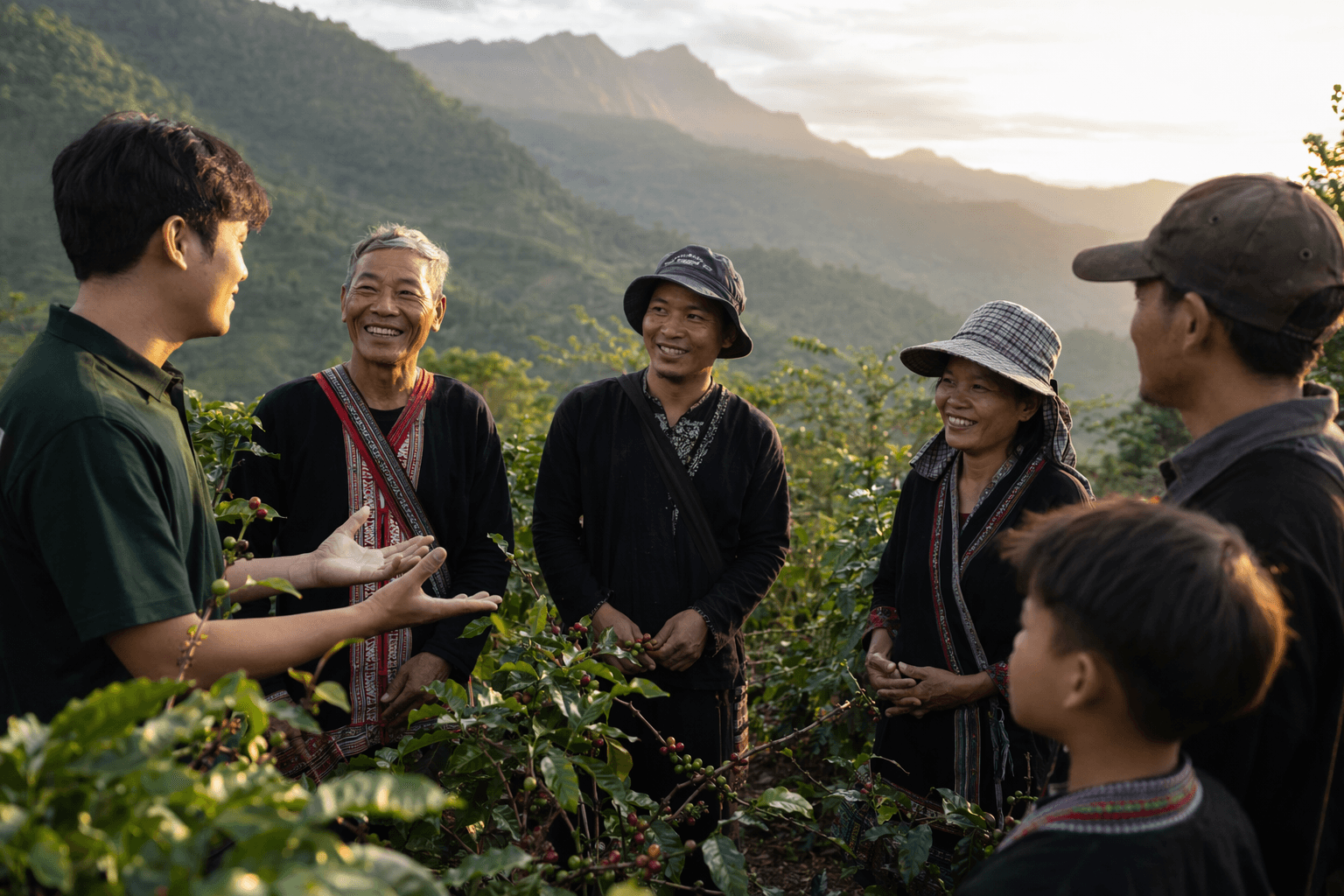
Starbucks is putting a new climate play directly into coffee country, launching a three-year initiative with the Integrated Tribal Development Foundation to support farmers in Northern Thailand with the kind of on-the-ground work that can decide whether arabica holds up in a hotter, less predictable season.
The program is aimed at farming and post-harvest practices, with Starbucks framing the effort around better coffee quality, higher productivity and stronger climate resilience. It landed as World of Coffee Bangkok 2026 took over BITEC in Bangkok from May 7 to 9, giving the company a high-profile stage to talk about origin support, not a product drop or a store opening.
What makes the plan concrete is the support structure behind it. Starbucks said farmers will work alongside agronomists from its Farmer Support Center in Sumatra, the Asia Pacific hub in a global network of 10 Farmer Support Centers. The company’s model also reaches beyond Thailand: at Hacienda Alsacia in Costa Rica, Starbucks’s first and only company-operated coffee farm, more than 800,000 coffee trees grow across 240 hectares as hybrids, varietals and sustainability practices are tested before being shared across the network, including with growers who do not sell to Starbucks directly.
That matters in Northern Thailand, where coffee is already under pressure. Arabica is especially sensitive to temperature swings, rainfall volatility and pest pressure, and those risks are shaping production across Southeast Asia. A 2025 Mae Fah Luang University report put Thailand’s annual arabica output at about 9,000 tons, with more than 3,000 tons coming from upper Northern Thailand. A 2026 climate report said Thailand ranks third globally for the increase in days above 30°C that are harmful to coffee production.
Starbucks is not starting from zero. In 2024, the company said its Thailand community-store giving had already contributed more than 17 million baht to ITDF-supported communities. Another Starbucks Thailand and ITDF figure put total support for Northern Thailand coffee communities at more than 27 million baht since Muan Jai Blend launched in 2003 and Thailand’s first Community Store opened in 2013. ITDF, founded in 1991, says it has worked in northern hill-tribe communities for more than 20 years on needs ranging from clean water and schools to clinics and income generation.
With Thai specialty coffee demand rising even as yields, costs and climate stress bite, Starbucks is turning a long-running local relationship into something more strategic. The question now is whether other major coffee brands treat Northern Thailand as a one-off investment, or as a preview of how origin support, agronomy and supply security will be handled across the industry.
This article was produced by Prism’s automated news system from verified source data, official records, and press releases, then run through automated quality and moderation checks before publishing. The system is built and supervised by the people who set the standards it runs under. Read our full AI policy.
Did this article answer your question?