Five-Year Study Reveals Unequal Climate Resilience Across Coffee Sectors
A five-year study found climate resilience in coffee is uneven across global, Ethiopian, and Tanzanian sectors, affecting who benefits from mitigation and adaptation efforts.

A five-year inquiry into coffee supply chains finds that climate resilience is not shared evenly across the sector, leaving certain producers and regions more exposed to climate shocks. The University of Basel highlighted a World Development article by Janina Grabs and PACSMAC partners that examines mitigation and adaptation in the global, Ethiopian, and Tanzanian coffee sectors, and warns that resilience often accrues to better-positioned actors rather than to the most vulnerable.
Janina Grabs and PACSMAC partners based their analysis on five years of research that tracked how policy choices, market mechanisms, and on-the-ground interventions interact. The study considers both mitigation - efforts to reduce emissions - and adaptation - measures to cope with changing conditions - and asks explicitly "resilience of what and for whom?" That framing exposes tradeoffs: interventions framed as climate-friendly can protect assets like export-oriented mills, processing infrastructure, and large farms, while leaving smallholders, hillside growers, and community laborers with fewer benefits.
For coffee producers and buyers, the findings matter because uneven resilience translates into concentrated risk. Specialty roasters and buyers who source from limited origin networks may see supply disruptions if smallholder-dominated regions lack access to adaptation finance or technical support. For smallholders in Ethiopia and Tanzania, the study highlights a concrete challenge: without targeted support that reaches farm level - via cooperatives, extension services, or accessible finance - climate impacts on yields, quality, and income will remain acute.
Practical implications are immediate for those involved in sourcing, extension, and farm-level management. Verify sourcing claims and ask suppliers which farms and communities receive adaptation investments. Cooperatives and exporters can use the study’s framing to press for climate finance that reaches farm-level improvements such as shade management, soil conservation, and access to climate-resilient varietals. Buyers should assess whether mitigation payments and sustainability premiums end up strengthening local resilience or primarily offset corporate emissions on paper.
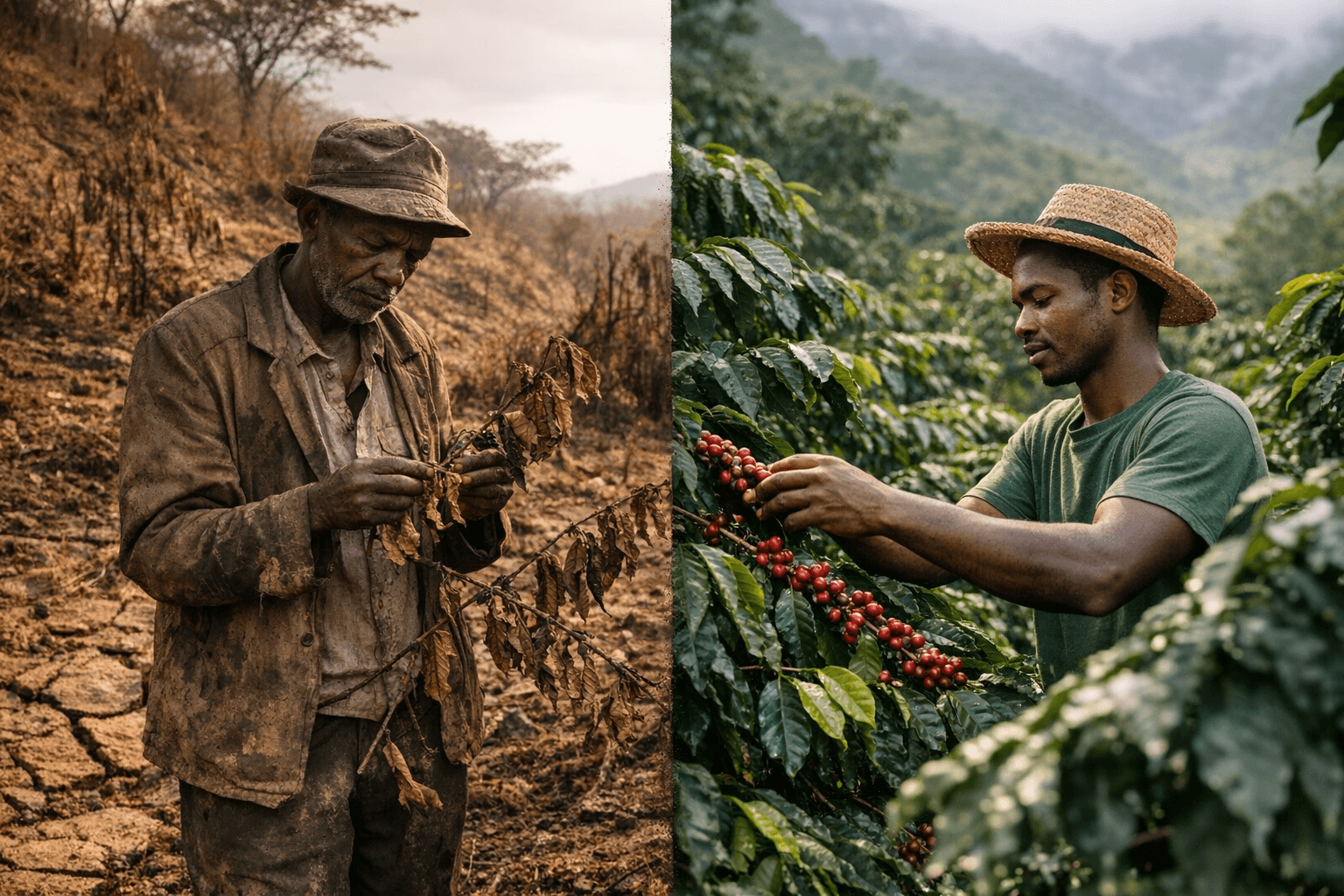
The study also matters for community organizers and local governments. Design choices in adaptation programming - who gets training, who receives seedlings, who qualifies for grants - determine whether resilience strengthens livelihoods or simply shields infrastructure higher up the chain. That difference will affect cup quality, long-term supply reliability, and rural economies tied to coffee.
Janina Grabs and PACSMAC partners’ work makes one point plain: resilience must be measured not only in hectares or emissions avoided but in who keeps their income and their land. For coffee communities, the next steps are clear - track where adaptation funds go, push for farm-level access to resources, and retool sourcing practices so that climate action protects producers as well as processors. Expect this study to shape conversations between producers, cooperatives, and buyers as the sector adapts to a hotter, more variable climate.
This article was produced by Prism’s automated news system from verified source data, official records, and press releases, then run through automated quality and moderation checks before publishing. The system is built and supervised by the people who set the standards it runs under. Read our full AI policy.
Did this article answer your question?