Germany’s coffee market shifts to whole beans as consumption surges
Whole beans just hit 193,800 tonnes in Germany, a 130% decade jump that is reshaping grinders, machines, and the way coffee gets brewed at home.
Germany’s coffee habit is changing fast
Whole-bean coffee in Germany has climbed to a record 193,800 tonnes, or 3.21 million bags, and that 130% rise over the past decade says plenty about where the market is headed. Roast-and-ground coffee, meanwhile, has fallen by about 38% over the same stretch, which is not a small consumer preference shift but a full-on change in how people want to make coffee. The message is simple: freshness, control, and a more deliberate brewing routine are beating convenience in the segment that matters most.
Holger Preibisch, the executive director of the Deutscher Kaffeeverband, argues that the market can look stable from a distance while everything underneath it changes. He is right. The cup count may not scream revolution, but the equipment on kitchen counters, the formats in supermarket aisles, and the expectations around flavor absolutely do. One in three German households now has a fully automatic machine that uses whole beans, and that is exactly the kind of installed base that keeps bean demand climbing.
Why whole beans are winning at home
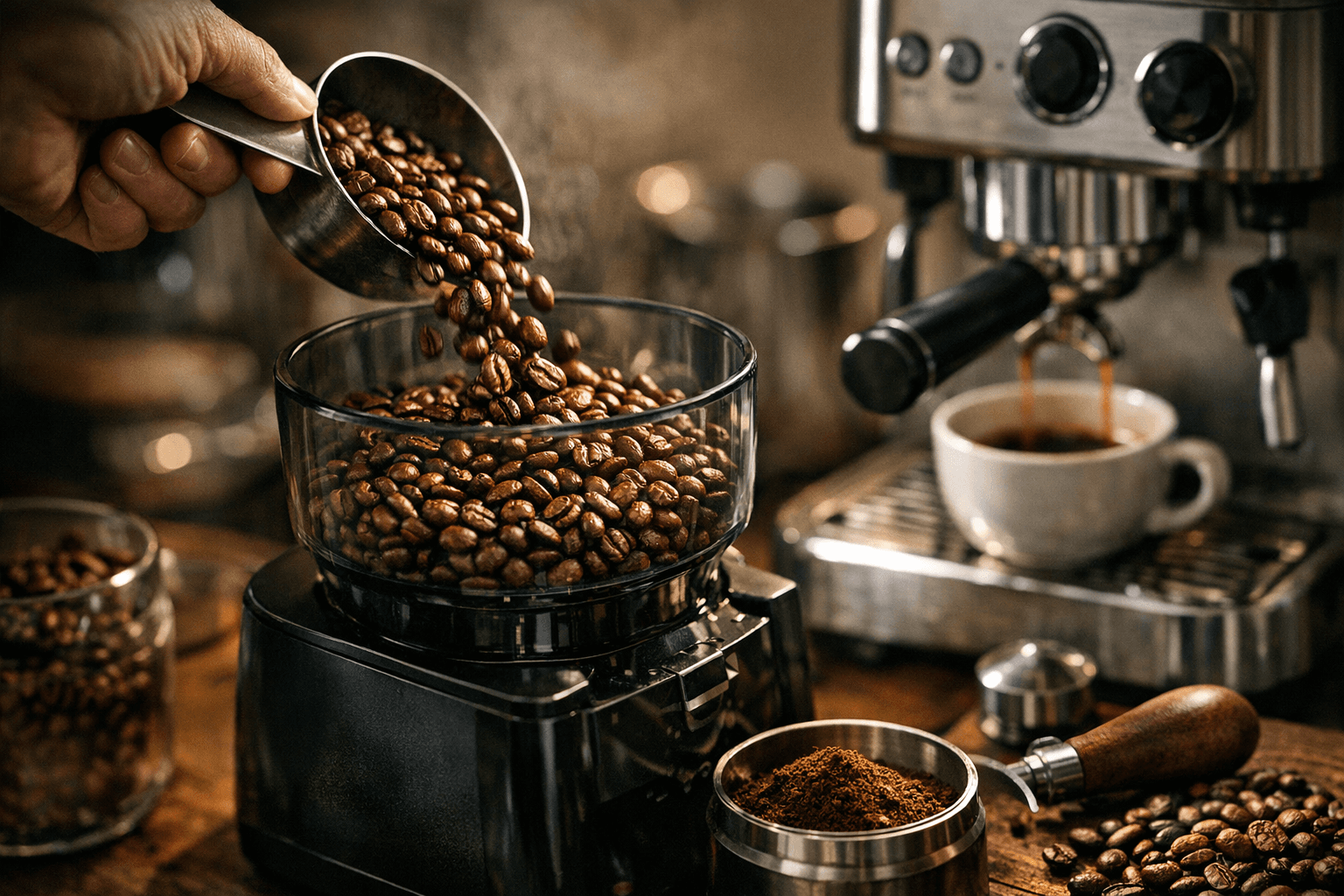
This is not just a story about specialty coffee lovers turning their backs on pre-ground. It is a broader consumer shift toward brewing systems that make freshness easier to access without turning the kitchen into a lab. Whole beans give people more control over grind size, dose, and extraction, and fully automatic machines remove a lot of the friction that once kept bean brewing in enthusiast territory.
That matters because the market is being pulled in two directions at once. On one side are discount supermarkets selling cheaper coffee, and on the other is a high-end specialty segment that keeps raising the bar for quality. Whole beans sit right in the middle of that tension: they can serve price-conscious buyers who want better cup quality at home, and they can support the higher expectations of drinkers who have already moved beyond basic convenience.
The average German drank 161 litres of coffee last year, which keeps coffee firmly embedded in daily life. But the format is changing, and that change is what roasters, grinders, and machine makers should care about most. When beans become the default rather than the enthusiast exception, the winners are the brands that make grinding, dosing, and brewing feel effortless.
The money is moving up even as volume slips
Germany’s total coffee market value rose by 23.5% to nearly 9 billion euros even though volume slipped by 1.5% to around 456,000 tonnes. That is the kind of split that tells you price pressure and premiumization are happening at the same time. Consumers are buying slightly less by volume, but they are paying more for better beans, better equipment, and formats that feel worth the spend.
Mintel expects the German coffee market, excluding RTD coffee, to reach more than 5 billion euros in 2025, with price increases and a shift toward premium at-home brewing solutions shaping the category. That lines up neatly with what is happening on the ground. If people are investing in a grinder, a superautomatic, or better whole beans, they are not just buying coffee. They are buying a better daily ritual.
For roasters, that changes the sell. Packaging, freshness windows, roast profile consistency, and grind recommendations become more important when customers are actively comparing bean quality rather than treating coffee as a generic pantry staple. For machine brands, it means the pitch is no longer just speed. It is cup quality, repeatability, and making whole-bean brewing feel normal.
The out-of-home market is still strong
The home shift is not happening because cafés have gone quiet. Out-of-home coffee consumption in Germany reached 125,500 tonnes in 2025, breaking the previous high of 125,000 tonnes set in 2018. That is an important reminder that the café culture side of the market remains resilient even as home brewing gets more bean-focused.
In practice, this creates a nice feedback loop. People taste better coffee outside the home, then start chasing a closer version of that experience in their kitchen. Whole beans and automatic machines are the bridge between those two worlds, which is why the home and café segments should be seen as connected rather than competing in a simple zero-sum way.
There is also a useful nuance in the report: around one in ten cups is now made with instant coffee, especially higher-quality versions. That means convenience is not disappearing. It is just losing its monopoly. Instant still has a role for speed, travel, and low-friction brewing, but the center of gravity is moving toward formats that let drinkers control taste and freshness.
Why Germany matters beyond its borders
Germany is Europe’s largest green coffee importer, and more than 90% of its coffee comes from producing countries. It is also home to around 2,500 roasters, which makes it one of the continent’s most important testing grounds for what consumers want next. When German households start favoring whole beans in a meaningful way, exporters, specialty suppliers, and equipment makers across Europe pay attention.
That is why Germany gets described as a bellwether. Its market is big enough to matter, but it is also varied enough to show how premium buying, discount retail, and specialty coffee can coexist in the same country. The result is a useful snapshot of what the wider European coffee trade may look like when whole beans stop being a niche and become the default expectation.
For exporters and roasters, the opportunity is obvious. More bean-led brewing means more demand for quality grading, consistent roasting, and packaging that protects freshness. For grinder and machine makers, it means the category is no longer selling a nice-to-have accessory. It is selling the hardware that makes the whole-bean habit possible.
What to watch next
The headline number is the 193,800 tonnes of whole-bean coffee, but the deeper story is the behavior shift behind it. German consumers are not just drinking coffee. They are choosing systems that give them more say in how it tastes, how fresh it is, and how closely it matches café coffee at home. That is a bigger change than a market share chart suggests.
If whole beans keep climbing and roast-and-ground keeps sliding, the old divide between everyday coffee and enthusiast coffee will keep blurring. In Germany, the bean grinder is moving from specialist gear to standard kit, and that is usually how a category changes for good.
This article was produced by Prism’s automated news system from verified source data, official records, and press releases, then run through automated quality and moderation checks before publishing. The system is built and supervised by the people who set the standards it runs under. Read our full AI policy.
Did this article answer your question?