Guatemala coffee output and exports set to rise in 2026/27, USDA says
More bearing arabica trees should lift Guatemala's 2026/27 crop, but higher fertilizer, fuel and rust pressure may decide who actually cashes in.
Guatemala’s coffee sector is heading into 2026/27 with more exportable arabica, and the winners could be roasters that want dependable strictly hard bean supply as much as growers hoping the next harvest finally turns higher output into better margins.
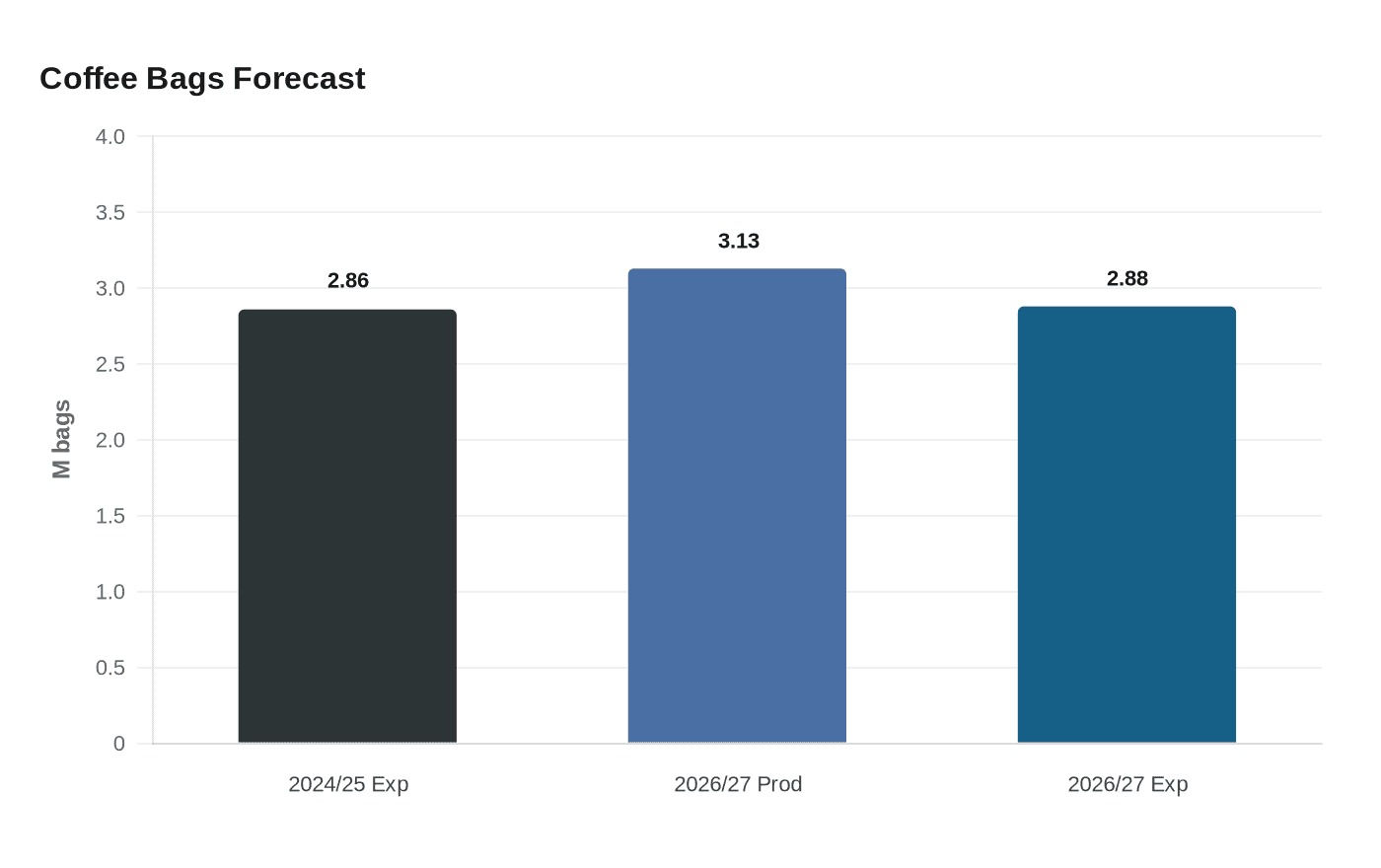
The USDA Foreign Agricultural Service now forecasts green coffee production at 3.13 million 60-kilogram bags, up 3% from 2025/26, with exports rising to 2.88 million bags. The lift is coming less from new land than from maturing trees: harvested coffee area is expected to reach 345,000 hectares, and bearing trees are projected to climb from 1.628 billion to 1.662 billion. In other words, Guatemala is not expanding wildly, it is cashing in on years of renovation.
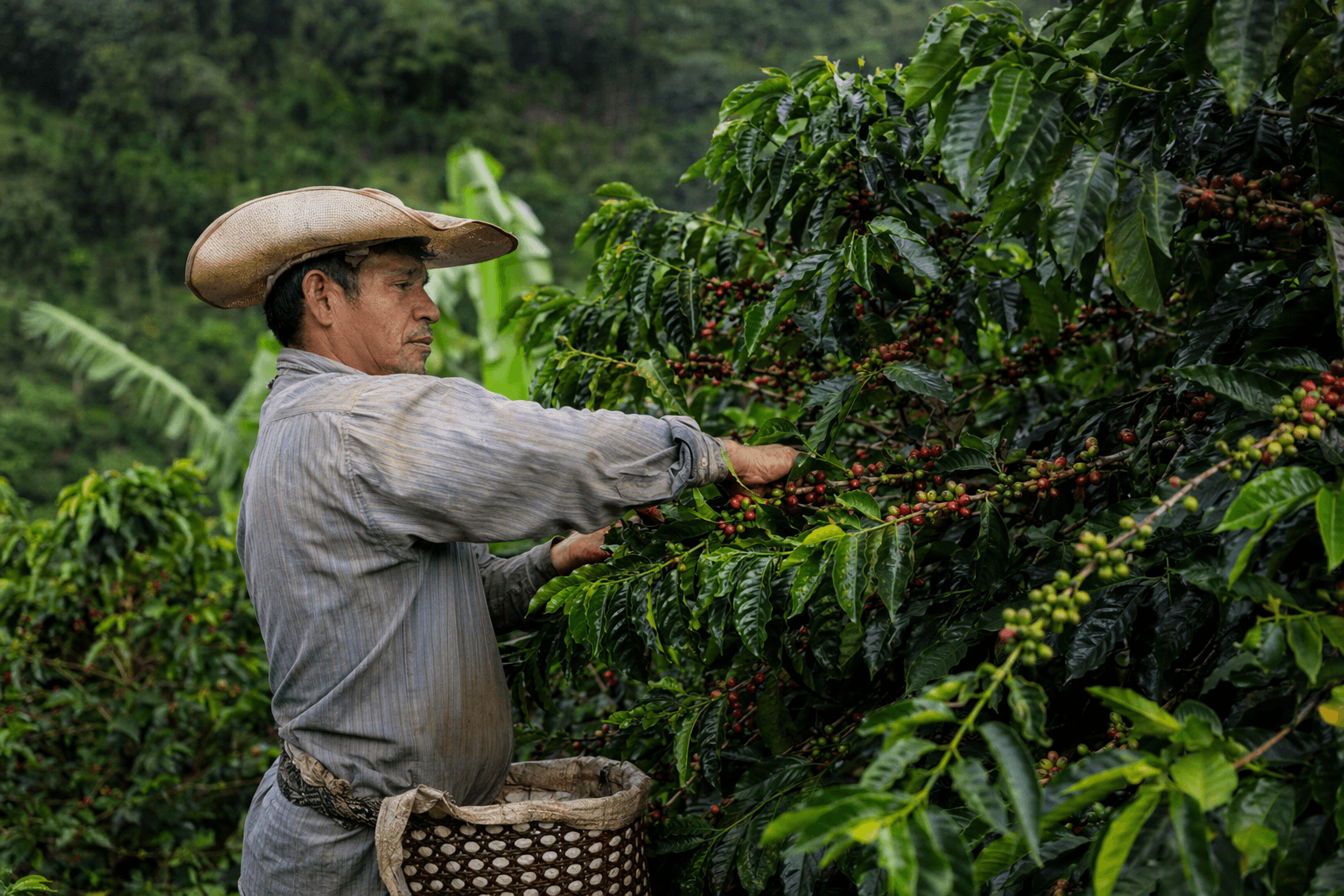
That matters because the crop remains overwhelmingly arabica. USDA says about 30% of cultivated arabica hybrids are rust-tolerant, while 81% of exports are classified as strictly hard beans. For green buyers, that keeps Guatemala firmly positioned in the higher-end bracket, especially in markets that pay for cup consistency and altitude-driven profiles. For producers, the question is whether more mature plantings can finally raise farm revenue enough to offset the heavier costs that come with keeping the trees healthy.
Those costs are not easing. Fertilizer and chemical expenses are expected to hit the next season, and oil prices in Guatemala had already risen 20% by March 2026, tightening the squeeze on picking, milling and transport. Disease pressure is another unresolved risk. ANACAFE’s technical bulletins have tracked coffee leaf rust in January, February and March 2026, and the association has also flagged the coffee branch and stem borer in several regions. A 2024/25 rust spike reached as high as 20% in some months, a reminder that the country’s quality reputation depends on constant crop management, not just rainfall and altitude.
The broader market backdrop is still constructive. ANACAFE says the 2024/25 coffee year, which ended September 30, 2025, brought exports of 3.73 million quintals of coffee oro, equal to 2.86 million 60-kilogram bags, worth US$1.285 billion. The average export price jumped to US$344.81 per quintal from US$235.37 a year earlier, and the United States remained the largest destination at 42% of exports. Coffee also supports 125,000 producer families and about 500,000 annual jobs, with 376,019 hectares cultivated across 261 municipalities.
That sets up a familiar but important test for the next buying cycle: if output and prices both hold, Guatemala can strengthen its position as a quality arabica origin. If costs keep rising faster than yields, the extra bags will matter more to exporters than to the farms that grew them.
This article was produced by Prism’s automated news system from verified source data, official records, and press releases, then run through automated quality and moderation checks before publishing. The system is built and supervised by the people who set the standards it runs under. Read our full AI policy.
Did this article answer your question?