ILO and Nestlé Partner to Protect Workers Across Global Coffee Supply Chains
The ILO and Nestlé partnered on a two-year project covering coffee supply chains that touch 20–25 million families, with seasonal and migrant workers in Brazil, Colombia and Mexico the primary focus.

Twenty to twenty-five million farming families worldwide depend on coffee for their income. Dan Rees, Director of the ILO Priority Action Programme on Decent Work Outcomes in Supply Chains, put that figure at the centre of the International Labour Organization and Nestlé's announcement in Geneva on March 31, framing a new two-year project aimed at the workers most exposed inside that chain: seasonal and migrant labourers in Brazil, Colombia and Mexico who harvest the crop but hold the least leverage when recruitment turns predatory or working conditions fall short.
The project, titled "From fair recruitment to worker protection in coffee supply chains," is part of an expanded ILO-Nestlé partnership and is supported by Nestlé through the Nescafé Plan, the company's global sustainability programme for the brand. It targets three interconnected failures the ILO has documented across sourcing countries: exploitative middlemen in recruitment, inadequate protections for workers around safety, wages and contract clarity, and weak institutional capacity to monitor or enforce the rules already on the books.
Antje Shaw, Nestlé's Head of Sustainability for Coffee, described the partnership as "a significant step to advancing and promoting human rights in coffee supply chains," and said that working alongside the ILO means they can move faster "in creating more resilient and inclusive coffee value chains, where workers are treated with dignity."
The ILO will convene governments, employers' organisations and workers' organisations in each of the three target countries to identify what drives decent-work deficits locally and to design context-specific interventions. Nestlé will use its supply-chain footprint to pilot and scale what works. The project also feeds into two ILO-wide programmes: the Fair Recruitment Initiative, which supports fair recruitment principles globally, and the Vision Zero Fund, part of the Safety + Health for All flagship programme, which the ILO describes as promoting "the fundamental right to a safe and healthy working environment in supply chains."
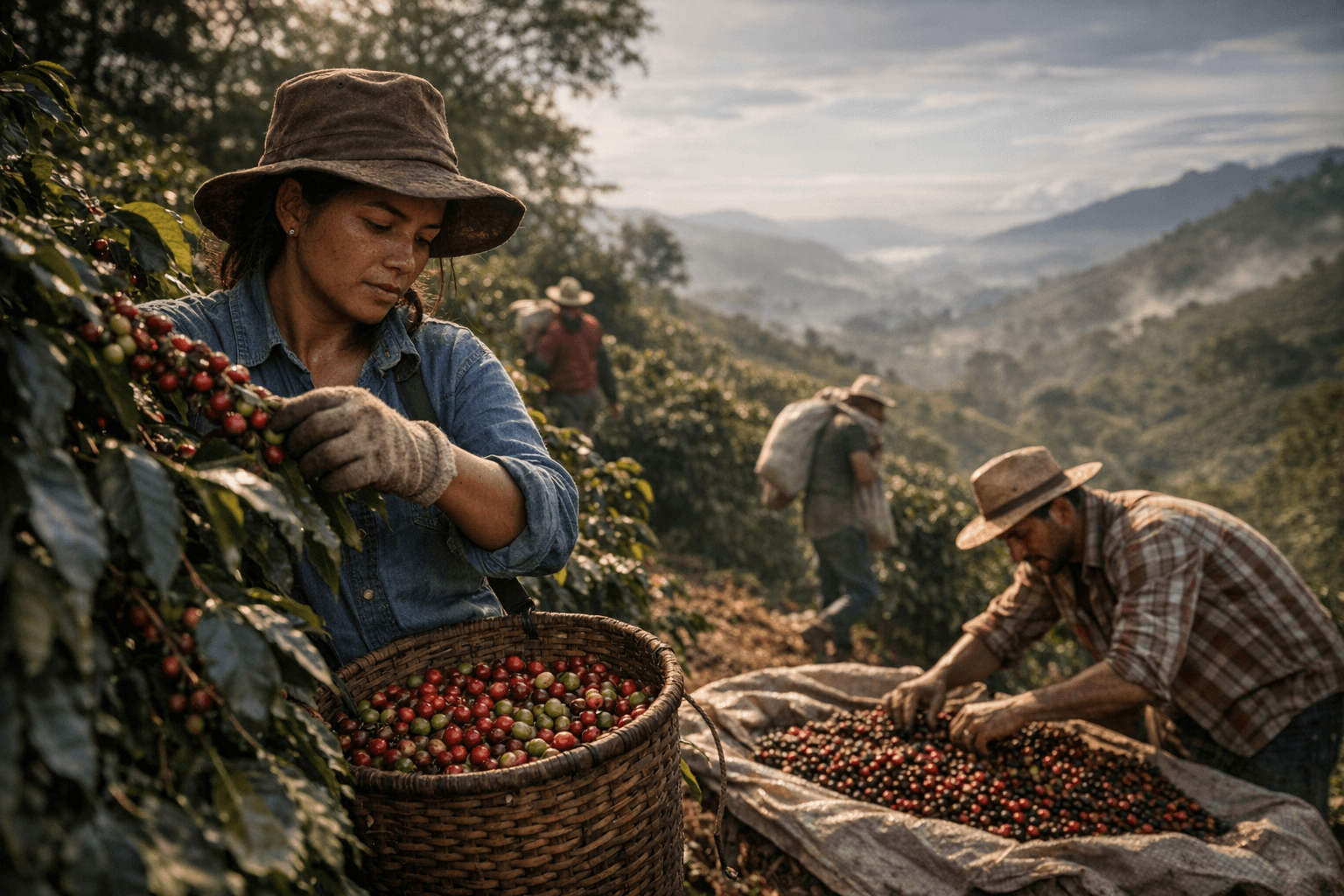
The announcement leaves open the specifics that would allow independent scrutiny. "Fair recruitment" in practice can mean several distinct things: caps on fees charged to workers before a harvest season begins, written contracts in a worker's language, grievance channels that don't route complaints back through the same labour brokers implicated in the original problem. The ILO's launch materials picture Briseida Venegas Ramos working at a cooperative in Veracruz, Mexico, the kind of worker the project is built for, but which mechanisms get deployed in her context, and by what indicators progress will be measured at the close of the two years, has not been detailed publicly.
That accountability gap is the central question the project will have to answer. The ILO's convening role provides structural credibility that purely self-reported corporate sustainability programmes don't, but third-party validation only carries weight if indicators are agreed upon and published before the pilots run, not after. The two-year window is explicitly framed as a period for piloting, capturing lessons, and building replicable models that other large buyers could adopt. If the project delivers on that framing, what appears in Nestlé's human-rights reporting and what the ILO certifies as independently verified progress will be the test of whether anything substantive changed for the seasonal workers it was designed to protect.
This article was produced by Prism’s automated news system from verified source data, official records, and press releases, then run through automated quality and moderation checks before publishing. The system is built and supervised by the people who set the standards it runs under. Read our full AI policy.
Did this article answer your question?