Kenya Coffee Gains Duty-Free Access to China's 1.4 Billion Consumers
Kenya's roasted coffee beans, tea, and avocados gain zero-tariff entry to China starting May 1, erasing duties that previously ran as high as 25%.
Deputy President Kithure Kindiki and Chinese Vice President Han Zheng flagged off the first consignment of Kenyan agricultural exports under a new zero-tariff arrangement, sending goods by Standard Gauge Railway to Mombasa for export to a market of 1.4 billion consumers. The duty-free regime, which covers tea, coffee, fresh and frozen avocados, macadamia nuts, cut flowers, fresh vegetables, and herbs, takes effect May 1, 2026.
The deal is structured as a preliminary "early harvest" framework granting zero-duty entry to 98.2 percent of Kenyan exports, according to reporting by South China Morning Post correspondent Jevans Nyabiage. Kenya's Ministry of Trade announced the arrangement less than a month after negotiations closed on December 19. Kenyan officials are already pushing for a final, comprehensive economic partnership agreement that would extend coverage to 100 percent of exports.
Trade Minister Lee Kinyanjui called the agreement "a monumental progression that signifies China's commitment to strengthening our trade ties further." Agriculture Cabinet Secretary Mutahi Kagwe, who announced the implementation timeline, said the duty-free access is expected to significantly expand export opportunities for Kenyan farmers and agribusinesses by making their products more competitive in the Chinese market, while stressing the need for increased value addition to maximize the opportunity.
The commercial case for the deal is already visible in the existing trade numbers. Chinese Ambassador to Kenya Guo Haiyan noted that Kenya's coffee and tea exports to China reached USD 24.46 million in 2025, accounting for 10.8 percent of Kenya's total agricultural exports to China and representing year-on-year growth of 8.8 percent. Exports of fresh and frozen avocados and macadamia nuts reached USD 19.9 million in the same period, accounting for a further 8.8 percent of agricultural exports. Those figures were achieved while tariffs on coffee and tea ran as high as 15 percent and duties on avocados, macadamia, vegetables, and cut flowers ranged between 10 and 25 percent, according to Firstpost; Dawan Africa reported the lower bound somewhat differently, citing rates of about 4 percent for cut flowers and between 6 and 25 percent for coffee, tea, and horticultural produce.
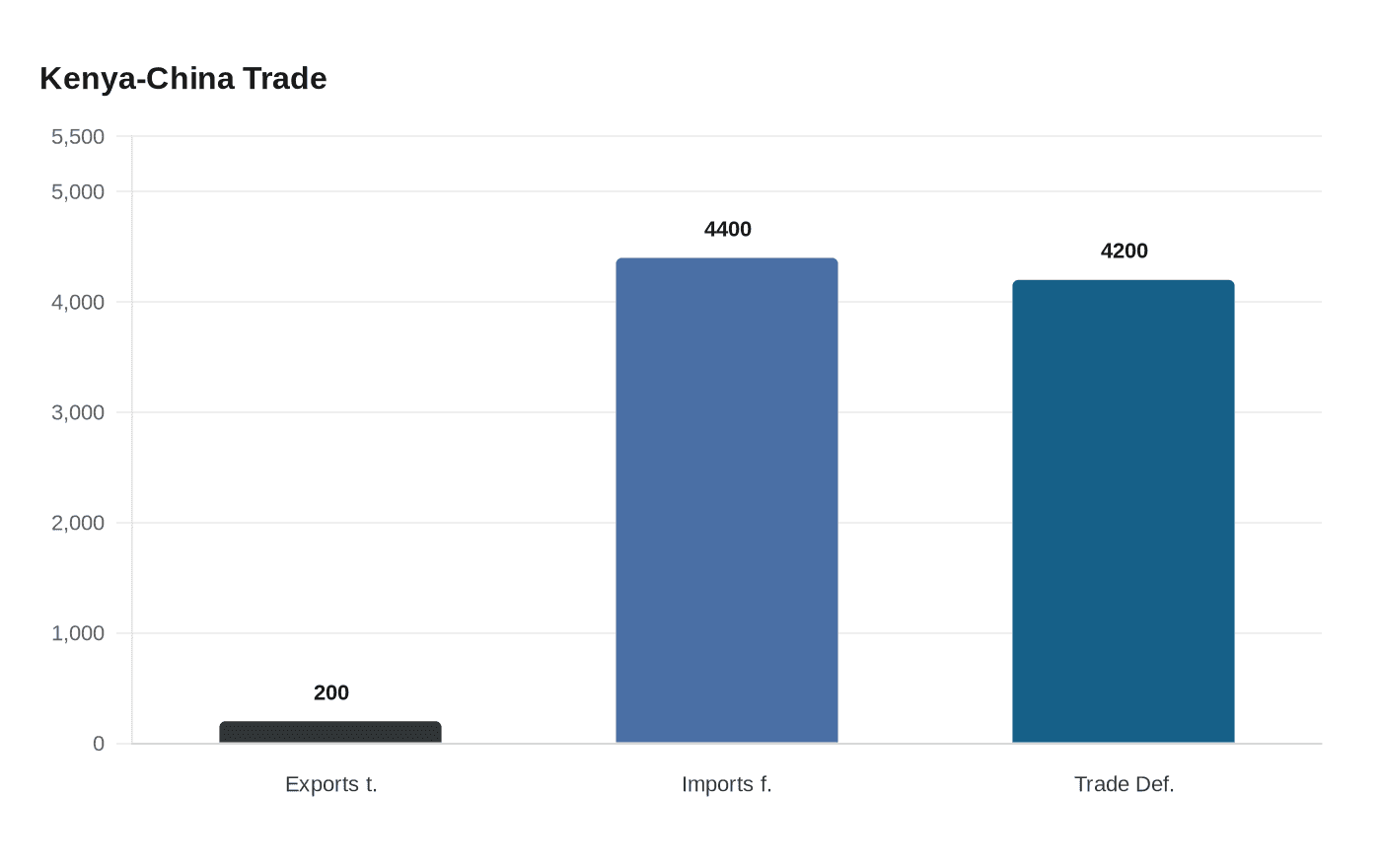
The wider trade relationship remains heavily imbalanced. Kenya exported roughly USD 200 million in goods to China last year while importing more than USD 4.4 billion, producing a trade deficit exceeding USD 4.2 billion. The Kenyan government is explicitly framing duty-free access as a mechanism to begin narrowing that gap by scaling agricultural exports and encouraging local agro-processing partnerships.
Patrick Lumumba, cited in analysis of the deal, said the policy creates an opening for export growth and industrialisation but warned that countries must better organise their economies and prioritise value addition to fully benefit. Analysts broadly echo that caution: scaling production, meeting China's strict quality and phytosanitary standards, and moving away from raw commodity exports toward processed goods are identified as the conditions that will determine whether the tariff elimination translates into sustained revenue for Kenyan farmers.
The agreement was advanced through President William Ruto's state visit to China, with the implementation now described by Kenyan officials as the delivery stage of commitments made during that visit. Ambassador Guo Haiyan signalled that cooperation would extend beyond market access into technology transfer and capacity building. Meanwhile, Kenya faces a parallel diplomatic pressure: the US is reportedly pressing Nairobi to abandon the China trade pact in exchange for renewal of duty-free privileges under the African Growth and Opportunity Act, which expired last year.
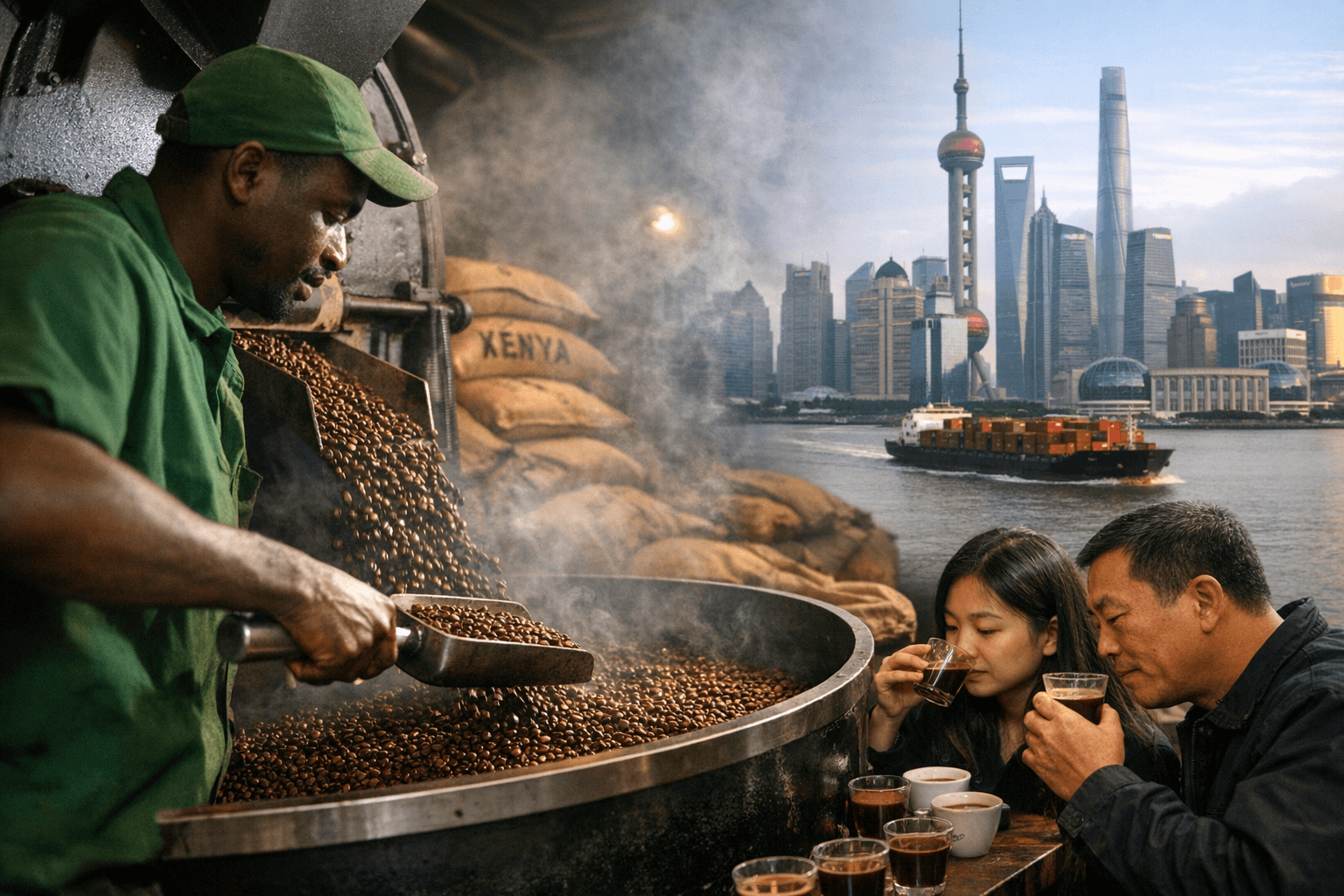
For Kenya's coffee sector specifically, the timing matters. Roasted beans were explicitly named in the product lists circulated by multiple sources, signalling that China's appetite for finished, higher-value coffee products is built into the framework from the outset rather than limited to green beans for re-processing elsewhere.
This article was produced by Prism’s automated news system from verified source data, official records, and press releases, then run through automated quality and moderation checks before publishing. The system is built and supervised by the people who set the standards it runs under. Read our full AI policy.
Did this article answer your question?