Minas Gerais reservoir aims to shield Brazil coffee from drought
Farmers in Minas Gerais finished a 600-million-liter reservoir to hold rainy-season water, a costly hedge against the droughts already shaking Brazil’s coffee crop.
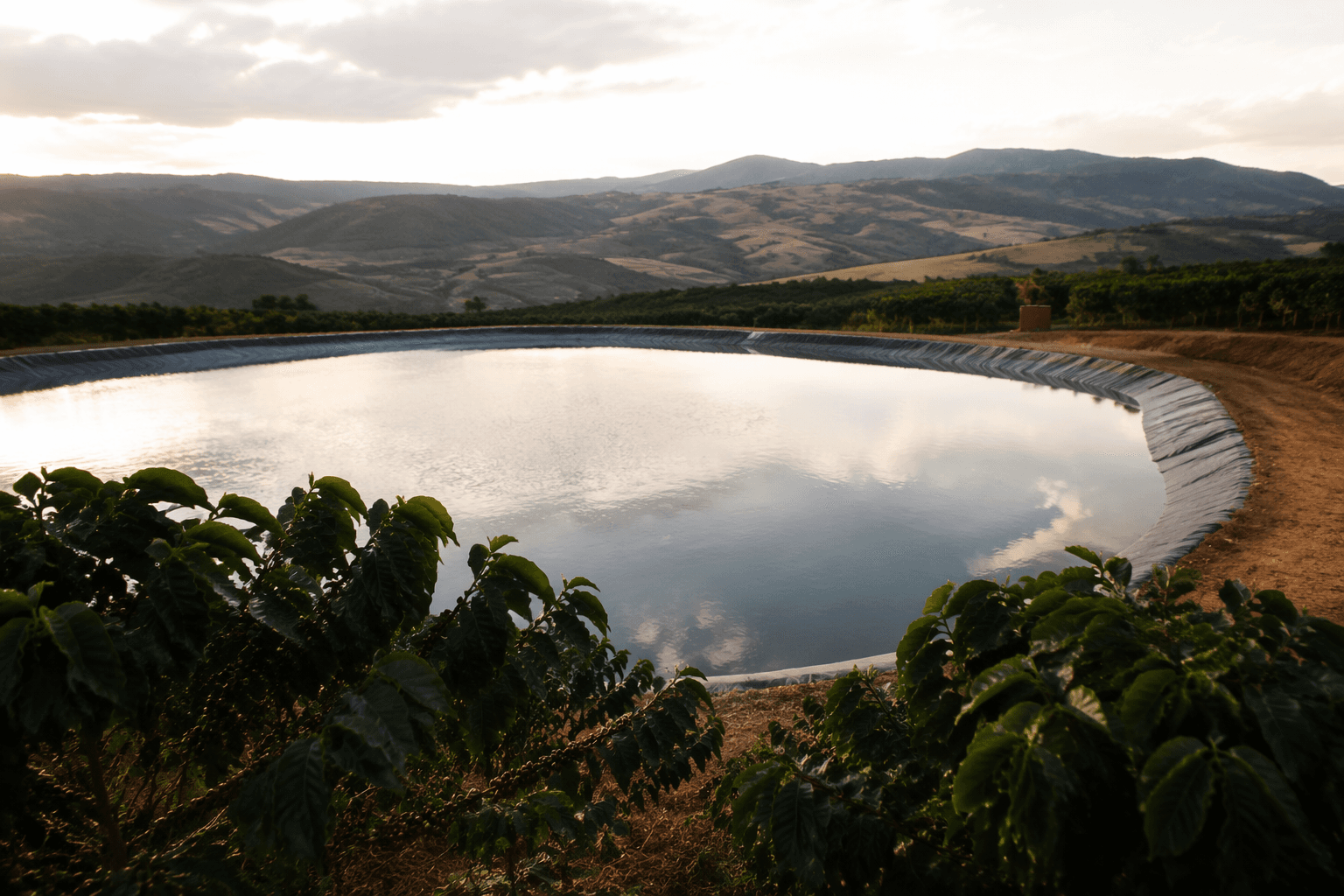
Farmers in Minas Gerais have completed a 600-million-liter agricultural reservoir designed to store rainy-season water for irrigation during dry spells, a concrete sign that Brazil’s coffee belt is building for a hotter, drier future. The project lands as coffee growers across Brazil scramble to protect yields, with drought already drying up trees, pushing global prices to record highs and leaving only about 30% of coffee fields irrigated, according to industry assessments.
That split is becoming the new divide in coffee production. Farms that can finance major water infrastructure are trying to smooth out the swings caused by erratic rainfall, while others are left exposed to every long dry stretch that hits the country’s coffee heartland. Brazil is the world’s biggest coffee producer, so the pressure does not stop at the farm gate; it reaches exporters, roasters and cafes that face more volatile green-coffee costs when weather knocks harvests off balance.
Reuters reported in March that Brazilian farmers were turning to costly irrigation to meet global demand, a shift that underlines how quickly climate stress is rewriting the economics of coffee. The same reporting noted that drought had already hit trees hard and driven prices to record levels. Reuters also reported last September that farmers in coffee-growing areas were trying to keep the world supplied despite climate change, and in October said rains may have come too late for Brazil’s coffee after a severe dry spell.
The damage has been visible on the ground in places like Caconde, where coffee producer Helio Moreira de Araújo said in AP Archive footage, “I lost around 8,000 to 10,000 coffee trees. We were expecting a harvest of 500 to 600 bags but we're going to take in more or less half of that.” That kind of loss shows why a reservoir built in Minas Gerais matters beyond one season: it gives growers a way to move water into the worst part of the dry period instead of waiting for rain that may not arrive in time.
USDA’s Foreign Agricultural Service projected Brazil’s 2025/26 coffee crop at 65 million 60-kilogram bags, up 0.5% from the previous crop year. But the reservoir in Minas Gerais makes clear that even in a country that can still produce on that scale, the next competitive edge may belong to the farms that can store water when the sky does not cooperate.
This article was produced by Prism’s automated news system from verified source data, official records, and press releases, then run through automated quality and moderation checks before publishing. The system is built and supervised by the people who set the standards it runs under. Read our full AI policy.
Did this article answer your question?