Pachamama Coffee earns Regenerative Organic Certified® status for Perú, Machu Picchu coffees
Pachamama Coffee's Perú and Machu Picchu coffees earned Regenerative Organic Certified® status, recognizing COCLA farmers' regenerative practices and raising sustainability standards.
Pachamama Coffee announced that its Perú and Machu Picchu coffees have achieved Regenerative Organic Certified® (ROC) status, marking a major recognition of regenerative practices on farms supplying the brand. The certification links the two SKUs to coffee sourced from COCLA, a farmer-owned cooperative in Peru’s Cusco region and a founding partner of Pachamama.
Regenerative Organic Certified® is overseen by the Regenerative Organic Alliance, a nonprofit that structures the standard around Soil Health, Animal Welfare, and Social Fairness. Christopher Gergen, CEO of the Regenerative Organic Alliance, said: “Pachamama Coffee represents what Regenerative Organic Certified® is meant to recognize - farmers leading with integrity and a deep commitment to the land,” underscoring the certificate’s role as an industry benchmark.
Pachamama positioned the ROC designation as building on its existing Organic Coffee status and as a way to make long-standing farm practices more visible to buyers. The company wrote that “Regenerative organic certification brings shared standards and visibility to this work, while honoring practices that have long been part of daily farm life.” Pachamama also described COCLA’s approach, saying: “COCLA’s smallholder farmers have been caring for their land for generations, growing coffee in diverse, shade-grown systems that protect biodiversity and build healthy soil.”
The certification applies to coffee traced to COCLA in Cusco; Pachamama said it is working to expand ROC across other founding members in Nicaragua, Guatemala, Mexico, and Ethiopia over time. Pachamama describes itself as a 100% farmer-owned specialty coffee cooperative that was founded by coffee farmers in multiple origins and now represents more than half a million smallholder farmers. The company noted it roasts organic coffee daily in small batches, operates five specialty cafés, offers direct-to-consumer subscriptions, and runs a national wholesale program. Pachamama framed its ownership model as a community-first structure, writing: “As a farmer-owned cooperative, all profits flow back to the farms, supporting better harvests, stronger communities, and a more resilient future for coffee.”
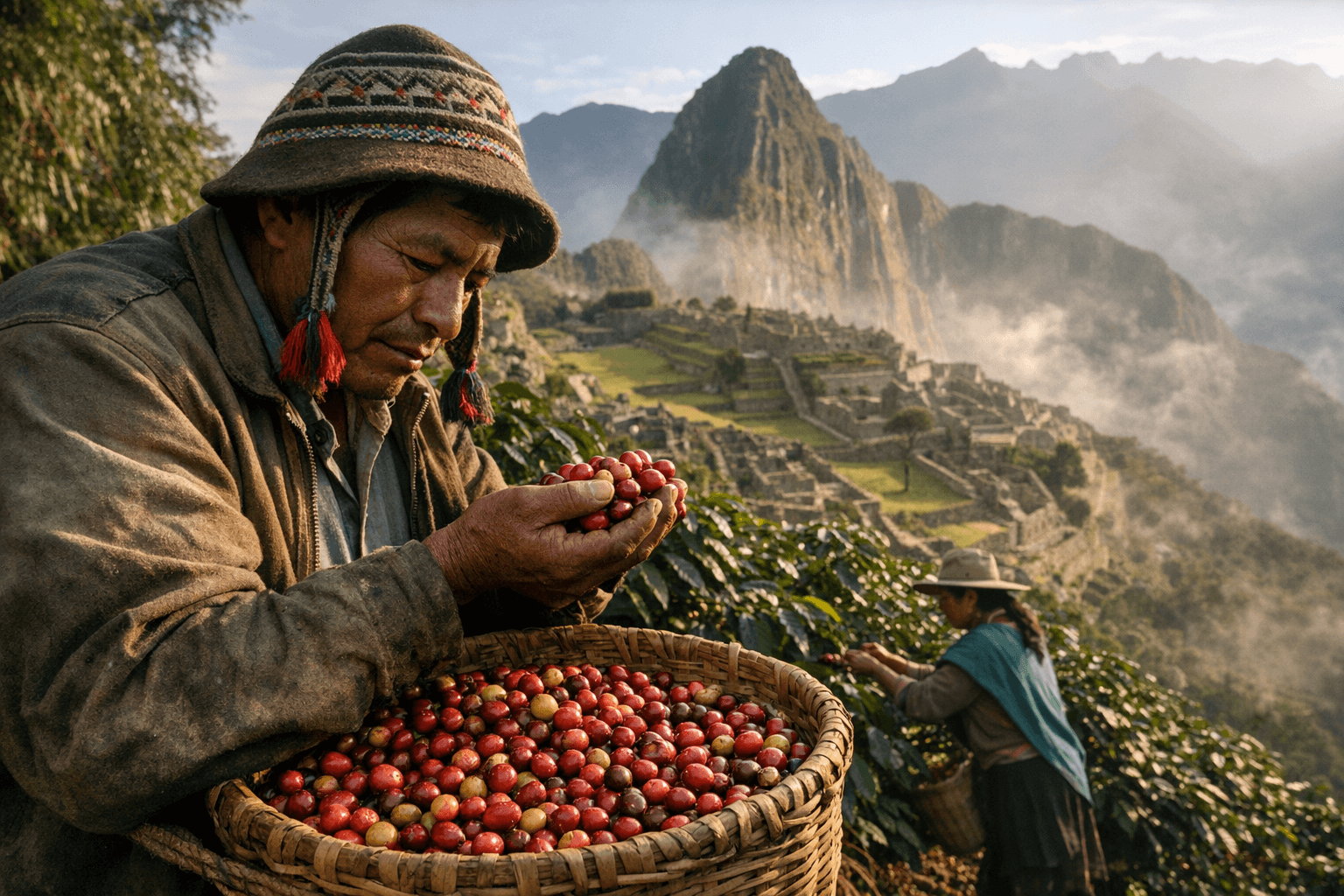
For roasters, retailers, and home brewers who track certifications and origin stories, ROC adds a more holistic layer beyond USDA Organic and Fair Trade by explicitly tying soil health, ecosystem resilience, and worker fairness to a seal. The designation also serves as a traceability marker for buyers seeking coffees from shade-grown, biodiversity-friendly systems in Peru’s highlands.
Pachamama has earned earlier industry recognition, including a 2021 Specialty Coffee Association Sustainability Award for Business Model and a 2024 Sustainable Food Award for Sustainability Pioneer. The company is promoting the newly certified coffees through its online shop and retail outlets; buyers looking for ROC-labeled options should expect availability through Pachamama’s direct channels and wholesale partners as the company scales certification to other origins.
This article was produced by Prism’s automated news system from verified source data, official records, and press releases, then run through automated quality and moderation checks before publishing. The system is built and supervised by the people who set the standards it runs under. Read our full AI policy.
Did this article answer your question?